





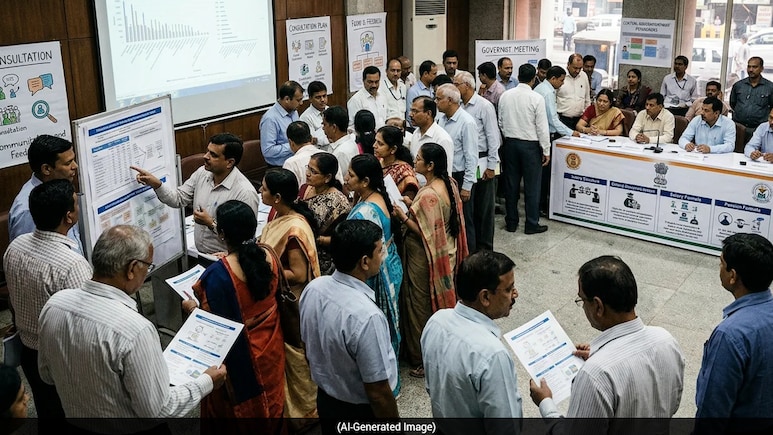
The 8th Central Pay Commission has announced its upcoming visit schedule to Telangana, Jammu and Kashmir, and Ladakh as part of its ongoing consultations with stakeholders on salary revisions and service conditions. The Commission will visit Hyderabad, Srinagar and Ladakh during May and June 2026 to interact with government departments, employee unions and other organisations. The meetings aim to gather feedback and suggestions that will shape the recommendations of the pay panel.
Officials said these consultations are a key step in understanding regional concerns and ensuring that the final report reflects a wide range of inputs from across the country. Stakeholders have been asked to submit their memorandums through the official website before seeking appointments for meetings. The deadline for submission has also been extended to allow more participation from employee bodies and associations.
Also Read | 8th Pay Commission 2026: Salary Structure, Pay Hike, Arrears Explained
A memorandum typically includes demands related to pay scales, allowances, pensions and working conditions, which are then reviewed by the Commission.
Fitment Factor Demand in Focus
The staff side of the National Council (Joint Consultative Machinery) has submitted its final set of recommendations to the 8th Pay Commission, urging far-reaching reforms in pay and service conditions. Among its key proposals are fixing the minimum basic pay at Rs 69,000, adopting a fitment factor of 3.83, granting annual increments of 6%, restoring the Old Pension Scheme, and raising the lowest House Rent Allowance slab to 30%.
Also Read | 8th Pay Commission: Deadline Extended, Basic Pay, Pension Demands Explained
This concluding memorandum serves as a consolidated statement of demands put forward by major central government employees' and pensioners' organisations. These bodies operate under the NC-JCM, which functions as the apex forum representing their collective interests.
In addition to the headline demands, the staff side has recommended streamlining the current 18 pay levels into seven, expanding the definition of family units to cover seven categories, ensuring at least five career progressions over a 30-year service span, and introducing a structured system for pension revision every five years.
Track Latest News Live on NDTV.com and get news updates from India and around the world

