





India's 8th Pay Commission has begun formal consultations, and the first big development is already here: the deadline to submit employee demands has been extended to May 31, 2026.
But this is not just about a date change. Behind this extension are major demands that could affect salaries, pensions, allowances, and working conditions of lakhs of central government employees -- including a push to bring back the Old Pension Scheme (OPS) and a proposal that could raise the minimum basic pay to Rs 69,000. Follow Markets Live Updates
Here is a simple, complete guide to what is happening.
Also Read | Layoffs Are Rising In Tech, But These Skills Are Helping People Unlock Better Pay
Who Met Whom - And Why It Matters
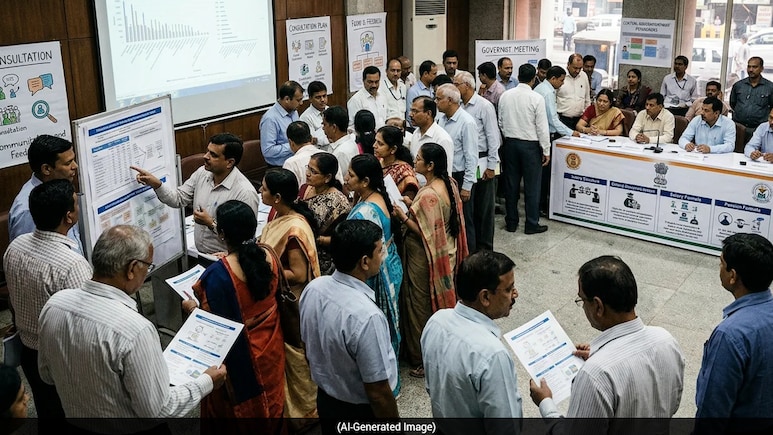
On April 28, the chairperson of the 8th Pay Commission, Ranjana Prakash Desai, met the delegation of the National Council-Joint Consultative Machinery (NC-JCM).
NC-JCM is the top representative body of central government employees. For over 60 years, every Pay Commission has regularly consulted it before finalising recommendations.
In this meeting, NC-JCM raised several key issues that may shape the 8th Pay Commission's final report.
Memorandum Deadline Extended To May 31
NC-JCM had requested the Commission to extend the last date for submitting employee demands (memorandums) from April 30 to May 31. The Commission has accepted this request.
- Earlier deadline: April 30, 2026
- New deadline: May 31, 2026
- Mode of submission: Online only (official link)
However, the Commission rejected another key request. It has clearly said that PDF, Word files, emails, or physical copies will not be accepted. All memorandums must be submitted only through the official online portal in the structured format.
What Is A "Memorandum"?
A memorandum is a formal document where employee bodies give proposals on:
- Pay revision
- Pension changes
- Allowances
- Promotions
- Working conditions
This is the document on which the Pay Commission studies demands.
The Biggest Demand: Fitment Factor Of 3.83
One of the most important demands submitted is the fitment factor of 3.83. The fitment factor is the number used to multiply current basic pay to arrive at the new basic pay.
| Under 7th CPC | Proposed under 8th CPC |
| Minimum basic pay: Rs 18,000 | Rs 69,000 (if 3.83 is accepted) |
| Fitment factor: 2.57 | Demand: 3.83 |
Even a small change in this number can massively change salaries.
Other major salary and promotion demands: NC-JCM has also demanded:
| Demand | What it means |
| 6% annual increment | Higher yearly salary growth |
| Two extra increments on promotion | Minimum Rs 10,000 benefit |
| One month's wages as gratuity | Higher retirement benefit |
Demand to bring back Old Pension Scheme (OPS): One of the most serious issues raised is the revival of OPS.
NC-JCM has asked the Commission to:
- Scrap NPS and UPS
- Restore non-contributory Old Pension Scheme
They argue that the term 'unfunded pension' used in the Pay Commission's Terms of Reference is incorrect because employees had earlier given up the Contributory Provident Fund and opted for pension.
| Pension system | Who contributes | Demand |
| OPS | Government only | Bring back |
| NPS/UPS | Employee + Govt | Scrap |
This is expected to be one of the most debated topics of the 8th CPC.
Separate Time Slots For Railways, Defence, Postal, Tax, Audit staff
NC-JCM has asked the Commission to give separate hearing time to different employee federations such as:
- Railways
- Defence
- Income Tax
- Postal
- Accounts & Audit
Reason: Each department has unique working conditions and risks.
Request for field visits to risky workplaces: NC-JCM has urged the Commission to personally visit:
- Railway field units
- Defence production units
- Remote and hazardous locations
So that the Commission can see first-hand the risky conditions in which employees work before deciding allowances and pay scales.
Demand for regular meetings with Pay Commission
NC-JCM reminded the Commission that in previous pay commissions, there were frequent interactions before final recommendations. It has asked for a fixed timetable for regular discussions.
What The Pay Commission Has Officially Said
The Commission has clarified on its website:
Only online submissions will be accepted till May 31, 2026.
Hard copies, PDFs, emails will not be considered.
It has also allowed authorised nodal officers of ministries and departments to submit inputs separately under a structured category.
Why This Matters To Employees
If even part of these demands are accepted:
- Minimum salary may see a historic jump
- Pension structure may change again
- Allowances for risky jobs may rise
- Promotion benefits may increase
- Retirement benefits may improve
This is why employee bodies are actively pushing their case early in the process.
What Happens Next?
- Employee bodies will submit memorandums by May 31
- Separate hearings may be scheduled
- Consultations will continue through 2026
- Final recommendations will come later
This is only the beginning of the 8th Pay Commission process.
Track Latest News Live on NDTV.com and get news updates from India and around the world

