

)
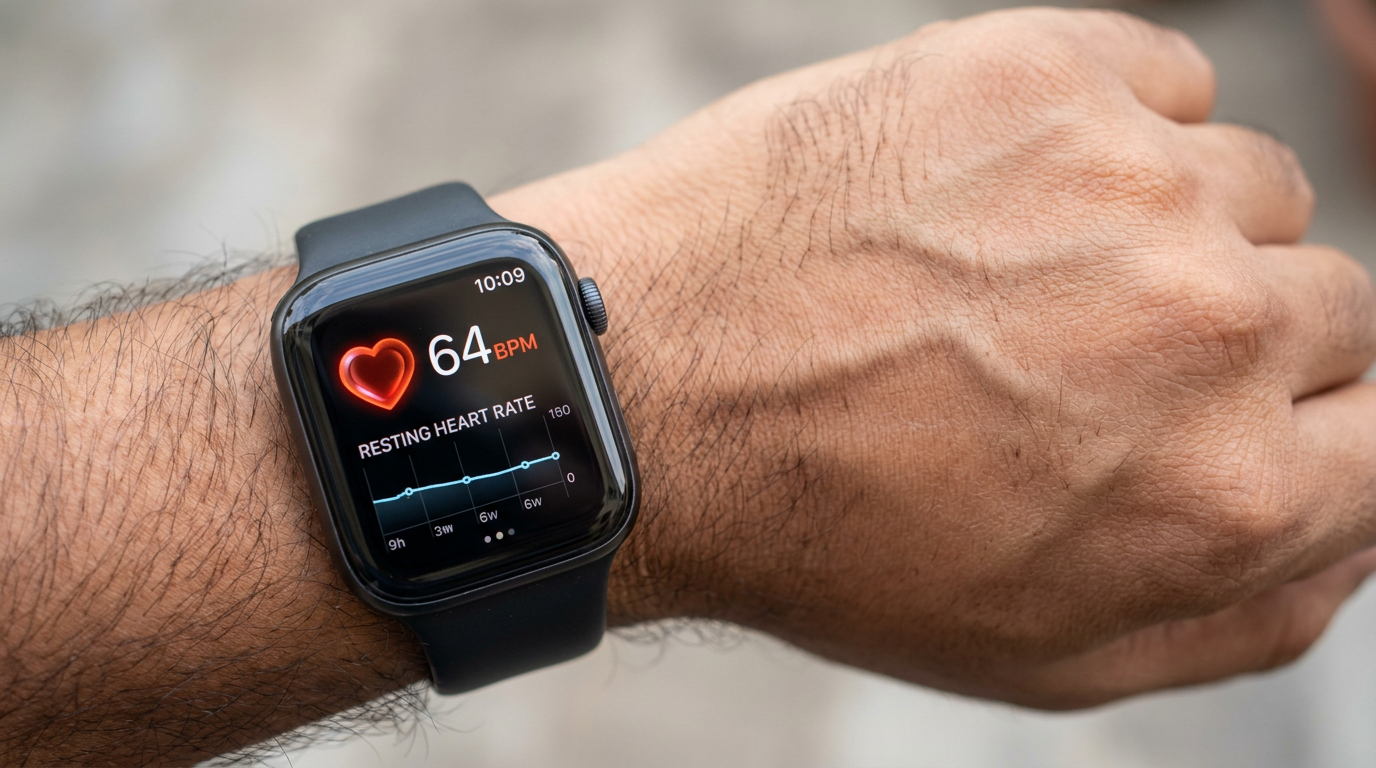
Resting heart rate used to be a footnote in a medical checkup, glanced at and quickly forgotten. However, that is not the case anymore. Doctors now see it as a steady marker of heart health, one that can flag risk long before other symptoms appear. With the rise in wearables, tracking this number has become effortless. But experts stress that a single reading rarely tells the full story. What matters is the pattern over time, the factors that move it, and knowing when a change needs a doctor's attention.
What Counts As A Normal Resting Heart Rate
Resting heart rate is simply how many times the heart beats per minute when the body is completely still, ideally measured after sitting or lying quietly for a few minutes.
The textbook range for adults is 60 to 100 beats per minute (bpm). In practice, many healthy adults sit lower than that, usually between 55 and 85 bpm. People who exercise regularly often have stronger, more efficient hearts, which can push their resting rate even lower, sometimes into the 40s for well-trained athletes.
Why The Number Moves Around
Resting heart rate is not fixed. It shifts with age, sex, and overall fitness. Large studies tracking heart rates across thousands of people have found the average resting rate sits around 67 bpm in women and 64 bpm in men, with fitter people generally landing lower.
Several everyday habits can push the number up, either briefly or over time:
- Stress or emotional strain
- Poor or insufficient sleep
- Caffeine and nicotine
- Certain medications
- Illness or hidden infections
Things outside the body matter too. Extreme heat, dehydration, tiredness, and air pollution can all raise the pulse, though doctors say these effects tend to be milder than the impact of poor fitness or lost sleep.
What A High Baseline Might Signal
A resting heart rate that stays high over time is increasingly seen as an early warning sign rather than a minor detail. Research links a consistently elevated resting heart rate to higher risk of heart disease, high blood pressure, stroke, type 2 diabetes, and other metabolic problems.
One large study that followed people over several years found that those with higher resting heart rates were more likely to develop heart failure, die of heart-related causes, experience a cardiovascular event, or die from any cause during the study period. Exact risk levels differed slightly between men and women.
A high resting heart rate often simply reflects poor physical fitness, since the heart has to work harder with each beat when it is not conditioned through regular activity. Over time, that added strain is itself a known contributor to heart and metabolic disease.
When A Low Heart Rate Needs A Second Look
A lower resting heart rate is usually a sign of good fitness, but not always. If it comes with certain symptoms, it stops being a good sign and becomes something worth checking.
It is worth seeing a doctor if a low heart rate comes with:
- Unexplained weakness or extreme tiredness
- Dizziness, lightheadedness, or fainting
- Shortness of breath
- Struggling with everyday physical activity
Sometimes an unusually low reading is caused by certain medications, or it can point to a problem with the heart's internal electrical signals. Even without symptoms, a low number that shows up suddenly is worth mentioning to a doctor.
Reading The Trend, Not The Spike
Smartwatches and fitness bands are useful for spotting patterns over time, but doctors describe them as screening tools, not diagnostic ones. Different devices calculate resting heart rate differently, so the numbers are best treated as a rough guide rather than an exact medical reading.
What matters is a change that holds over several weeks, not a one-off odd reading. Usually, an elevated reading after a busy day, a terrible night's sleep or an additional cup of coffee isn't something to worry about. But a baseline that stays high for no noticeable cause is another matter and could hint at problems like anaemia, thyroid dysfunction, dehydration or deteriorating heart health.
Chest pain, breathlessness, sudden palpitations, or fainting alongside an unusual heart rate call for immediate medical attention.
Building A Healthier Baseline
Rather than trying to force the number down directly, doctors recommend focusing on the habits that influence it. A few consistent changes tend to make the biggest difference over time:
- Regular aerobic exercise, which strengthens the heart so it works more efficiently with each beat
- Consistent, good-quality sleep, giving the heart time to recover each day
- Managing stress, through relaxation habits practised regularly
- Cutting back on tobacco and heavy drinking, both of which put extra strain on the heart
For people juggling long work hours, disturbed sleep, and daily exposure to city pollution, resting heart rate offers an easy way to keep an eye on heart health without needing special equipment or frequent doctor visits. It is not a diagnostic test on its own, and a good number does not rule out every health risk. But as a simple, low-effort baseline, it gives people an early signal worth watching, and a reason to pay closer attention to sleep, movement, and stress before small changes turn into bigger problems.
[By Dr (Prof) Hemant Madan- Senior Director & Program Head- Cardiology, Narayana Hospital, Gurugram]
Disclaimer: The opinions expressed within this article are the personal opinions of the author. NDTV is not responsible for the accuracy, completeness, suitability, or validity of any information on this article. All information is provided on an as-is basis. The information, facts or opinions appearing in the article do not reflect the views of NDTV and NDTV does not assume any responsibility or liability for the same.