

)
After a long and busy day, many people find it difficult to relax when it's finally time for bed. Stress, long hours of sitting, screen time, and daily responsibilities can leave the body feeling stiff and the mind feeling restless. While many people turn to sleep aids or scrolling through their phones to unwind, a few minutes of gentle stretching can be a better way to prepare for sleep. Simple bedtime stretches help loosen tight muscles, improve flexibility, and release built-up tension throughout the body.
These stretches also encourage slow, deep breathing, which helps calm your nervous system and signals your body that it's time to rest. Making stretching a part of your bedtime routine can improve both the quality of your sleep and the way you feel the next morning. Gentle stretching can also reduce stress, improve blood circulation, and promote a feeling of calm that supports deeper, more restful sleep. Here are some easy bedtime stretches that can help you fall asleep faster.
1. Child's Pose
Child's Pose is one of the most relaxing stretches to do before bed. Kneel on the floor, sit back on your heels, and stretch your arms forward while lowering your chest toward the floor. Rest your forehead gently on the mat or bed. This stretch helps release tension in the back, shoulders, and hips, which often become tight after sitting all day. Slow, deep breathing in this position also helps calm the mind and prepares the body for restful sleep.
2. Neck Stretch
A simple neck stretch can ease stiffness caused by long hours of working, reading, or using a phone. Sit comfortably and slowly tilt your head toward one shoulder, holding the stretch for about 20-30 seconds. Repeat on the other side. Relaxing the neck muscles can reduce built-up tension and make it easier to unwind before bedtime.
3. Seated Forward Bend
Sit on the floor with your legs stretched out in front of you. Slowly lean forward from your hips and reach toward your feet or shins without forcing the stretch. Keep your back as straight as possible and breathe slowly. This stretch gently loosens the lower back, hamstrings, and calves while encouraging your body to relax. This movement helps reduce stress, making it easier to switch from a busy day to a peaceful night.
4. Cat-Cow Stretch
Begin on your hands and knees with your wrists under your shoulders and knees under your hips. As you breathe in, lift your head and arch your back (Cow Pose). As you breathe out, round your spine and tuck your chin toward your chest (Cat Pose). Repeat this movement for one or two minutes. Cat-Cow improves spinal flexibility, eases back stiffness, and helps release physical tension, leaving your body feeling lighter and more relaxed before sleep.
5. Butterfly Stretch
Sit on the floor and bring the soles of your feet together, allowing your knees to fall out to the sides. Hold your feet with your hands and sit tall. You can gently lean forward. This stretch opens the hips and inner thighs, areas that often become tight after prolonged sitting. Holding the position while taking slow breaths helps reduce muscle tightness and creates a calming effect.
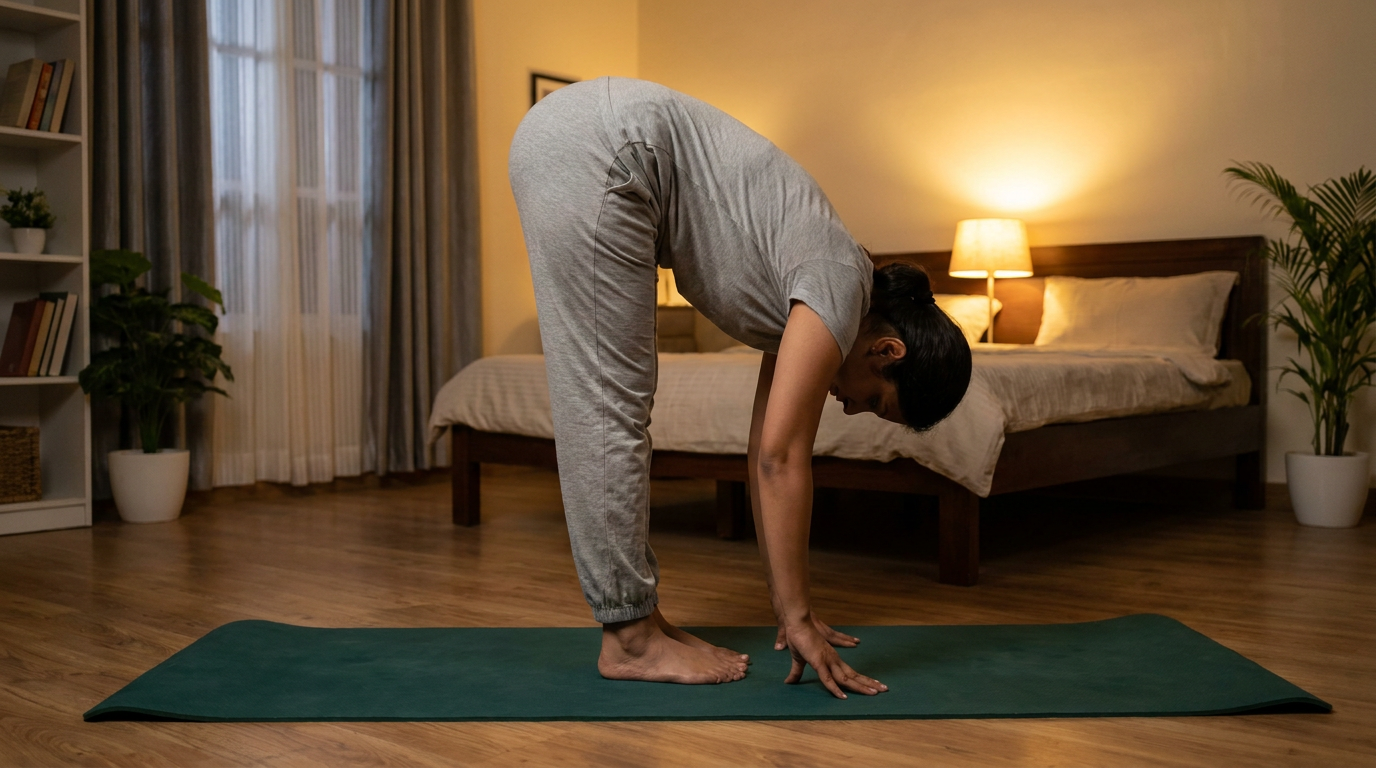
6. Standing Forward Fold
Stand with your feet about hip-width apart and slowly bend forward from your hips. Let your arms hang naturally toward the floor, and keep your knees slightly bent if needed. Allow your head and neck to stay relaxed. This stretch helps release tension in the back, legs, and shoulders while improving blood flow. Many people find that stretching and posture helps reduce stress and quiet the mind.
7. Legs Up the Wall
Lie on your back close to a wall and extend your legs straight up against it. Keep your arms relaxed by your sides and breathe slowly. Stay in this position for five to ten minutes if it feels comfortable. This gentle stretch encourages relaxation by reducing pressure on legs and promoting a sense of calm. It is helpful after a long day of standing or walking and can leave you feeling refreshed, relaxed, and ready for sleep.
Disclaimer: This content including advice provides generic information only. It is in no way a substitute for a qualified medical opinion. Always consult a specialist or your own doctor for more information. NDTV does not claim responsibility for this information.