






India's crude oil import bill has finally caught a break.
The average price of the Indian crude basket has fallen below the $70-a-barrel mark for the first time since tensions in the Middle East pushed oil prices higher earlier this month. The decline comes after global markets cooled following the ceasefire between Iran and Israel, easing fears of supply disruptions.
For an economy that imports nearly 90 per cent of its crude oil requirement, the fall is significant. It reduces import costs, eases pressure on the current account deficit and gives the government more fiscal breathing room.
Also Read | Layoffs Are Rising In Tech, But These Skills Are Helping People Unlock Better Pay
But don't expect cheaper petrol and diesel just yet.
Industry experts say the relief is more likely to benefit government finances and oil marketing companies before it reaches consumers.
India's Crude Basket Drops Below $70
According to official data, the average price of the Indian crude basket stood at $68.86 per barrel on June 27. That is the first time it has slipped below $70 since the Iran-Israel conflict triggered a spike in global oil prices.
Earlier this month, fears that the conflict could disrupt shipping through the Strait of Hormuz had pushed crude prices sharply higher. However, as geopolitical tensions eased, international benchmark prices retreated, bringing India's import costs down with them.
The latest decline is expected to reduce the country's oil import bill and improve macroeconomic indicators, including inflation and the trade balance.
Why Fuel Prices May Not Come Down
Despite the sharp fall in crude prices, experts believe petrol and diesel prices are unlikely to be cut immediately.
Dipal Dutta, CEO of RedoQ, said the decline offers meaningful relief for India's economy but may not translate into lower retail fuel prices anytime soon.
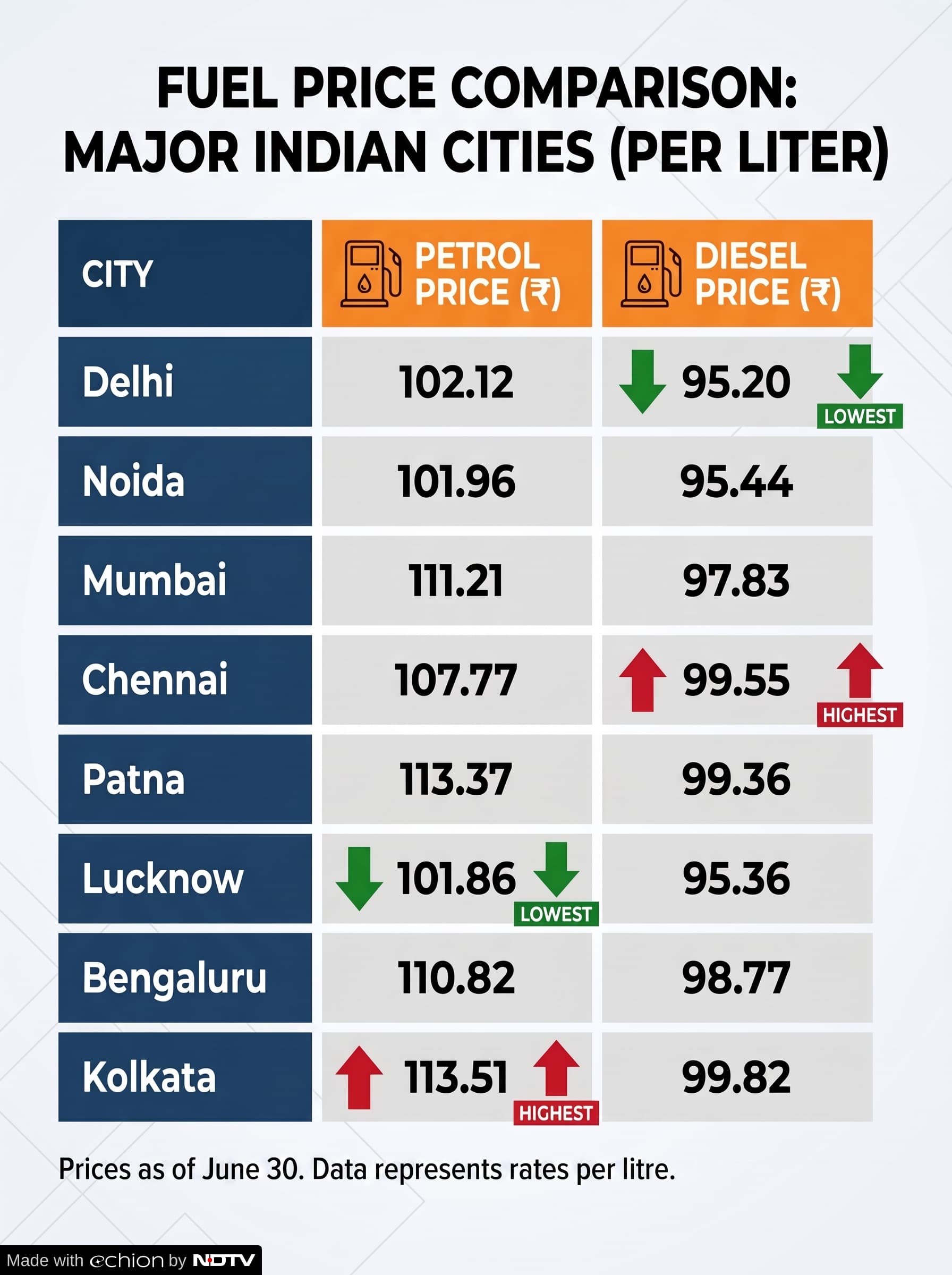
According to Dutta, oil marketing companies are expected to use the lower crude costs to recover earlier under-recoveries and strengthen their margins after a period of volatile global prices. He added that even though the Indian crude basket has dropped to $68.86 per barrel, retail fuel prices are likely to remain unchanged because companies are still prioritising financial stability over immediate price cuts.
He also noted that energy markets remain vulnerable to sudden geopolitical developments, making oil companies cautious about passing on the benefits too quickly.
A Chance To Invest Beyond Cheaper Oil
The decline in crude prices should also be viewed as an opportunity to accelerate India's transition towards cleaner industrial technologies, according to Anup Garg, Founder and CEO of World of Circular Economy (WOCE).
Garg said lower oil prices are positive for the economy, but they should not reduce the urgency of investing in sustainable technologies. He pointed out that global energy markets remain unpredictable because of geopolitical tensions, supply disruptions and fluctuations in demand.
Instead of relying on temporary relief from lower crude prices, businesses should continue investing in low-carbon solutions such as carbon capture and other technologies that improve efficiency while reducing environmental impact, he said.
According to Garg, companies that keep investing during periods of favourable energy prices will be better prepared for future carbon regulations, supply-chain expectations and changing climate policies. Sustainable growth, he argued, depends on innovation and long-term planning rather than the price of a single barrel of oil.
What Lower Crude Prices Mean For India
Even if motorists do not see immediate relief at fuel stations, the fall in crude prices still carries broader economic benefits.
A lower oil import bill can help reduce inflationary pressures, improve the country's external finances and give policymakers greater flexibility. It also lowers costs for sectors that rely heavily on fuel, including transport, aviation and manufacturing.
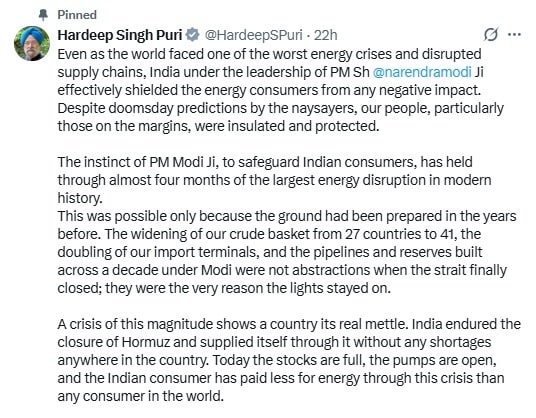
For now, the price displayed at fuel pumps is likely to stay exactly where it is. But at least the fear of price hikes (for all sectors) has also reduced drastically.
Track Latest News Live on NDTV.com and get news updates from India and around the world

