





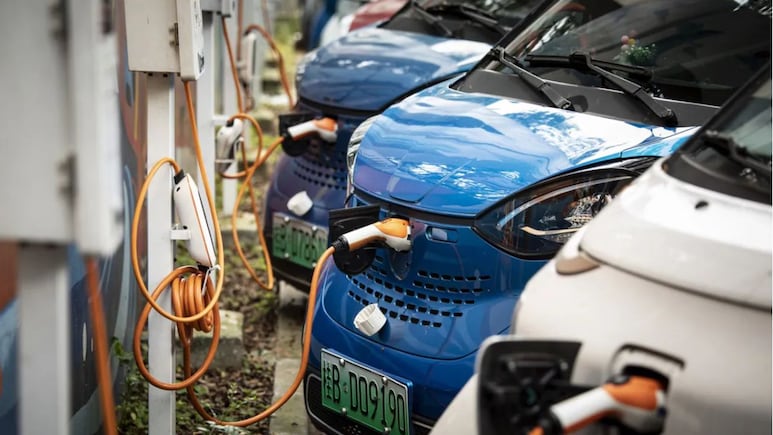
Delhi's draft EV Policy 2.0, released on April 11 for public feedback, is entering its final consultation week. The policy sets a bold target: 95 per cent EV adoption by 2027. It moves away from upfront subsidies and leans on scrappage-linked incentives, tighter registration timelines, and tax relief for affordable EVs and strong hybrids. Also, Delhi will permit only electric two-wheelers for fresh registrations from April 1, 2028, as per the proposal.
Industry stakeholders say this is a more mature version of the earlier policy. It focuses on outcomes, not just incentives. But nearly all of them add two caveats. Charging infrastructure must expand much faster. And retrofitting of old vehicles must be formally recognised inside the policy framework.
"We see Delhi's Draft EV Policy 2026 as a defining moment in India's mobility transition. With a proposed ₹3,600 crore investment and a roadmap extending to March 2030, the policy aims to accelerate EV adoption, expand charging infrastructure, and move the capital toward a cleaner transport ecosystem. Its incentive-led approach, especially upfront benefits for scrapping older BS-IV or below vehicles, is designed to drive immediate replacement demand," said Tarun Jain, Co-founder of LetzRyd.
Also Read | Layoffs Are Rising In Tech, But These Skills Are Helping People Unlock Better Pay
EV Charging points: The Biggest Execution Risk
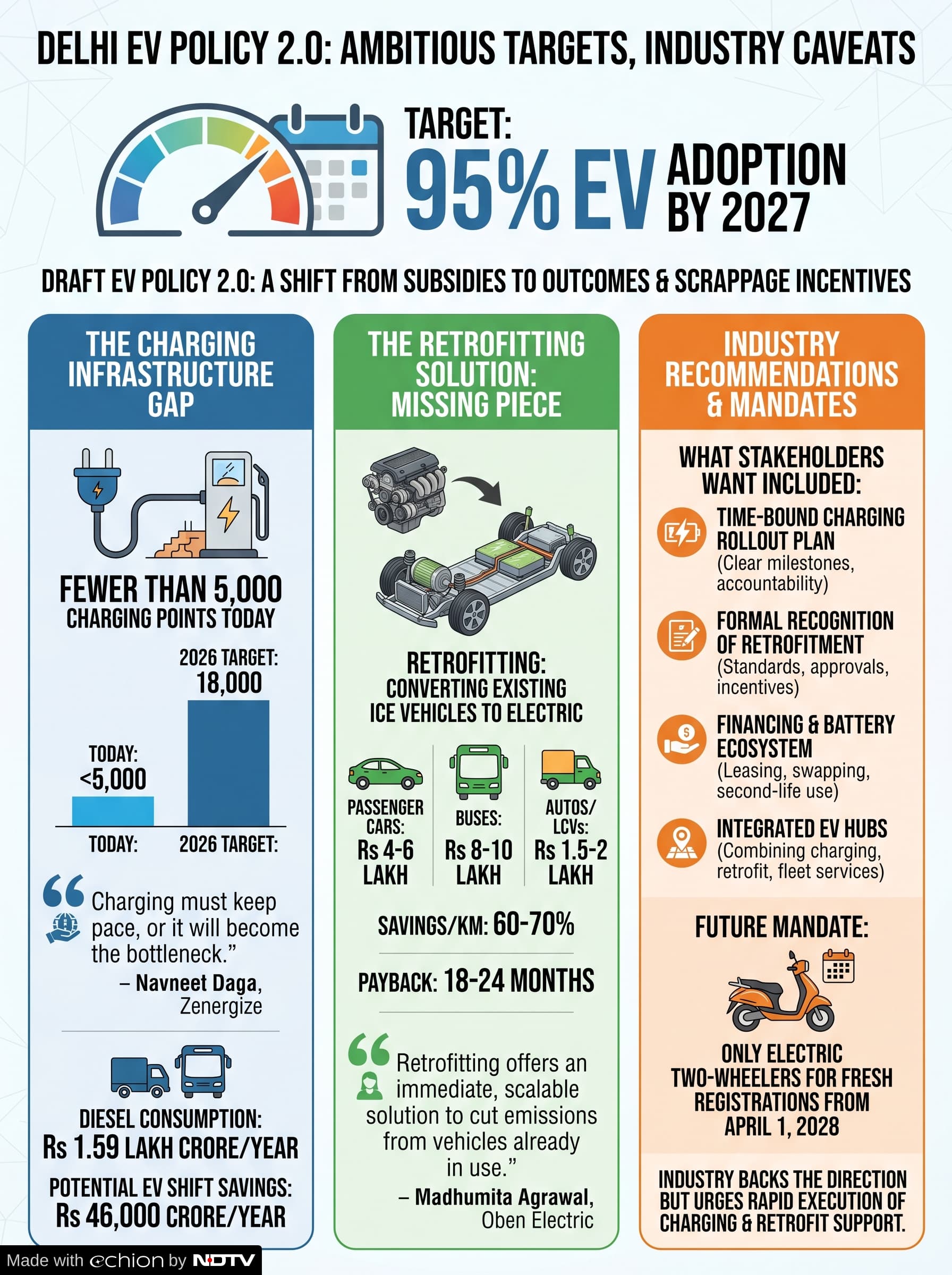
Navneet Daga, Co-founder and CEO of Zenergize, says the policy intent is strong but execution will depend on charging rollout. Delhi has fewer than 5,000 public charging points today. The target is 18,000 by the end of 2026.
"Vehicle adoption will move quickly because of the policy push. Charging must keep pace, or it will become the bottleneck," he says. Daga links this to a larger economic case. India's trucks and buses consume diesel worth over Rs 1.59 lakh crore every year. If even 25 per cent of this segment shifts to EVs, it can cut nearly Rs 46,000 crore from the fuel import bill annually. For him, EV Policy 2.0 points in the right direction. But the speed and reliability of charger deployment will decide whether targets are met.
EV Policy 2.0: The Problem No Can Ignore
Several stakeholders say the EV conversation is too focused on new vehicles. Madhumita Agrawal, CEO and Founder at Oben Electric, says India's EV transition cannot be limited to fresh sales. There are over 300 million ICE vehicles already on Indian roads. Waiting for them to be replaced over time will delay emission reduction by years.
Therefore, she suggests "retrofitting", a process through which conventional petrol or diesel engine vehicles are converted into electric ones by replacing the engine and fuel tank with an electric motor, controller, and battery pack. "Retrofitting offers an immediate, scalable solution to cut emissions from vehicles already in use," she says. "OEMs must play a role not just in making new EVs but in enabling retrofit ecosystems through technology, partnerships, and standardisation."
She calls this a "dual approach" -- new EV adoption plus retrofitment. This, she says, will achieve real emission cuts at scale.
Delhi EV Policy 2.0: 'Retrofit Economics'
Nikhil Anand Khurana, Managing Director at Folks Motor, explains why retrofitment is commercially viable, not just environmentally sound. He proposes that Delhi build "xEV Hubs". These hubs can combine retrofit services, AC and DC fast charging, smart load management, fleet solutions, and financing in one place. A digital layer using IoT (Internet of Things) and telematics can help fleet operators track performance and optimise usage. He shares indicative retrofit costs:
- Passenger cars: Rs 4-6 lakh
- Buses: Rs 8-10 lakh
- Autos and light commercial vehicles: Rs 1.5-2 lakh
Despite the upfront cost, savings per km can be 60-70 per cent. Payback can happen within 18-24 months because fuel and maintenance costs drop sharply. "The real barriers are regulatory clarity, financing access, and ecosystem scale," Khurana says. "If retrofitment is integrated into policy, adoption can be rapid."
Delhi EV Policy 2.0: Cabs Need Retrofit Urgently
Sahil Jindal, Co-founder at Trevel and Managing Director of the Jindal Group, highlights the fleet reality. India has 3-4 million commercial vehicles operating as taxis and fleet cars. Many run 150-250 km daily in cities. For these operators, buying new EVs for the entire fleet is not financially practical in the short term.
"Retrofitting allows these taxis to turn electric immediately," he says. "It cuts emissions and reduces operating cost without forcing fleet owners to buy new vehicles." He adds that although India now has over 4.5 million EVs and annual sales above 2 million units, EVs still account for only 6-8 per cent of new vehicle sales. For heavy-use urban vehicles, retrofitment can accelerate electrification faster than new purchases.
What Industry Wants EV Policy 2.0 To Include
Stakeholders broadly agree on what should be strengthened before the policy is finalised:
- Time-bound charging rollout plan: Clear milestones to move from 5,000 to 18,000 chargers, with accountability.
- Formal recognition of retrofitment: Standards, approvals, and incentives for certified retrofit players.
- Financing and battery ecosystem: Battery leasing, swapping, second-life use, and pay-per-km or leasing models to reduce upfront burden.
- Integrated hubs for EV services: Spaces where charging, retrofit, fleet services, and financing come together.
Industry voices are not opposing the draft. In fact, they strongly back its direction. However, as the feedback window closes, they urge the government to support the retrofitting ecosystem and ensure rapid deployment of EV chargers. The cumulative impact of the two, they say, will create a model that other states may follow.
Track Latest News Live on NDTV.com and get news updates from India and around the world

