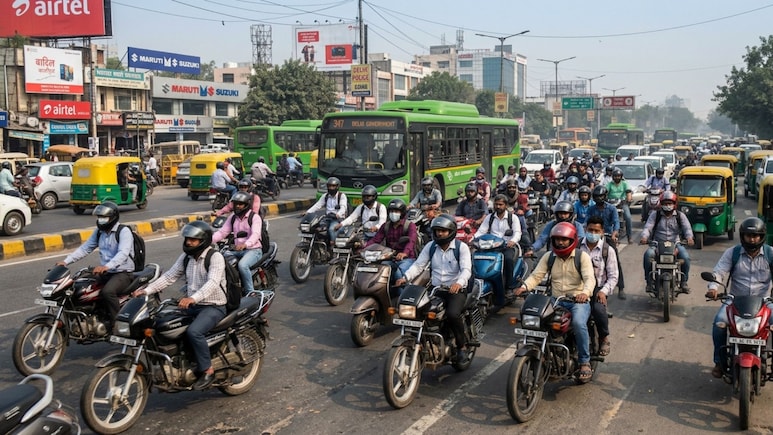
The Delhi government has released the draft Electric Vehicle (EV) Policy 2026-2030, setting out a detailed roadmap to accelerate the capital's shift to electric mobility through time-bound restrictions on petrol vehicles, stricter fleet regulations, incentives for EV adoption, and a large-scale expansion of charging infrastructure.
The draft, issued by the Transport Department's EV Cell, has been placed in the public domain for 30 days of stakeholder feedback (citizens and experts) before finalisation. The policy is aimed at reducing vehicular emissions, which remain a key contributor to Delhi's air pollution crisis, particularly during winter smog episodes.
Also Read: Tata Tiago EV Fined In Rajasthan For No Pollution Certificate - Video Is Viral
Petrol Two-Wheelers, Autos Face Fixed Phase-Out Timelines
In one of the most significant proposals, the draft lays down clear electrification deadlines for key vehicle segments.
From January 1, 2027, only electric three-wheelers will be permitted for new registration in Delhi. This will be followed by a complete transition for two-wheelers, with only electric models allowed from April 1, 2028.
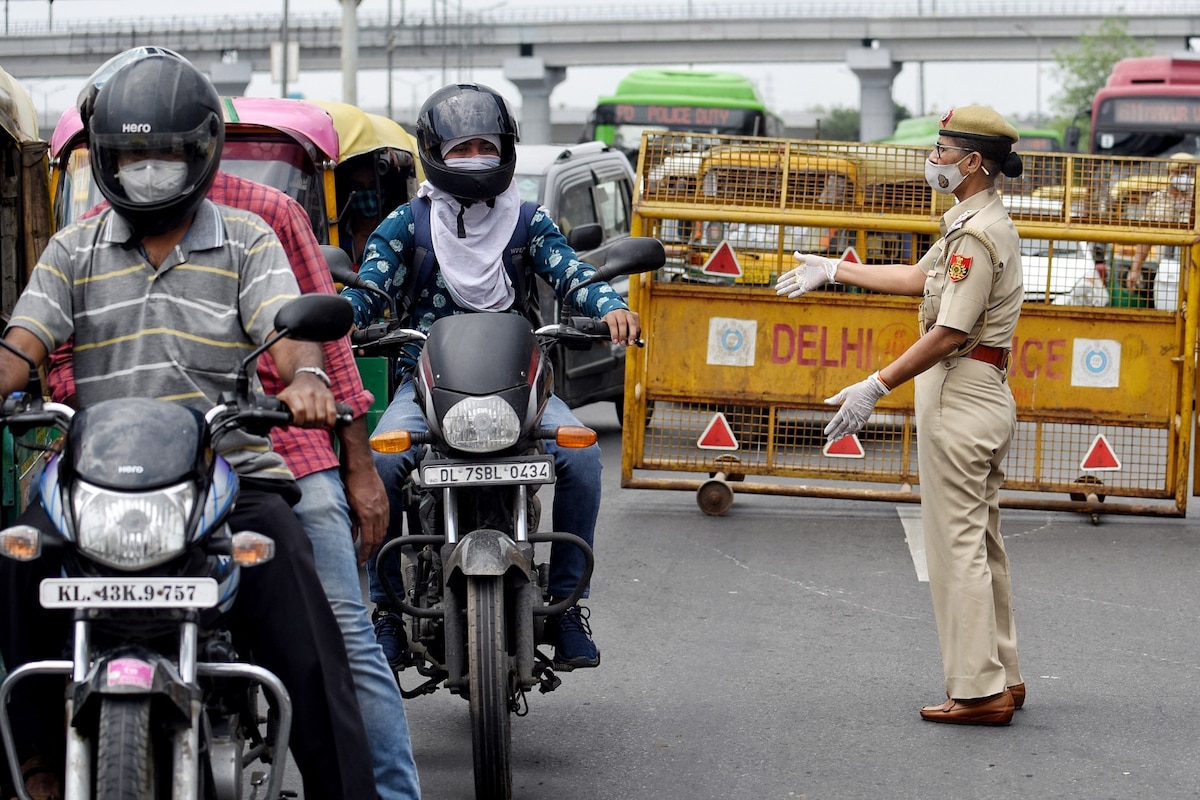
Image Source- ANI
The policy also brings forward restrictions for commercial fleets. No new internal combustion engine vehicles will be allowed in aggregator-based operations, including two-wheelers and light goods vehicles up to 3.5 tonnes, from January 1, 2026. Existing BS-VI two-wheelers in such fleets will be permitted only till December 31, 2026.
Officials say the approach is designed as a phased transition rather than abrupt restrictions, allowing time for industry and consumers to adapt.
School Buses, Govt Fleet Also Set for Electrification
The draft extends electrification targets across institutional transport systems. School buses will be gradually electrified, with targets of 10% EV adoption in Year 2, 20% in Year 3, and 30% by 2030.
Also Read: Tesla Working On New Smaller, Cheaper Electric Vehicle: Report
All hired and leased government vehicles will transition to 100% electric mobility from the date of notification, while all new government vehicle procurement will be electric. New intra-state buses under the transport system will also shift to electric, with provision for cleaner technologies such as hydrogen if introduced later.
Incentives, Scrappage Push, and Tax Benefits
To drive early adoption, the policy introduces a time-bound incentive structure that gradually reduces over three years.
Electric two-wheelers priced up to Rs 2.25 lakh will receive subsidies linked to battery capacity, with higher support in the first year and declining benefits thereafter. Similar tapering incentives are proposed for electric three-wheelers and goods vehicles, while electric cars will be eligible for incentives of up to Rs 1 lakh under specified conditions.
The policy also provides scrappage incentives ranging from Rs 10,000 to Rs 1 lakh, depending on vehicle category, aimed at replacing older BS-IV and below vehicles. These benefits will be available against a valid scrappage certificate and within defined timelines.
Also Read: EVs Weigh Heavier Than ICE Vehicles - Is It Always A Bad Thing?
In addition, the draft proposes 100% exemption on road tax and registration fees for eligible electric vehicles, while strong hybrid vehicles will receive partial exemptions. High-value electric cars will be subject to eligibility caps.
Charging Network Expansion To Be Led By DTL
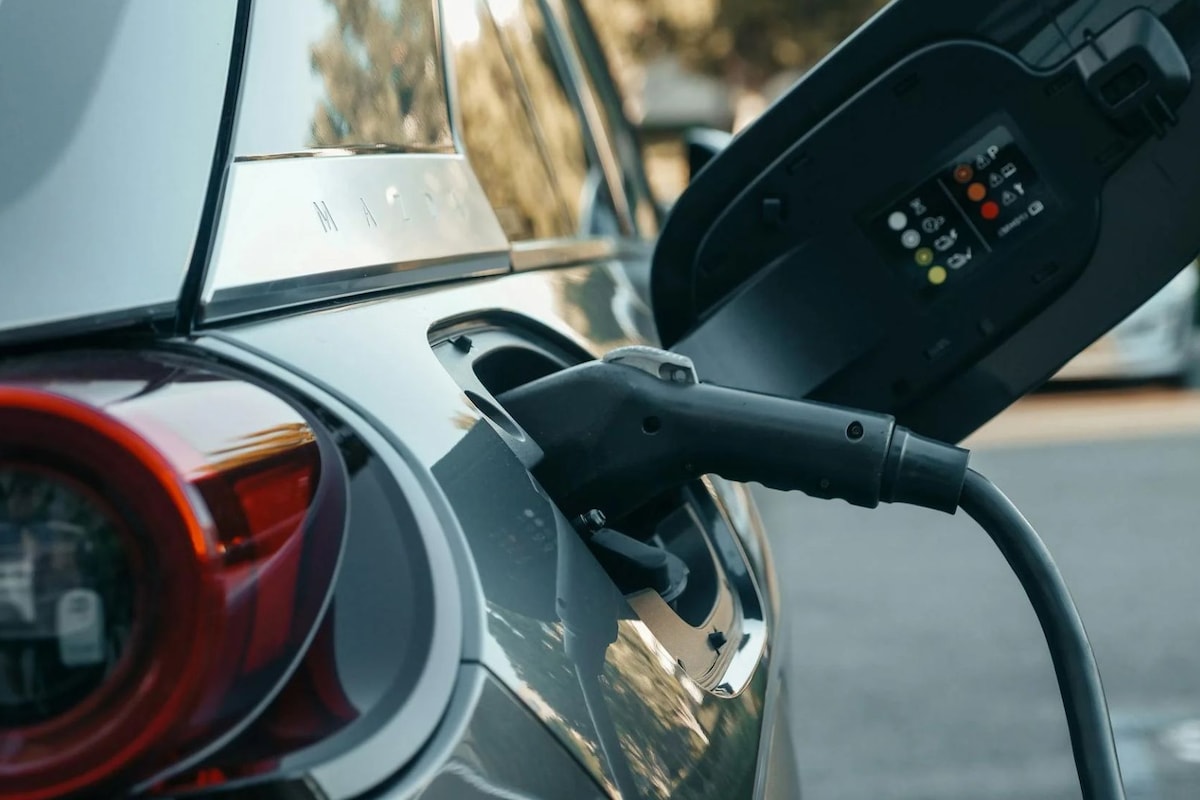
A major focus of the policy is the rapid expansion of EV charging infrastructure across Delhi.
Delhi Transco Limited has been designated as the nodal agency responsible for planning, implementation, and grid integration of the charging and battery-swapping network.
The draft proposes a single-window clearance mechanism to fast-track approvals, a unified digital platform for infrastructure management, and coordinated planning with land-owning agencies and district authorities to ensure optimal rollout and grid readiness.
Manufacturers will also be required to install charging points at dealerships to strengthen last-mile accessibility.
Battery Recycling, EPR, and Circular Economy Push
The policy places strong emphasis on sustainable battery management.
Delhi Pollution Control Committee will oversee the implementation of Extended Producer Responsibility (EPR) rules, battery collection systems, recycling frameworks, and safe disposal mechanisms.
A battery traceability system is also proposed to enable reuse and second-life applications, aiming to ensure that large-scale EV adoption does not create a parallel waste challenge.
OEM Rules, Digital System, and EV Fund
Original Equipment Manufacturers will be required to ensure adequate EV supply and set up charging infrastructure at dealerships, including a minimum number of charging points depending on vehicle category.
The entire system will be fully digital and paperless, covering applications, approvals, subsidy disbursal through Direct Benefit Transfer (DBT), and grievance redressal.
A dedicated EV Fund will be created to finance implementation, supported by state budget allocations, central government schemes including PM E-DRIVE, environmental charges, and other approved sources.
Institutional Framework For Execution
The Transport Department will serve as the nodal authority through a dedicated EV Cell, supported by an Apex Committee for monitoring and coordination.
Multiple agencies, including power, environment, and urban development departments, will be involved in implementation. District administrations will support land aggregation and infrastructure rollout, while regulatory bodies will oversee emissions monitoring and compliance.
Aim: Cleaner Air, Faster Transition To EVs
The policy is ultimately aimed at reducing vehicular emissions, which remain one of the largest contributors to Delhi's air pollution, especially during peak winter months.
By combining fixed electrification timelines, fiscal incentives, charging infrastructure expansion, and institutional reforms, the draft outlines a structured roadmap for a large-scale transition to electric mobility over the next decade.
Track Latest News Live on NDTV.com and get news updates from India and around the world
