

)
Acid reflux is an issue that can arise when excessive stomach acid builds up and flows into the esophagus. This can happen due to a poor diet, stress, or irregular meals, which can trigger acid reflux. The commonality of this issue is due to certain lifestyle habits that can trigger acid build-up. When overall digestive health is concerned, people need to consider how making the right dietary choices is necessary. One such dietary choice could be consuming an assortment of herbs that can reduce the acid build-up in the stomach.
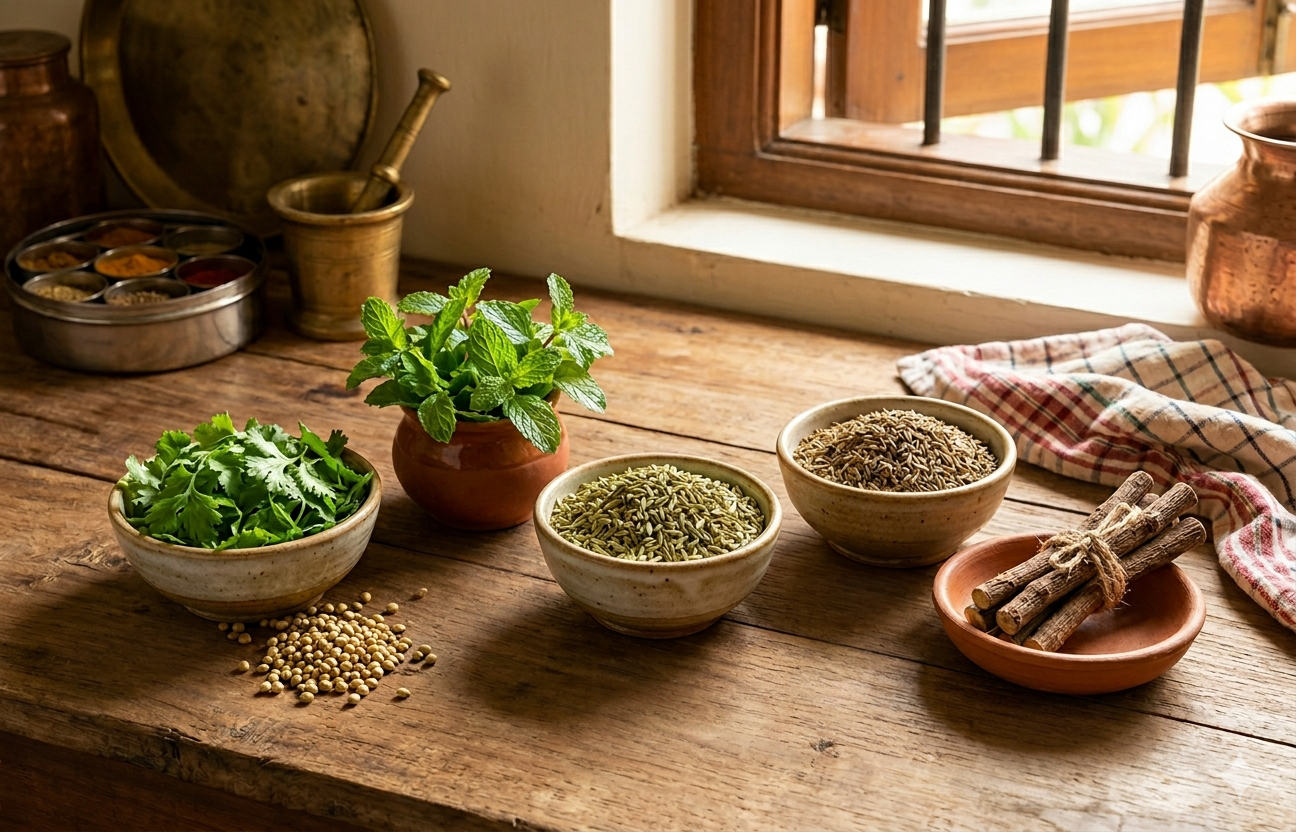
The Indian diet has various herbs that can help with reducing acid reflux. Namely, these are coriander, mint, cumin seeds, fennel, and liquorice root. But knowing how much dose is needed for relief, along with the timing and the duration of each, is necessary. To figure out if you need to consume these herbs and spices to get relief from acid reflux, you need to know why you should consume them as part of your daily routine.
Why Choose Indian Herbs And Spices For Acid Reflux Relief?
Consuming Indian herbs and spices that are scientifically proven to help with acid reflux could be a way to offer natural digestive support. But people need to understand that they also need to take medications if the acid reflux is too severe. After a doctor consultation and an evaluation of your medical history, you can safely consume certain herbs and spices in moderate doses as a supportive measure.
The most positive aspect of making these herbs and spices a part of your daily acid reflux-soothing routine is that they have fewer side effects compared to long-term medications. But the balance is needed according to a medical professional's advice.
5 Indian Herbs And Spices That May Help Reduce Acid Reflux
1. Dhaniya (Coriander)
The green herb, as well as the seeds from the coriander plant, are known to improve digestion and gut motility. This could reduce acid reflux episodes that tend to get triggered when the wrong food combinations are consumed.
Research published in Scientific Reports shows that Coriandrum sativum can enhance gastrointestinal movement and reduce gastric discomfort.
This matters, as when digestion becomes faster, it can reduce pressure buildup that can trigger acid reflux.
To safeguard your digestive health needs the green herb and whole beige seeds in moderation.
2. Pudina (Mint)
A review published in the International Journal of Research and Agricultural Reviews suggests that consuming mint could help relax intestinal muscles and reduce bloating. But it may also worsen reflux in some people by relaxing the lower oesophageal sphincter, so cautious use is advised. You need to regulate your dose and make sure how much mint is a part of your diet, and tweak your dietary consumption accordingly.
3. Saunf (Fennel Seeds)
Whole fennel seeds and fennel tea, which is prepared by soaking them, can reduce bloating, improve gastric emptying, and soothe the gut lining. The research published in the Nutrients journal highlights that fennel contains compounds (like anethole) that relax the gastric muscles and may support faster stomach emptying, thus reducing reflux triggers.
Neutral pH and mucosal protection can ease irritation that is caused by excessive build-up in the stomach.
4. Jeera (Cumin Seeds)
Cumin seeds, when consumed roasted or when soaked in water, could stimulate digestive enzymes and improve digestion at the same time. Research published in Food Chemistry details that cumin enhances enzyme secretion and gut motility, supporting better food breakdown and reducing reflux risk. But excess intake may stimulate acid production in sensitive individuals.
5. Mulethi (Liquorice Root)
Research mentioned in the Nutrient journal says that mulethi forms a protective mucus layer over the stomach and oesophagus, which protects from acid reflux. But some clinical trials suggest liquorice extracts improve gastric issues as well as symptoms by protecting the mucosa and aiding healing. But only a certain group of people can benefit from consuming it in controlled doses.
Also Read: A Gastroenterologist Explains Why Arbi Is Actually A 'Superfood' For Your Gut Microbiome
Gastroenterologist's Advice On Using Herbs And Spices Safely
Dr (Brig.) Pankaj Puri, Director, Gastroenterology and Hepatology, Fortis Escorts, Okhla, New Delhi, explains, "herbs and spices should be consumed in a safe manner and in controlled doses only, especially those with strong effects on the body." Here is what you should know:
- Herbs should complement but not replace medical treatment for acid reflux.
- Avoid overuse of herbal remedies that can combine and show side effects if consumed in large quantities.
- Consult a doctor for persistent acid reflux, as it may be related to a serious digestive issue.
Lifestyle Tips To Prevent Acid Reflux Naturally
To make sure you prevent acid reflux, you need to follow these lifestyle tips:
- Avoid spicy and oily foods, as they can trigger acid build-up.
- Eat smaller and more frequent meals to make sure you don't let the stomach build up acids due to hunger.
- Maintain a healthy weight for better digestion, as your gut health depends on your digestive health.
- Stay hydrated for improved gut health, as the digestive process needs proper support.
When To See A Doctor
You need to seek medical advice if you experience the following:
- Frequent or severe acid reflux symptoms that don't seem to go away.
- Difficulty swallowing, chest pain, or weight loss that can't be explained.
- Could indicate GERD or chronic digestive issues that need medical treatment.
So, making Indian herbs and spices a part of your diet in a safe manner could ease the issue of acid reflux. But to know which herb is needed in which dose, you need to consult a specialist who can help you.
Disclaimer: This content, including advice, provides generic information only. It is in no way a substitute for a qualified medical opinion. Always consult a specialist or your own doctor for more information. NDTV does not claim responsibility for this information.