





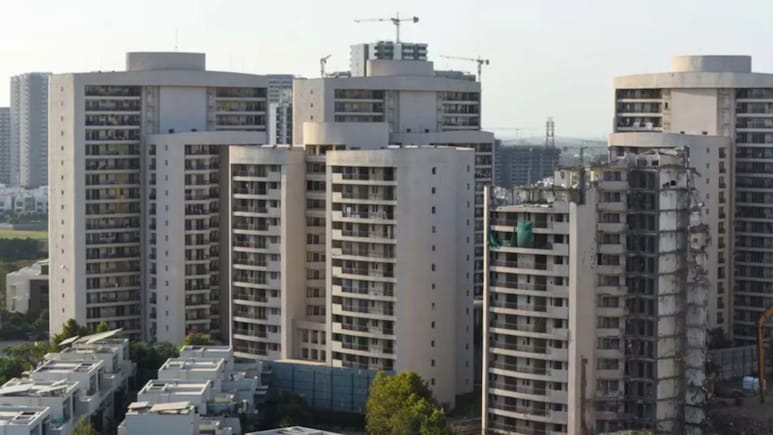
- Wealthy investors buy income-generating properties for immediate positive cash flow and appreciation
- They identify emerging locations early by tracking infrastructure and economic development projects
- Leverage is used prudently to control large assets and amplify returns without undue risk
Property isn't just an investment for the wealthy. It's a system for creating income, preserving wealth and building a legacy.
For many people, the formula for making money in real estate seems straightforward. Buy a property, hold it for a few years and sell it when prices rise.
But that isn't how most wealthy investors approach the market.
For India's affluent families, real estate is far more than a bet on rising property prices. It is a carefully planned strategy that combines recurring income, long-term appreciation, wealth preservation and intergenerational planning.
"Real estate is one of the most trusted tools for creating and preserving wealth across generations," says Dipesh Garg, Co-founder and Real Estate Advisor at SouthDelhi1. According to him, high-net-worth investors view property as a long-term wealth creation vehicle rather than a short-term investment.
And the numbers suggest their conviction is not misplaced.
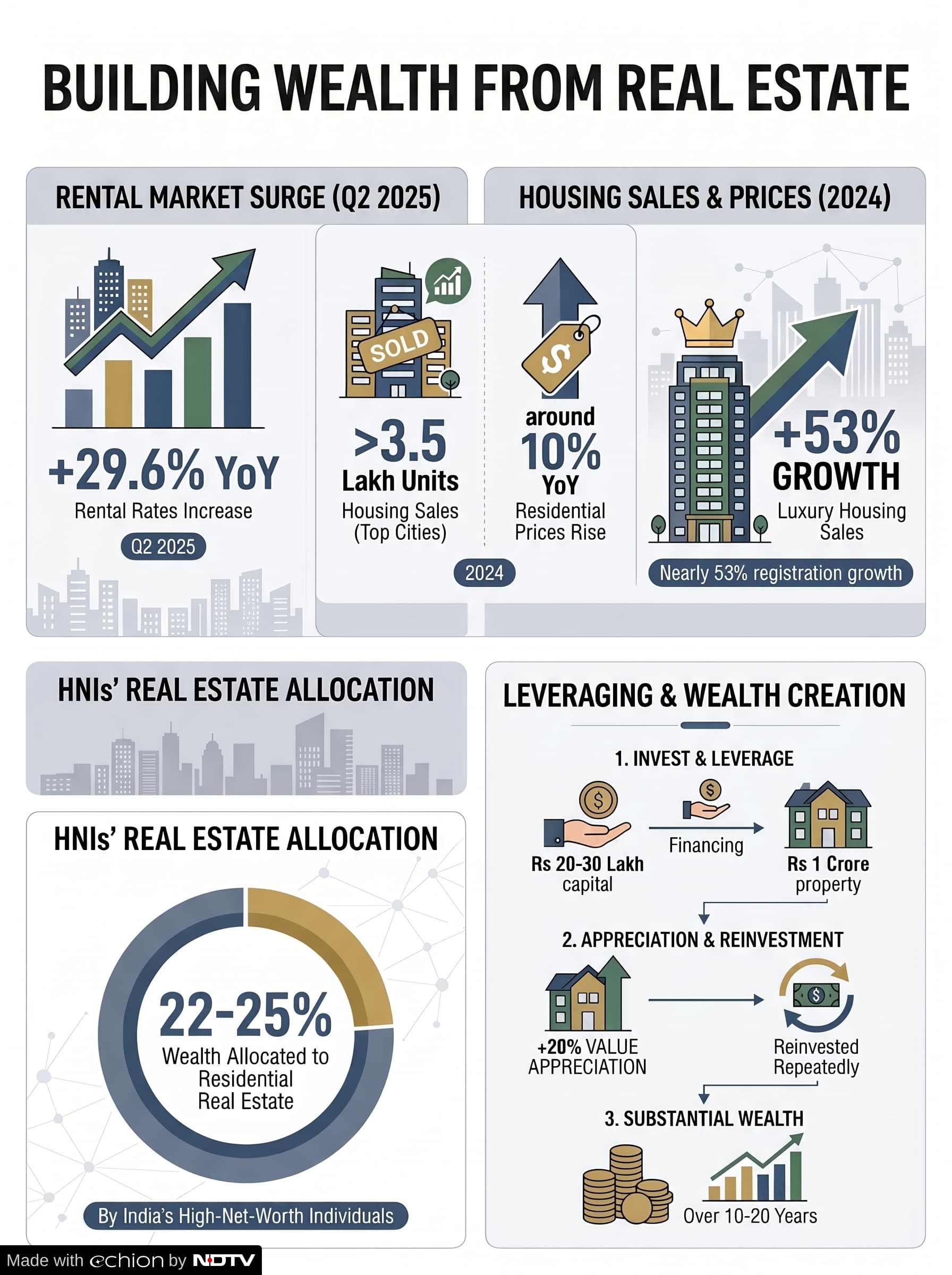
According to Aman Sharma, Managing Director and Founder of Aarize Group, India's rental housing market recorded a 29.6 per cent year-on-year increase in rental rates during the second quarter of 2025. Housing sales across the country's top cities crossed 3.5 lakh units in 2024, while residential prices rose around 10 per cent year-on-year. The luxury housing segment, meanwhile, registered nearly 53 per cent growth in sales.
The question is: what exactly are wealthy investors doing differently?
They Buy Income, Not Just Property
One of the biggest misconceptions about real estate investing is that wealthy people simply buy homes and wait for prices to climb.
According to Vijay Raundal, Managing Director of Teerth Realties, the wealthy focus on assets that generate income from day one. "People often believe rich investors create wealth by buying a property and waiting for appreciation. In reality, they buy income-generating properties that start producing positive cash flows immediately," he says.
Rental income becomes an additional source of earnings, while property appreciation acts as a second engine of wealth creation.
This approach creates a powerful compounding effect. Income generated from rent can be used to cover expenses, service loans or acquire additional assets. Over a period of 10 to 20 years, those cash flows can be reinvested repeatedly, creating substantial wealth.
Garg agrees. He says rental income from residential, commercial or mixed-use properties creates a dependable stream of earnings while the underlying asset continues to appreciate.
That combination of cash flow and capital growth is one of the key reasons real estate remains central to many wealth-building strategies.
The Rich Invest Before Everyone Else Notices
Successful real estate investing is often less about timing the market and more about identifying the right location early.
That's where wealthy investors tend to stand apart.
Sandeep Mangla, Managing Director of Forteasia Realty Pvt. Ltd., says affluent investors focus on future growth rather than current popularity.
Instead of chasing hot markets, they closely monitor infrastructure projects, transportation networks, industrial corridors, commercial developments and employment hubs.
The logic is simple. New roads, metro lines, airports and business districts attract people. People create housing demand. Housing demand drives property values higher.
"Once infrastructure projects or job centres are announced, demand for nearby real estate often follows," Mangla explains.
Garg echoes this point, noting that wealthy investors prioritise locations with improving connectivity, growing business activity and strong infrastructure because these factors can steadily increase property values over time.
Importantly, these decisions are usually backed by data rather than emotion. Population growth trends, migration patterns, rental demand and local development plans often play a bigger role than market hype.
They Use Debt As Wealth Multiplier
Another advantage wealthy investors have is their understanding of leverage.
According to Anurag Goel and Gunjan Goel, Directors of Goel Ganga Developments, real estate allows investors to control large assets with relatively modest upfront capital.
An investor may contribute Rs 20-30 lakh and acquire a Rs 1 crore property through financing. If the property's value appreciates by 20 per cent, the gains generated on the investor's original capital can be significantly amplified.
At the same time, rental income can help offset loan repayments.
But leverage is not used recklessly.
The Goels stress that successful investors carefully assess whether rental income and future cash flows can comfortably support ownership costs. Debt is viewed as a tool to acquire more assets, not as a shortcut to speculation.
Used responsibly, leverage can accelerate wealth creation without exposing investors to unnecessary risk.
Real Estate Protects Wealth During Uncertain Times
Creating wealth is important. Keeping it is equally important.
That is one reason property remains a favourite among affluent families.
According to Akash Pharande, Managing Director of Pharande Spaces, high-quality real estate has historically shown resilience during periods of economic uncertainty.
Unlike many financial assets that can experience sharp swings, property often benefits from rising rents and asset values over time. This helps investors maintain purchasing power and protect wealth against inflation.
"Real estate can act as both an anti-inflationary tool and a safe investment during uncertain periods," Pharande says.
Many wealthy families therefore build diversified portfolios that include residential, commercial and income-generating properties. Multiple asset types create multiple streams of income while reducing dependence on any single market segment.
Garg points out that this diversification also helps investors reduce reliance on market-linked assets and creates a buffer during periods of volatility.
Building Wealth Across Generations
For many wealthy families, the ultimate objective is not simply growing net worth. It is creating a legacy.
Pharande notes that real estate offers something few other assets can provide: a tangible asset that can be passed from one generation to the next.
Some families even establish structured ownership arrangements to ensure a smooth transfer of property and wealth across generations.
Garg believes this is one of real estate's biggest strengths. "Real estate is a tangible asset that can help families preserve and grow wealth over decades," he says.
This long-term mindset explains why property remains such a significant component of affluent portfolios.
According to Sharma, India's high-net-worth individuals allocate roughly 22-25 per cent of their wealth to residential real estate. Beyond appreciation, investors value the stability, income generation and wealth preservation that property can provide.
More Than An Investment
Despite the emergence of new-age investment options, real estate continues to hold a special place in the portfolios of wealthy investors.
The reasons are straightforward.
It generates rental income. It appreciates over time. It provides protection against inflation. It enables the intelligent use of leverage. And it can be passed on to future generations.
As infrastructure development continues to unlock new growth corridors across India, these advantages are likely to remain relevant for years to come.
For the wealthy, real estate is rarely about buying a property and hoping for the best.
It is about building a system that generates income, compounds wealth and creates lasting value for future generations. That is why, even in a rapidly changing financial world, property continues to be one of the most enduring pillars of long-term wealth creation.
Track Latest News Live on NDTV.com and get news updates from India and around the world

