





The fallout of the US-Iran conflict is no longer confined to oil markets and shipping lanes. It is now showing up at construction sites across India.
Developers say construction costs have surged by as much as 25 per cent since the escalation in hostilities. This has put pressure on project budgets and threatening delivery timelines. The impact is being felt across the supply chain -- from steel and electrical components to fuel, logistics and labour.
The concern is not just rising costs. In several cases, builders say critical materials are becoming difficult to procure at any price.
"Construction costs have risen by over 25 per cent since the onset of hostilities," said Shekhar Patel, President of CREDAI. According to him, the bigger challenge is availability. Certain key materials are simply not accessible in the market, creating a situation the sector has rarely faced before.
The disruption is forcing developers to rethink procurement strategies, accelerate domestic sourcing and reshuffle construction schedules to keep projects moving.
Sales Remain Robust, But Concerns Persist
The pressure comes at a time when India's housing market has been enjoying a strong run. Residential sales have remained robust in major cities over the past three years, supported by rising incomes, urbanisation and strong end-user demand. But industry executives warn that demand alone cannot offset a sharp increase in input costs.
"What's different this time is the breadth of the disruption," said HS Kandhari, Executive Director of Harmony Infra Developers. "Energy, shipping, raw materials and currency are all moving against you simultaneously."
Kandhari noted that when the Strait of Hormuz comes under stress, India's construction cost structure can change almost overnight because of the country's dependence on Gulf energy supplies and imported raw materials. The impact extends beyond company balance sheets, he said, eventually reaching homebuyers through project delays and higher prices.
US-Iran War: Impact Visible On Ground
Several developers say supply chain disruptions are already becoming visible on the ground.
Abhijith Ramapriyan, CEO of buildAhome, said project costs in some segments have witnessed upward pressure of 20-25 per cent in recent weeks. Steel and electrical components have been among the worst affected due to raw material shortages, import dependence and rising logistics expenses.
Imported tiles, premium fittings and specialised products are also becoming more expensive and harder to source within expected timelines. At the same time, higher diesel and fuel costs have pushed up transportation expenses for cement, sand and aggregates.
The squeeze is not limited to imported materials.
As supply shortages shift demand toward domestic manufacturers, local suppliers are also revising prices more frequently. Ramapriyan said fluctuating exchange rates are adding another layer of uncertainty for projects that rely on imported products, while labour costs have risen because of increasing travel and living expenses.
Iran War Hits Real Estate Sector: Labour Shortage
Developers are also reporting workforce challenges.
Patel said labour migration trends have started reversing in some regions as fuel shortages affect mobility and living costs. This has created a dual challenge of material shortages and manpower constraints.
Deepak Kapoor, Director at Gulshan Group, said contractors and subcontractors are increasingly invoking force majeure conditions because procurement bottlenecks and labour shortages are beyond their control.
"Steel, petrochemical-linked products and specialised finishes are not just more expensive but sometimes simply not available," Kapoor said, adding that developers are reworking procurement pipelines and increasing domestic sourcing efforts to protect delivery schedules.
The financial implications could be significant if the disruption persists.
Pranndeep Singh, Managing Director and Founder of White Flower Developers, estimates that soaring crude prices have increased domestic transport and logistics costs by 15-18 per cent, while disruptions in global shipping routes have pushed prices of structural steel and imported finishing materials up by nearly 30 per cent.
According to Singh, developers are already facing pressure on project economics as raw material volatility erodes margins. Many are being forced to renegotiate vendor contracts or slow procurement to absorb sudden price shocks.
The result could be delays across the sector.
Iran War Impact: Delays In Project Timelines
Singh warned that delivery schedules for ongoing projects could slip by four to six months across both mid-segment and luxury housing developments if current conditions continue.
The industry is also worried about the eventual impact on homebuyers.
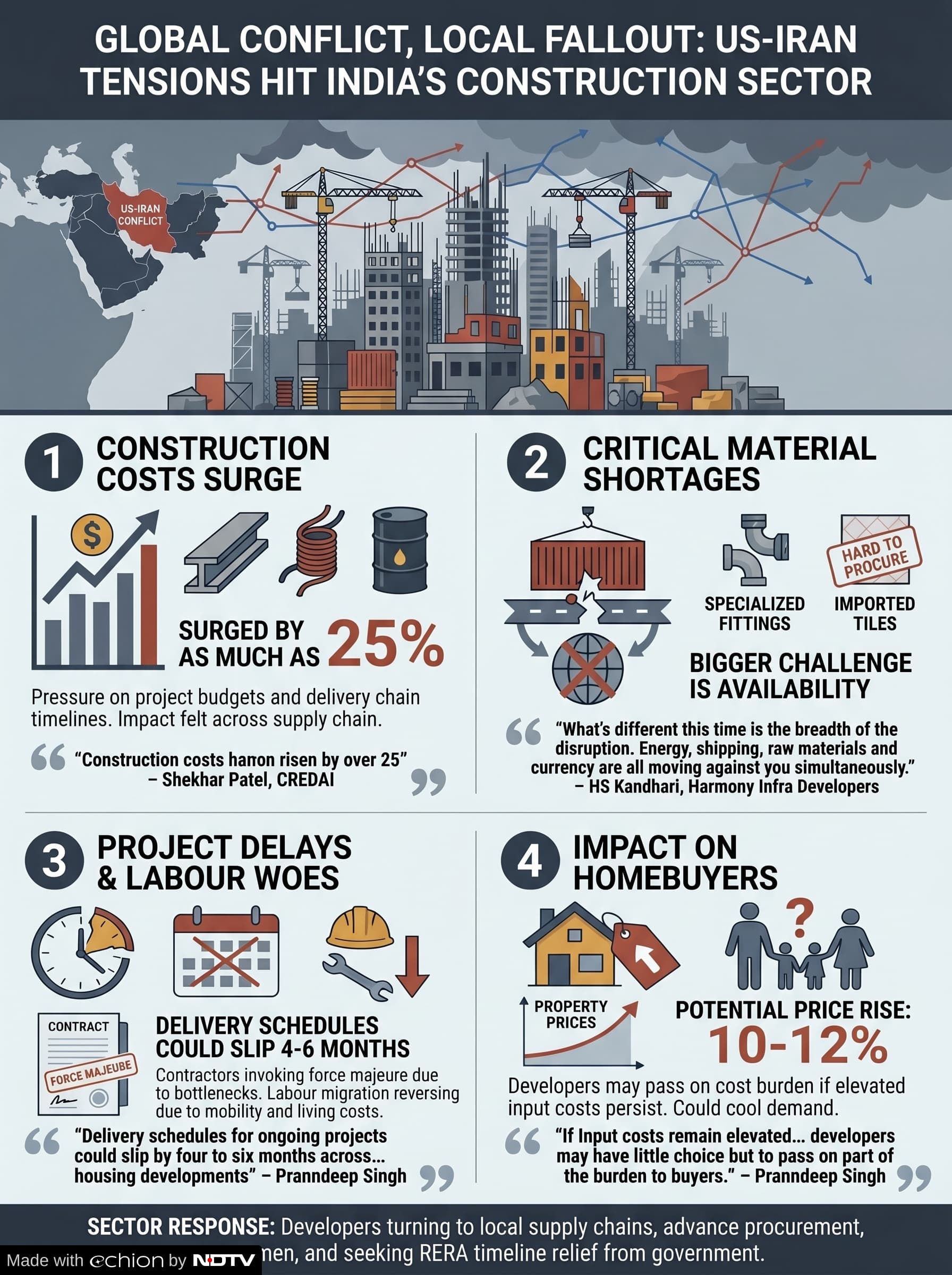
If input costs remain elevated for another quarter, developers may have little choice but to pass on part of the burden to buyers. Singh estimates property prices could rise by 10-12 per cent, potentially cooling demand just as the market was gathering momentum.
To manage the situation, developers are increasingly turning to local supply chains, advance procurement and tighter cost controls. Industry bodies are also seeking policy support.
CREDAI has approached the Union Housing Ministry seeking appropriate RERA timeline relief, arguing that developers and homebuyers should not be penalised for delays arising from extraordinary global events.
For now, the sector remains cautiously optimistic. Housing demand continues to hold up, and developers believe stronger balance sheets and better operational discipline than in previous cycles will help them weather the storm.
But if the conflict drags on and supply disruptions deepen, India's real estate sector may soon face a difficult choice: absorb higher costs, delay projects, or pass the burden on to homebuyers.
Track Latest News Live on NDTV.com and get news updates from India and around the world

