

)
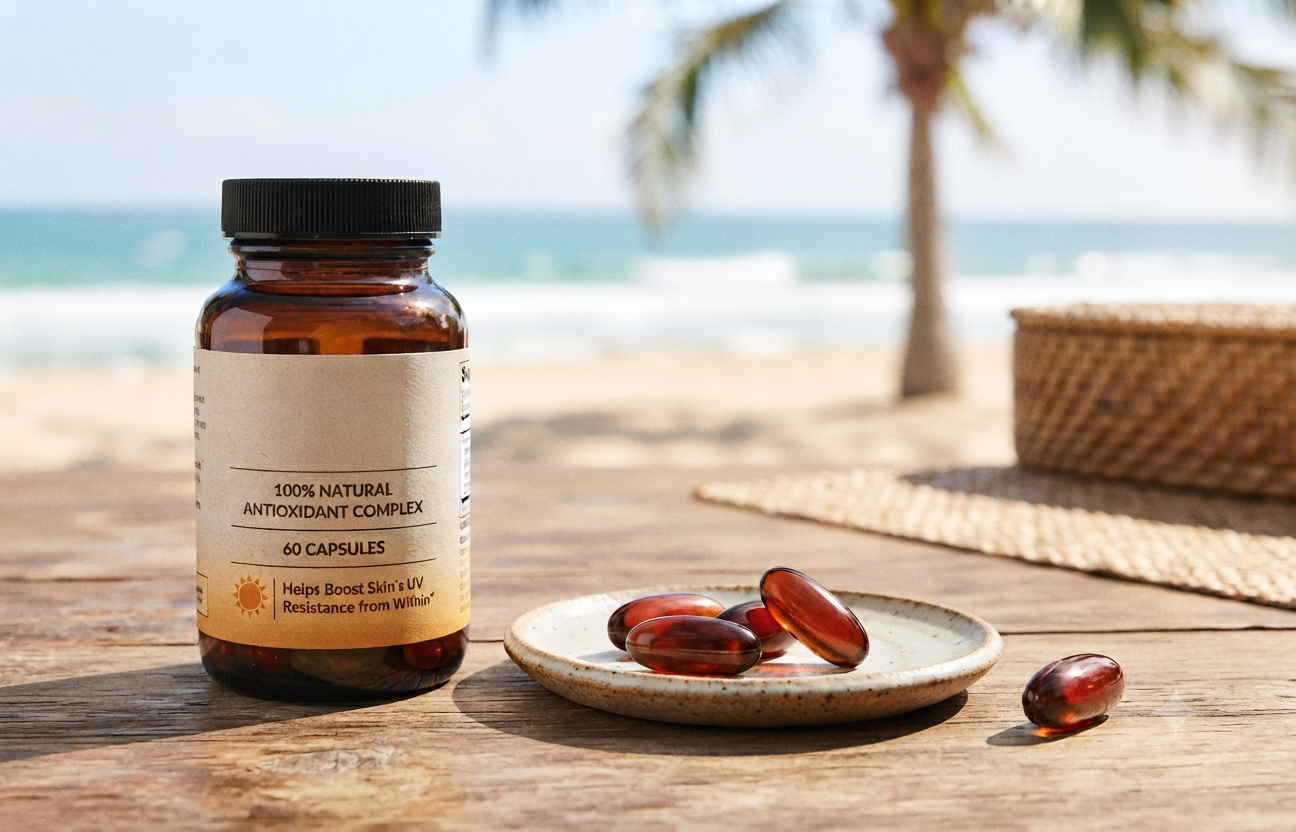
Sunscreen pills are the trending supplement to hit the market, as they are believed to increase your sun protection from within. These products claim to offer sun protection without applying sunscreen, but are they really effective is the real question. While there is clinical evidence validating some claims, such as "systemic photoprotection" or oral sun protection supplements may help with some antioxidant capabilities, but they do have limits. On the other hand, topical application of sunscreen is proven for protecting the skin especially after ultraviolet ray exposure.
Traditional sunscreen is best for regulating the harmful effects of the sun's rays, but a supplement can't replace it. The top-most layer of the skin needs constant help from the external application of sunscreen on a daily basis. This is important, as the exposure to the sun's rays can increase the chances of developing skin disorders such as skin pigmentation, skin cancer, blemishes, or dark spots.
What Are Sunscreen Pills?
Sunscreen pills are oral sunscreen supplements that contain multiple ingredients that work to provide internal protection from the sun. Specifically, ingredients such as:
- Polypodium leucotomos extract
- Beta-carotene
- Lycopene
- Vitamins C and E
- Astaxanthin
These ingredients may help reduce the effects of oxidative stress that is caused by UV exposure. But the science on this is patchy, as the skin needs topical application to avoid possible sun damage.
Can You Really "Eat Your Sunscreen"?
Dr Gurveen Waraich, Dermatologist, and Dr Lipy Gupta, Consultant Dermatologist, Max Super Speciality Hospital, Delhi, explain why you can't eat your sunscreen. They explain, "There is currently no pill that can provide sun protection on a level that is equivalent to sunscreen's SPF protection factor." This is because sunscreen supplements can't block UV rays like topical sunscreen, as it has a formulation that serves this purpose.
They may offer supportive benefits, but cannot prevent sunburn on their own. Sunscreen is needed to protect the skin from issues that can damage the epidermis ( top most layer of the skin).
Why Dermatologists Warn Against Relying On The Topmost Pills
Complete reliance on oral supplements for sun protection can prove dangerous, as your skin needs applied sunscreen that dodges the sun's rays. If someone solely relies on sunscreen pills, then these risks can become serious health concerns:
- Increased UV exposure
- Higher risk of sunburn
- Premature skin ageing
- Hyperpigmentation
- Greater skin cancer risk
Dr Lipy Gupta explains, "As soon as summer sets in, sun tanning, pigmentation, and development of sunburn freckles are commonly seen. Proper use of sunscreen can prevent you from all this."
She adds, "Sunscreen should be selected according to skin type and applied in sufficient quantity to cover all exposed areas."
"Reapplication is important because a single application does not provide day-long protection. Dr Gupta recommends reapplying sunscreen every 3 to 4 hours," advises Dr Gupta.
What The Research Says About Oral Sunscreen
Currently, there are some studies that show oral sunscreen pills have antioxidant properties, helping reduce oxidative damage. Research published in the Archives of Dermatological Research Journal suggests that oral pills don't protect your skin from sunburn.
There is no clear clinical evidence linking oral sunscreen pills and sun protection benefits.
Note: Limited benefits are related to antioxidant dose, not direct sun protection benefits.
Who Might Benefit From Oral Sun Protection Supplements?
Oral sun protection supplements may help certain people who suffer from challenges that could prevent them from getting sun protection from direct sunscreen use. These people can be classified under the following:
- Those with photosensitivity conditions
- Individuals with melasma
- Outdoor workers
- Frequent travellers
Oral sunscreen pills should be used as a supportive remedy to topical sunscreen application. A broad-spectrum sunscreen should be used for effective sun protection, along with protective clothing, as well as shade-seeking behaviors, which can offer complete skin protection.
The Right Way To Protect Yourself From Sun Damage
Damage from the sun's ultraviolet rays can become damaging when it leads to possible skin health issues. Dr Lipsy Gupta highlights, "Regular sunscreen use is essential to prevent tanning, pigmentation, and sun damage, reinforcing the regular consensus that topical sunscreen remains a fundamental tool for ultraviolet protection."
- Apply Broad-Spectrum SPF 30 but the exact sun protection factor should depend on your skin type and the concentration of melanin in your skin.
- It needs to be reapplied every two hours for sun protection.
- Wear protective clothing as using these protective measures can help reduce the possibility of skin issues due to sun exposure.
You need to use:
- Hats to keep your face and neck protected
- Full sleeves reduce the surface area of the skin that can be absorbed by the skin
- UV-blocking sunglasses to protect your eyes as well
- Avoid peak UV hours that last from 10:00 a.m. to 4 p.m
- Seek shade whenever possible as the exposure needs to be minimised
- Consider oral supplements only as a supportive aid
Warning Signs Of Too Much Sun Exposure
If you are getting too much sun exposure, then your body can suffer from symptoms such as the following:
- Redness
- Burning skin
- Blistering
- Excessive tanning
- New moles
- Changes in existing moles
When To See A Dermatologist
A skin specialist needs to look at your skin barrier and assess the damage after looking at it through specialised equipment. Current skin damage influences dermatological needs and those with the following:
- Persistent sun damage
- Suspicious skin lesions
- Repeated severe sunburns
Need to apply effective sunscreens for better skin protection and control the damage. Sunscreen pills may support skin health, but are not a substitute for SPF sunscreen.
Also Read: Are You Applying Sunscreen Correctly? The '2-Finger Rule' Every Dermatologist Wants You To Follow
Disclaimer: This content including advice provides generic information only. It is in no way a substitute for a qualified medical opinion. Always consult a specialist or your own doctor for more information. NDTV does not claim responsibility for this information.