

)
As protein supplements continue to gain popularity, many continue to wonder whether collagen can replace the protein they get from everyday foods. While collagen is often praised for promoting healthy skin, hair and joints, according to nutritionist Rashi Chowdhary, it should not be viewed as a substitute for a balanced, protein-rich diet.
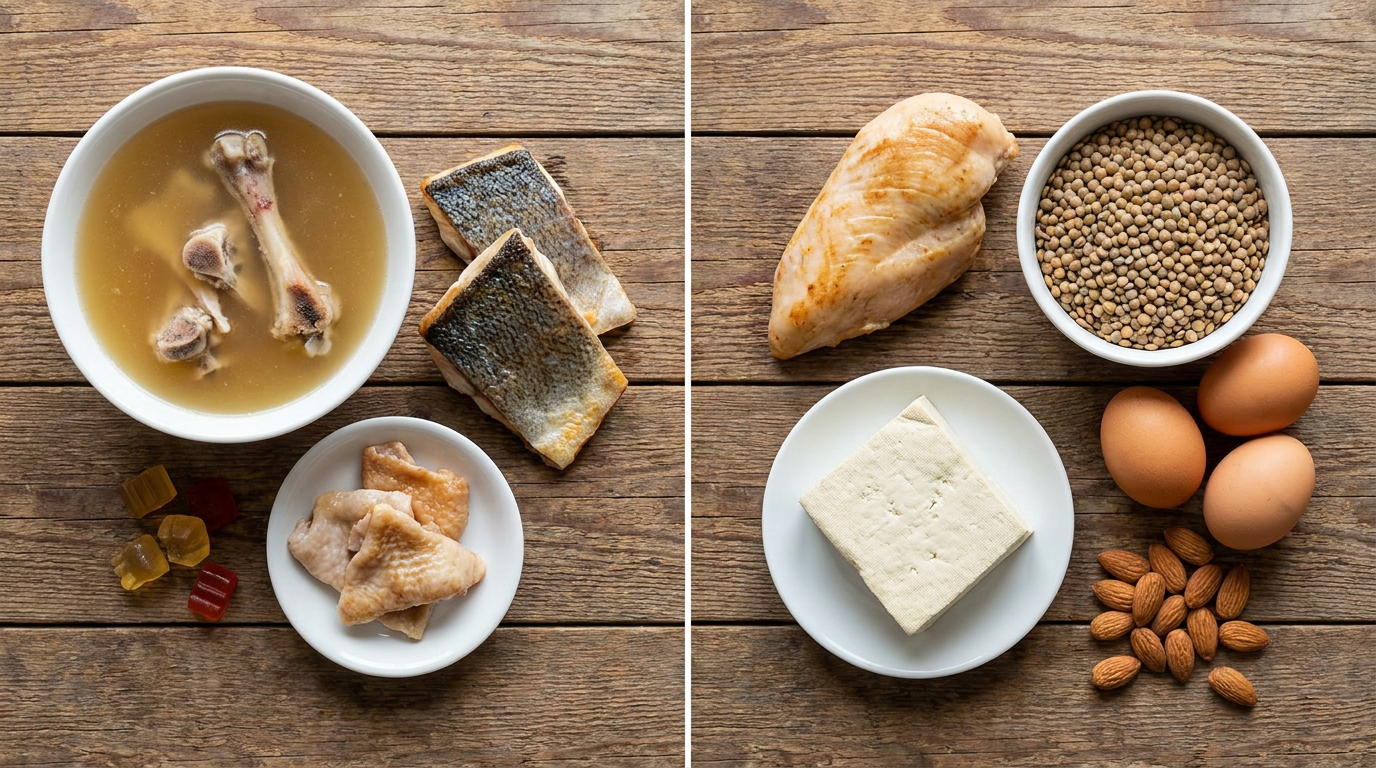
Explaining how collagen protein differs from food-based protein and why understanding the distinction matters, she shares, “When your collagen says '8 grams of protein' on the label, that does not mean it behaves the same way as 8 grams of protein from fish or eggs.” Stating that collagen is great for skin, hair, joints, and gut lining, she revealed that it is not a great option for muscle building.
Talking about why collagen does not work well for muscle building, she explains, “It does not have enough essential amino acids that your body needs to trigger muscle protein synthesis, especially tryptophan.”
Answering the most common questions of people, she shares our everyday foods, including dal, lentils, beans, and chickpeas, which are also sources of protein and contribute to daily protein intake. However, the catch is that they are not as protein-dense or anabolic as eggs, fish, tofu, meat, or edamame.
Calling collagen a “targeted protein", she explains, “It is a connective tissue protein. If your goal is skin, hair, tendons, and joints, then collagen can be really useful for you, but if your goal is muscle, metabolism, strength, and body composition, please do not make collagen your main protein source.”
She also adds that if someone's goal is both, they should eat foods like a collagen smoothie, 200 grams of edamame, 7 whole boiled eggs, and 200 grams of salmon, which will provide 120 grams of protein a day. Lastly, she stresses that people should not ask themselves how much protein they are eating; instead, they should ask themselves what kind of protein they are eating.
Disclaimer: This content including advice provides generic information only. It is in no way a substitute for a qualified medical opinion. Always consult a specialist or your own doctor for more information. NDTV does not claim responsibility for this information.