

)
Heart health plays an important role in your overall health and well-being. People living with heart conditions often need to make healthy lifestyle changes alongside their medical treatment. Regular physical activity, a balanced diet, proper sleep, and stress management, all work together to improve heart health. Yoga can be a safe and calming way to stay active, improve flexibility, and better breathing when practiced with guidance.
One of the biggest benefits of gentle yoga poses is its ability to reduce stress and promote relaxation, both of which are important for heart health. Slow movements combined with deep and controlled breathing can help improve circulation, ease muscle tension, and support overall well-being without putting too much strain on the body. Here are some yoga poses for cardiac patients that can improve heart health.
Yoga Poses For Healthy Heart
1. Mountain Pose (Tadasana)
Mountain Pose is a simple standing pose that helps improve balance and body alignment. Stand with your feet together or slightly apart, keeping your arms relaxed by your sides. Breathe deeply while standing tall. This pose encourages good posture, improves body awareness, and supports steady breathing. It also helps reduce unnecessary tension in the shoulders and back.
2. Easy Pose (Sukhasana)
Easy Pose is a comfortable seated position that helps in relaxation and mindful breathing. Sit cross-legged on the floor or on a cushion with your back straight and shoulders relaxed. Place your hands on your knees and take slow, deep breaths. This pose helps calm the mind, lowers stress levels, and encourages better oxygen flow. Since stress can affect heart health, practicing this pose may help cardiac patients.
3. Cat-Cow Pose (Marjaryasana-Bitilasana)
Cat-Cow Pose is a gentle movement that improves flexibility in the spine while encouraging deep breathing. Begin on your hands and knees. As you inhale, lift your head and chest while lowering your belly (Cow Pose). As you exhale, round your back and tuck your chin (Cat Pose). Move slowly with your breath. This pose improves spinal mobility, reduces stiffness, and helps coordinate breathing with movement.
4. Child's Pose (Balasana)
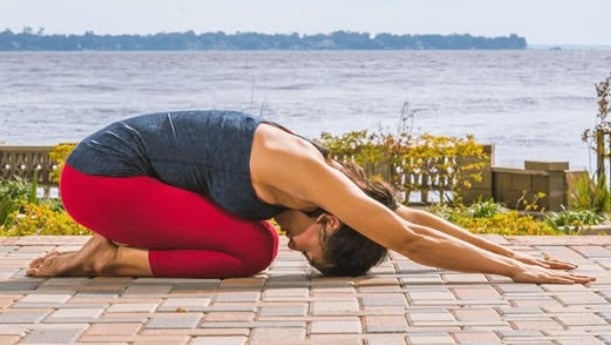
Child's Pose is a relaxing posture that allows the body to rest. Kneel on the floor, sit back on your heels, and gently stretch your arms forward while lowering your chest. Rest your forehead comfortably. If needed, place a cushion under your chest or head for support. This pose helps release tension, promotes calm breathing, and reduces mental stress.
5. Seated Forward Bend (Modified Paschimottanasana)
A modified seated forward bend can gently stretch the back and legs without causing strain. Sit with your legs comfortably extended or slightly bent. Slowly lean forward from your hips only as far as it feels comfortable while keeping your breathing smooth. Avoid forcing the stretch. This pose encourages relaxation, improves flexibility, and may help reduce muscle tightness. Cardiac patients should always perform this pose gently and stop if they feel discomfort or dizziness.
6. Legs-Up-the-Wall Pose (Viparita Karani)
This pose is excellent for relaxation. Sit close to a wall and gently swing your legs up so they rest against the wall while your back lies comfortably on the floor. Place a folded blanket under your hips if needed for comfort. Stay in the position for a few minutes while breathing slowly. This pose helps reduce fatigue, encourages relaxation, and may improve blood circulation in the legs.
7. Corpse Pose (Savasana)
Corpse Pose is one of the most important relaxation poses in yoga. Lie flat on your back with your arms slightly away from your body and your legs comfortably apart. Close your eyes and focus on slow and natural breathing. Allow every part of your body to relax. This pose helps reduce stress, supports mental calmness, and may help lower heart rate after exercise.
Disclaimer: This content including advice provides generic information only. It is in no way a substitute for a qualified medical opinion. Always consult a specialist or your own doctor for more information. NDTV does not claim responsibility for this information.