

)
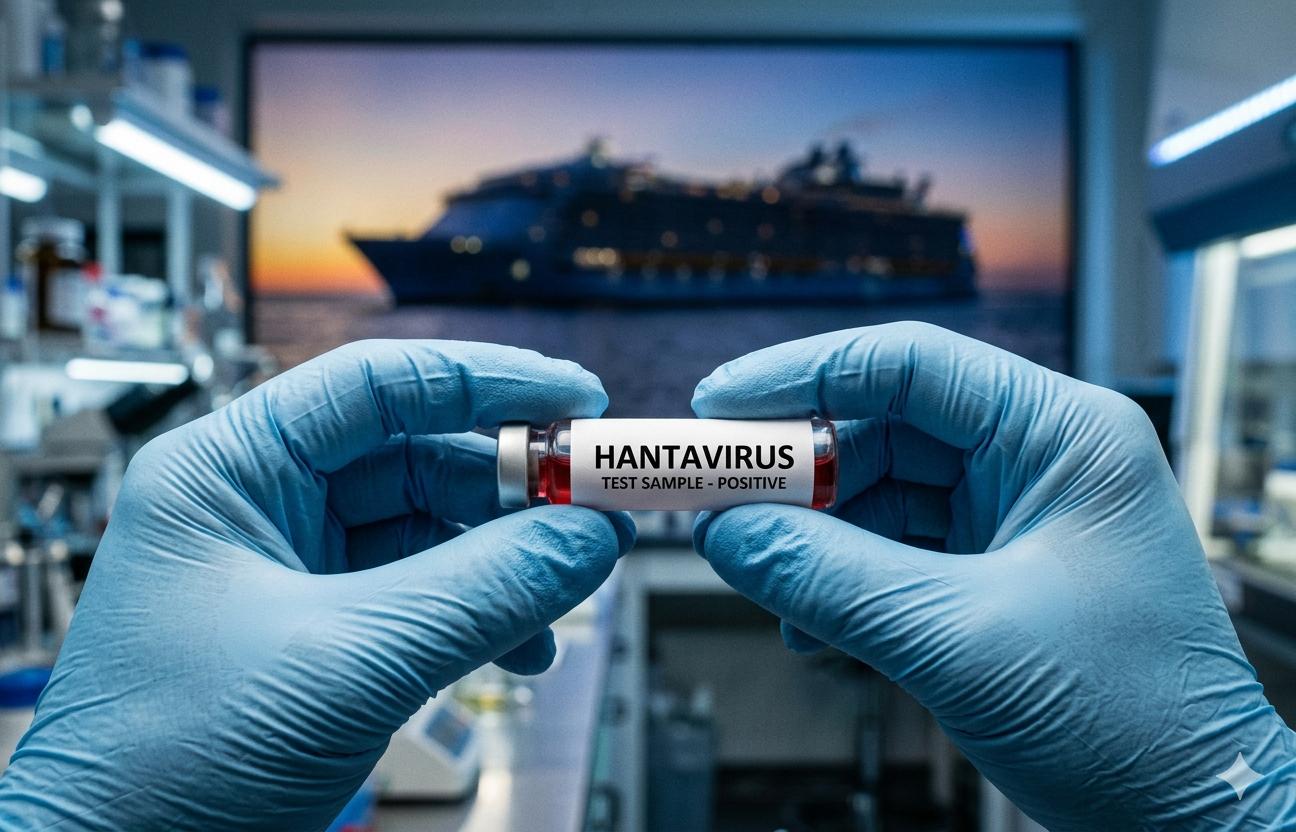
The Union Health Ministry has activated precautionary surveillance and monitoring measures after multiple hantavirus infections and three deaths were reported aboard the Dutch cruise ship MV Hondius. According to senior government officials, India is closely tracking the evolving international situation in coordination with the National Centre for Disease Control (NCDC), Integrated Disease Surveillance Programme (IDSP), World Health Organization (WHO), and other global health agencies. The outbreak has drawn international attention because the virus involved is the Andes strain of hantavirus, the only known hantavirus strain associated with limited human-to-human transmission. WHO has confirmed that five of the eight suspected cases onboard have tested positive for the virus.
Indian authorities said two Indian nationals currently onboard the vessel are asymptomatic and under observation as part of international health protocols. Officials stressed that WHO currently considers the broader public health risk to be low, although surveillance efforts remain active due to the virus's long incubation period and ongoing epidemiological investigations.
India Activates Precautionary Surveillance Measures
According to a senior Union Health Ministry official, India has initiated precautionary preparedness measures under its public health surveillance framework while maintaining close coordination with international authorities.
The Ministry said the Public Health Emergency Operations Centre (PHEOC) under IDSP-NCDC convened a high-level review meeting involving senior officials from the Integrated Disease Surveillance Programme and India's International Health Regulations National Focal Point (IHR-NFP).
Officials reviewed surveillance preparedness, monitoring systems, and coordination mechanisms related to the outbreak. The government said the situation is being monitored through the International Health Regulations (IHR) framework coordinated by the WHO.
Also Read: Hazmat Suits On, Health Authorities Evacuate Suspected Hantavirus Patients From Cruise Ship
Five Confirmed Cases, Three Deaths Reported
According to preliminary information shared with India through the WHO channels, eight probable hantavirus infections have been reported onboard the MV Hondius so far, of which five cases have been laboratory confirmed.
Three deaths linked to the outbreak have also been reported. WHO was formally notified of the incident during the first week of May. The outbreak aboard the Dutch expedition vessel has involved passengers and crew from multiple countries, prompting coordinated international contact tracing and surveillance efforts.
Two Indian Nationals Onboard
Health Ministry sources confirmed that two Indian nationals are currently onboard the vessel. "Both individuals are presently asymptomatic and are under observation in accordance with established international health protocols," a senior official said.
The Ministry stated that necessary public health precautions are being proactively undertaken to safeguard Indian citizens. Officials have not indicated any suspected infection among the two Indian nationals at this stage.
What Is Andes Hantavirus?
According to the World Health Organization (WHO), hantaviruses are primarily spread through exposure to infected rodents, including their urine, saliva, and droppings. The strain linked to the MV Hondius outbreak is the Andes hantavirus strain, found mainly in parts of South America. WHO says the Andes strain is scientifically important because it is the only hantavirus with documented evidence of limited human-to-human transmission, typically requiring close and prolonged contact.
Unlike respiratory viruses such as Covid-19 or influenza, hantavirus does not spread easily through casual interaction or brief exposure. WHO infectious disease epidemiologist Maria Van Kerkhove recently stated that "this is not Covid; this is not influenza; it spreads very, very differently."
WHO Assesses Global Risk As Low
The Union Health Ministry said WHO currently considers the broader public health risk associated with the outbreak to be low. However, the WHO has cautioned that additional cases may still emerge because hantavirus infections can have relatively long incubation periods.
According to the US Centers for Disease Control and Prevention (CDC), hantavirus symptoms may initially resemble flu-like illness, including fever, muscle aches, and fatigue, before progressing to severe respiratory complications in serious cases.
WHO is currently coordinating international response measures under the IHR mechanism, including:
- Diagnostic support
- Epidemiological assessment
- Passenger monitoring
- Safe disembarkation protocols
- International travel coordination
Also Read: The First-Ever Hantavirus Outbreak With Human-To-Human Spread Happened In 2018; Here's How It Ended
Why Surveillance Matters
Public health experts say surveillance becomes especially important during outbreaks involving rare zoonotic viruses with limited human-to-human transmission potential. The World Health Organization - International Health Regulations (IHR) framework is designed to help countries rapidly share outbreak information and coordinate global response measures.
India's Integrated Disease Surveillance Programme and NCDC routinely monitor international outbreak alerts to assess potential domestic health implications. Health experts say early surveillance helps strengthen preparedness even when overall risk remains low.
No Evidence Of Widespread Transmission
WHO and infectious disease specialists continue to emphasise that the current outbreak is not comparable to the Covid-19 pandemic. The virus spreads far less efficiently than airborne respiratory viruses and typically requires close, prolonged contact for transmission.
India's decision to activate precautionary surveillance measures reflects growing global attention on the hantavirus outbreak aboard the MV Hondius, even as the WHO maintains that the broader public health risk remains low. With two Indian nationals onboard, currently asymptomatic and under observation, authorities say monitoring, international coordination, and rapid information sharing remain central to preparedness efforts.
Health experts stress that while the Andes hantavirus strain warrants close surveillance because of its limited transmission potential, the current situation does not indicate a pandemic-level threat.
Disclaimer: This content, including advice, provides generic information only. It is in no way a substitute for a qualified medical opinion. Always consult a specialist or your own doctor for more information. NDTV does not claim responsibility for this information.