

)
Bloating refers to the uncomfortable feeling that you can get after consuming meals. The season and food combinations can also trigger it, which can lead to discomfort. But consistent bloating signals that your gut microbiome is imbalanced and requires analysis to figure out what is causing the issue. Globally, 4 out of 10 adults suffer from some kind of gut issue, as per the Indian Society of Gastroenterology. This means that most of you have encountered some kind of gut issue in your life that has caused you discomfort. If you are experiencing it too frequently, then it is time to get tested by seeking the specialised gut diagnostic tests that can provide you with answers.
These diagnostic tests become necessary as frequent bloating may signal food intolerance, irritable bowel syndrome, gut infections, or just poor digestion. It is vital that you take your gut health seriously and seek the right and timely medical testing to rule out serious issues related to bloating. Through early diagnosis of the root cause of bloating, you can seek relief that lasts.
5 Diagnostic Tests That Reveal The Cause Of Bloating
1. Food Intolerance Test
Due to genetic, environmental, or delayed introduction to diverse food combinations, food intolerance can develop. To identify whether your bloating is attributed to food intolerance or not, you need to get the specialised test for the same. Generally, a food intolerance test can indicate the presence of intolerance to lactose, gluten, or other sensitivities to food compounds. The test is necessary to pinpoint the exact food source that may be causing bloating after consumption and eliminate or change the form of the food source through a nutritionist or dietician's advice.
2. Gut Microbiome Test
This test is detailed and analyses the presence of bacteria whose balance is vital for gut function. When there is a possible imbalance, then a gut dysbiosis is diagnosed, which means that the bad bacteria in your gut are higher than the good bacteria. The environment of your gut is linked to many bodily functions, and hence, analysing the root cause of bloating is necessary.
3. Breath Test For Small Intestinal Bacterial Overgrowth
The breath test is a type of non-invasive testing that measures the amount of hydrogen or methane that you breathe out after drinking a solution. The solution contains glucose and water, and it is used to test the presence of any bacterial overgrowth through the rise of hydrogen or methane in your breath. The rapid rise indicates bacterial overgrowth, which leads to gas and bloating.
4. Stool Test
Stool testing becomes necessary when the frequency of bloating and the resulting discomfort are deemed medically necessary. A medical professional can guide you towards a stool test if the cause of bloating could possibly be attributed to infections, inflammation, or major digestive issues. This test is useful for chronic gut problems that can trigger bloating frequently.
5. Endoscopy Or Imaging Tests
A small camera is attached to a medically guided flexible instrument that takes an image of your internal gut function. It is commonly used in persistent or severe cases to help detect ulcers, inflammation, and structural issues that may be triggering bloating and gastric issues that need further medical treatment for relief.
Also Read: Harvard-Trained Gastroenterologist Explains Why Eating Healthy May Not Fix Your Gut Issues
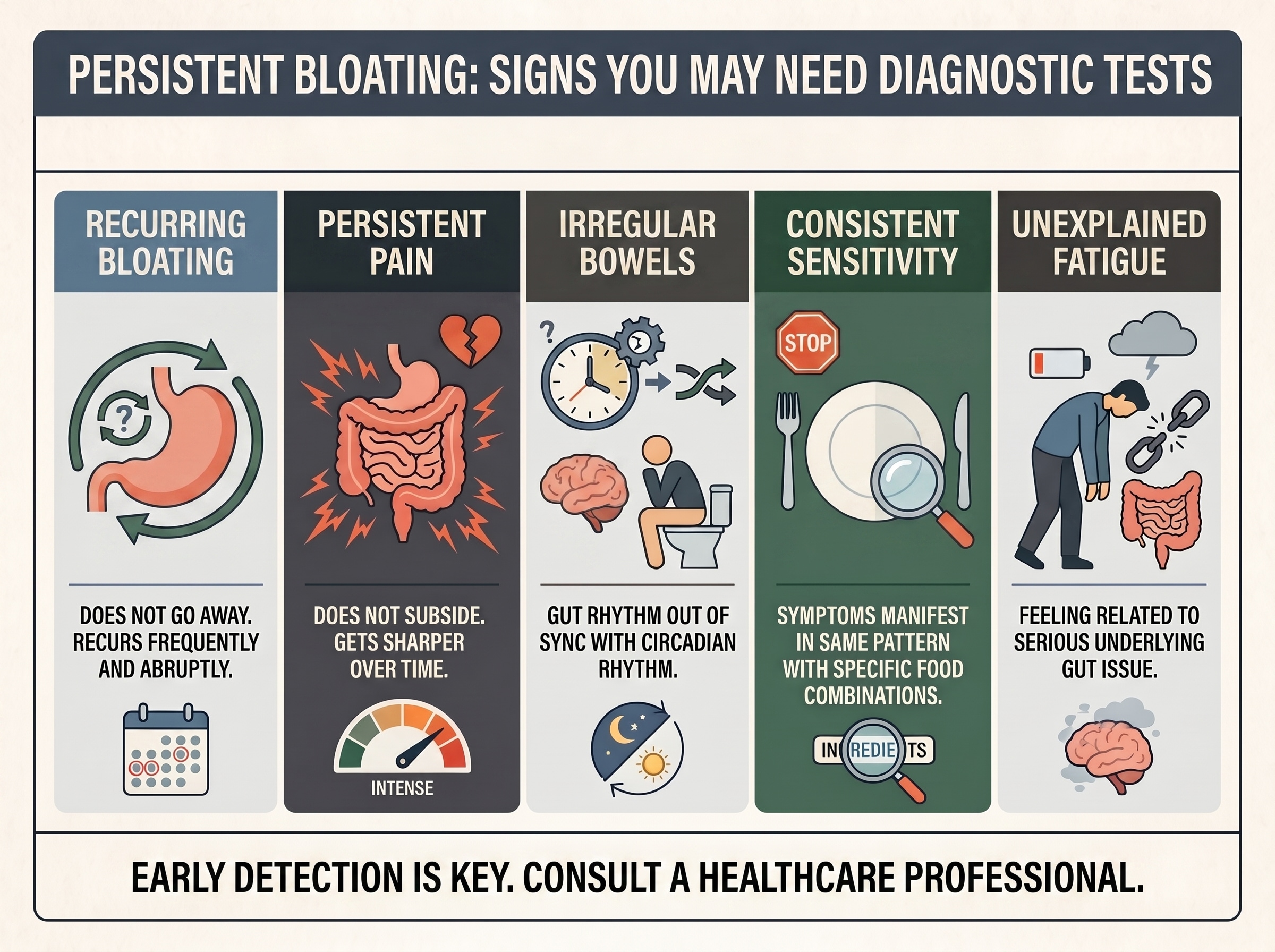
Signs You May Need These Tests
Your body sends signals to make sure that you know what is going on within. Identifying these signs at the right time is key to avoiding dealing with serious health complications. Here are the signs that you need these diagnostic tests to figure out if your bloating is related to something serious:
- Bloating that does not go away but recurs frequently and abruptly.
- Abdominal pain that doesn't go away and gets sharper even when you try to soothe your gut.
- Irregular bowel movements signal that your gut is not synced to your circadian rhythm.
- Food sensitivity symptoms that manifest in the same pattern whenever you consume the same food combination.
- Unexplained fatigue that you can feel is related to some serious underlying gut issue.
What Your Gut Might Be Telling You
Stress, lack of sleep, lifestyle imbalances, and many other factors collectively contribute to how your gut functions. Your gut might be sending you signals that you need to revise your habits or modify how you are living:
- A poor diet that lacks a balance of macro- and micronutrients.
- Stress levels that are unmanaged, as it results in gut issues directly.
- A lifestyle that doesn't take nutrition and physical activity into consideration.
- Low fibre intake, which doesn't help the gut metabolise the food effectively.
- Imbalanced gut bacteria cause an imbalance between good and bad bacteria.
How To Improve Gut Health Naturally
You need to persistently and consistently follow these tips to make sure your gut can deal with the erratic temperatures, weather changes, and food combinations that cause it to work extra hard. You can improve your gut health greatly when you are able to balance these aspects. Here is how you can improve your gut health naturally:
- Increase fibre intake
- Stay hydrated
- Eat probiotic-rich foods
- Avoid trigger foods
- Manage stress
Dr Manisha Arora, Clinical Nutritionist, explains, "Persistent bloating is often linked to gut imbalance or food intolerance." Proper testing helps identify the root cause and prevents long-term digestive problems."
Bloating is common but should not be ignored if persistent. You need to seek diagnostic tests that can help identify the root cause of your bloating. Through early intervention, you can improve your gut health and overall well-being.
Disclaimer: This content, including advice, provides generic information only. It is in no way a substitute for a qualified medical opinion. Always consult a specialist or your own doctor for more information. NDTV does not claim responsibility for this information.