

)
The basic checklist for healthy eating has changed completely. A reliable healthy diet tips list no longer tells individuals to simply count calories or avoid dietary fats. As the medical community marks World Nutrition Day 2026 on May 28, the conversation has officially shifted toward cell-level metabolism and biochemical individuality. Proper nutrition is not about starving the body but about helping daily metabolism work efficiently. For Indians who are looking to optimise their nutrition, these new scientific ideas are important. The country faces a rapid rise in diabetes, heart issues, and metabolic disorders. Because of this, traditional Indian dietary habits are being studied by global researchers and are proving to be highly effective for long-term health management.
4 Nutrition Science Concepts That Changed Global Dietary Trends
1. The Gut Bacteria Ecosystem
For a long time, standard medicine viewed the digestive tract only as a basic tube for processing food and clearing waste. Today, global research focuses heavily on gut microbiome health. This term refers to the massive community of trillions of tiny live bacteria inside the large intestine. These bacteria control energy utilisation, immune health, and even mood signals via the gut-brain pathway.
This discovery has shifted global diet trends back toward high-fibre, unrefined ingredients. For anyone looking at how to improve gut health naturally, the most effective options are already present in the traditional Indian kitchen.
Fermented items like homemade curd (dahi), fresh idli batter, and seasonal kanji work as potent natural probiotics. Local foods like arbi (taro root), onions, and garlic act as prebiotics that feed good bacteria. This simple process effectively lowers chronic swelling and irritation inside the body.
Also Read: The 3-Step Eating Sequence That Controls Blood Sugar Spikes And Keeps You Full For Longer
2. Eating Food In The Right Sequence
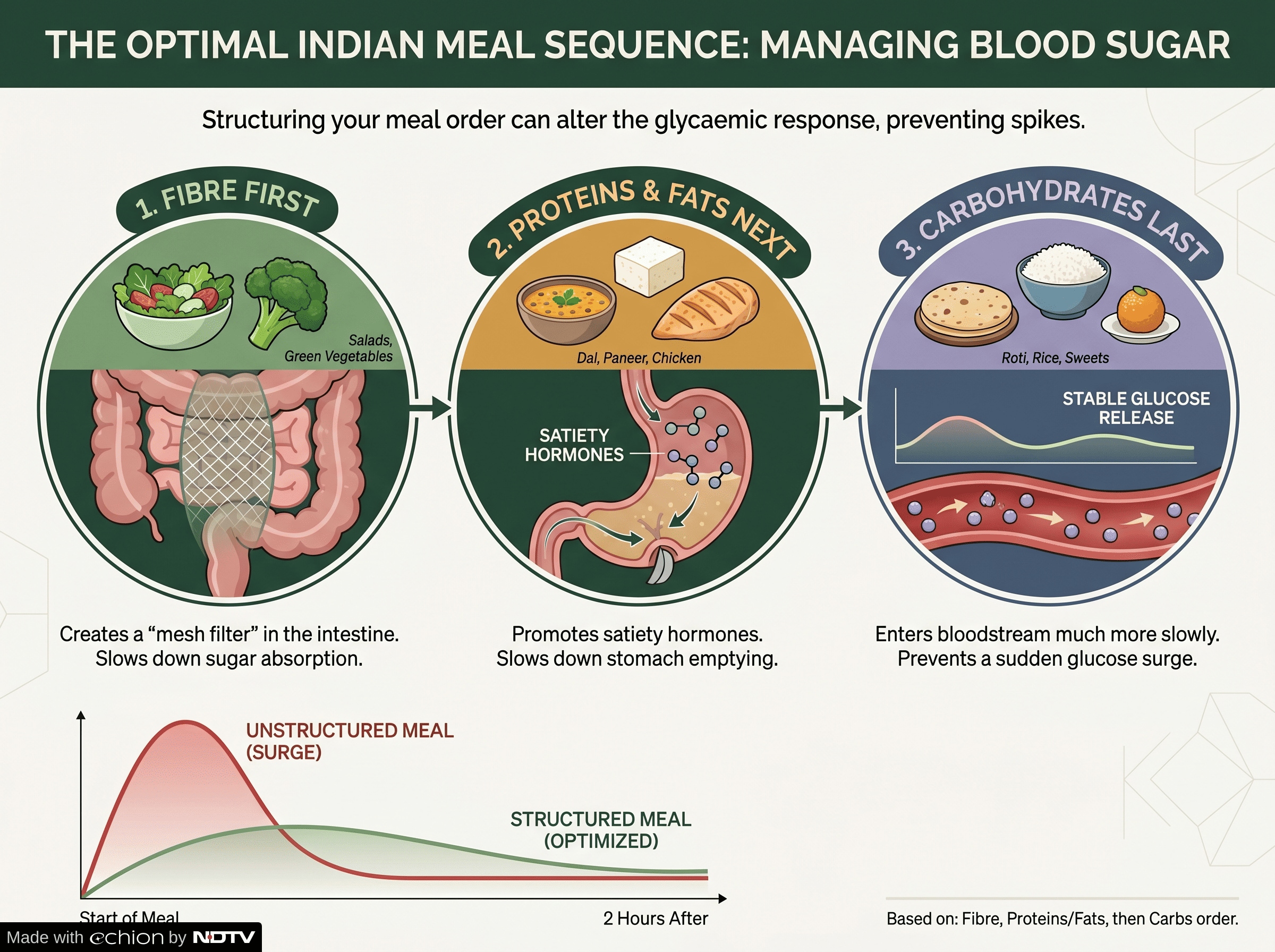
One of the most practical new health tools involves macronutrient sequencing. This principle states that the exact order in which food is eaten matters just as much as what is on the plate. Medical studies such as the study published in the J Am Nutritional Association Journal confirms that eating a meal in a specific order helps significantly in managing blood sugar spikes with food sequence adjustments.
Structuring the regular Indian meal by eating components in a specific order alters the glycaemic response. There are two distinctions that determine the impact of food on your blood sugar levels:
- Eating Order
- Food Component
How It Helps the Body
- First : Fibre (salads, green vegetables) which creates a mesh filter in the intestine to slow down sugar absorption.
- Second : Proteins and Fats (dal, paneer, chicken) which promotes satiety hormones and slows down stomach emptying.
- Third : Carbohydrates (roti, rice, sweets) as they enter the bloodstream much more slowly, preventing a sudden glucose surge.
Eating a standard meal in this precise order provides a powerful way to handle sugar issues without requiring a total change to the family menu.
3. Understanding Carbohydrates And Insulin Resistance
Weight gain is often a visible symptom of a deeper metabolic issue called insulin resistance. When cells cannot use insulin properly, the condition can lead to type-2 diabetes, cardiovascular issues, and hormonal issues. This issue is highly critical because genetic susceptibility to insulin resistance in India remains exceptionally high.
In previous decades, public health rules favoured low-fat foods, which inadvertently caused people to eat too many refined carbs like white rice and white flour (maida). Today, top health experts suggest focusing on high-quality carbohydrates paired with adequate protein and good fats.
This biochemical reality explains why reliance on packaged "sugar-free" commercial diet foods often fails. These highly processed products can cause fat buildup in the liver and disrupt baseline metabolic health over time.
Also Read: Don't Throw Away Mango Seeds This Summer! Doctor Explains How They Protect Your Skin In A Heatwave
4. The Power Of Ancient Grains And Meal Timing
On World Nutrition Day 2026, ancient grains like sorghum (jowar), pearl millet (bajra), and finger millet (ragi) are highly valued globally. Modern global diet trends favour these grains because they do not cause fast sugar spikes, they carry vital micronutrients, and they maintain steady energy levels.
Nutritional Fact: The health benefits of traditional Indian foods like millets are immense. These grains possess special plant polyphenols and resistant starch that are digested very slowly, giving the body a steady release of fuel.
At the same time, the study of chrono-nutrition shows that the timing of food intake is crucial. The human metabolic system processes sugar best in the morning and afternoon. Eating heavy meals late at night goes directly against the internal biological clock, leading to visceral fat storage and poor sleep quality. Shifting the largest meal to lunch and keeping dinner light and early remains one of the best healthy diet tips for long-term health.
Modern nutrition science reveals that good health does not require expensive, imported superfoods or restrictive eating patterns. True health management comes from applying modern scientific research to local, native food systems.
By prioritising gut microbiome health, using smart food sequencing, and choosing ancient grains over refined flour, individuals can protect their health effectively. For World Nutrition Day 2026, making these small, deliberate updates to existing Indian dietary habits remains the most practical strategy for lifelong health and well-being.
Disclaimer: This content, including advice, provides generic information only. It is in no way a substitute for a qualified medical opinion. Always consult a specialist or your own doctor for more information. NDTV does not claim responsibility for this information.