

)
Managing metabolic health in urban India often feels like an uphill battle. With skyrocketing rates of Type 2 diabetes and metabolic syndrome across the country, the standard clinical advice almost always focuses entirely on what to eat: cut the carbohydrates, ditch the deep-fried snacks, and load up on greens. While dietary composition is undeniably critical, an equally powerful metabolic tool is frequently overlooked: the precise order in which food is consumed. Emerging nutritional science reveals that rearranging the sequence of a meal without changing a single ingredient or reducing portion sizes can drastically flatten post-meal blood glucose spikes and prolong satiety. For anyone looking to optimise metabolic health, this simple, structured strategy offers a practical pathway to sustainable glycaemic control.
The 3-Step Meal Sequence Explained
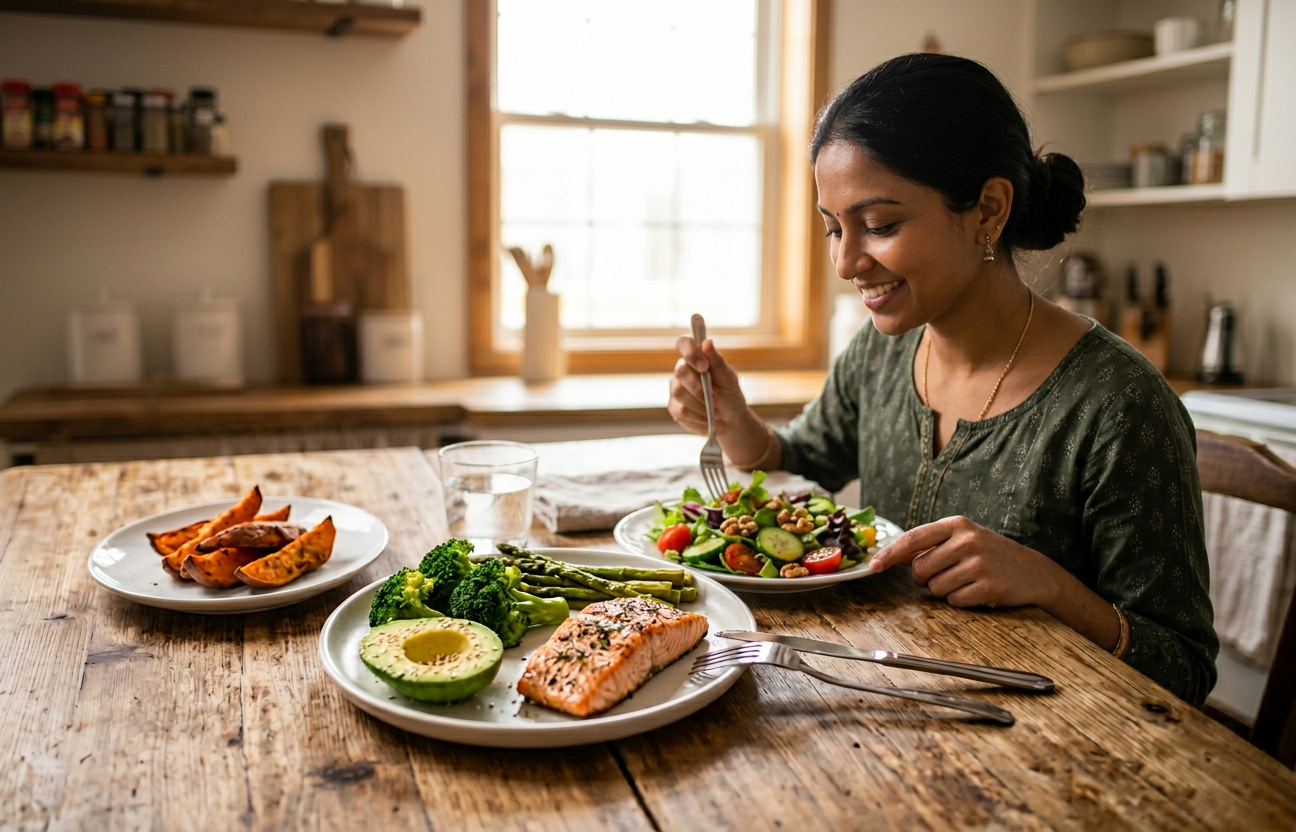
The strategy relies on separating a standard plate into three distinct nutritional phases, consumed one after the other rather than mixing them together.
Step 1: Start With Fibre (Vegetables)
The meal must always begin with fibre. In a traditional meal setting, this means consuming seasonal vegetables, salads, or clear vegetable-based preparations first. Fibre acts as a biological shield, creating a viscous, mesh-like lining along the walls of the small intestine. This physical barrier slows down the rate of gastric emptying and delays glucose absorption into the bloodstream.
Step 2: Follow With Protein and Fats
Once the fibre foundation is laid, the next focus should be proteins and healthy fats such as paneer, dal, chicken, eggs, curd, or nuts. Consuming proteins and lipids triggers the secretion of satiety hormones like peptide YY (PYY) and glucagon-like peptide-1 (GLP-1). These hormones signal the brain that the body is receiving calorie-dense nourishment, effectively blunting subsequent hunger pangs.
Step 3: Finish With Carbohydrates And Sugars
Carbohydrates, including rice, rotis, potatoes, and any sweet treats, must be saved for the very end of the meal. Because the digestive tract is already filled with a dense matrix of fibre, protein, and fat, the enzymes responsible for breaking down complex carbohydrates work at a highly measured pace. Instead of a rapid deluge of glucose hitting the bloodstream, carbohydrates are converted into energy slowly and systematically.
Also Read: MIT Scientists Suggest Everyday Foods To Help Your Gut Repair Itself
What The Science Says: Clinical Evidence For Food Sequencing
This sequencing method is backed by robust, peer-reviewed clinical research demonstrating its immediate impact on metabolic signalling:
- The Immediate Glucose Drop: A clinical study published in the journal Diabetes Care examined the immediate impact of food sequencing on patients with Type 2 diabetes. Research published in the Diabetes Care Journal found that when participants consumed vegetables and proteins before carbohydrates, their post-meal glucose levels were roughly 37% lower compared to when they consumed the exact same components in reverse order. The study concluded that food sequencing can achieve glycaemic improvements comparable to some pharmaceutical interventions.
- The Long-Term Metabolic Benefit: Further longitudinal research published in The American Journal of Clinical Nutrition verified that this eating pattern consistently mitigates glycaemic variability over time. By smoothing out regular blood sugar spikes and subsequent crashes, individuals experienced fewer instances of reactive hypoglycaemia, the primary driver behind intense, mid-day sugar cravings.
- The Hormonal Satiety Factor: A study published in Nutrition and Diabetes highlighted that sequencing actively enhances the release of the gut hormone GLP-1. This hormone not only improves the pancreas's natural insulin response to the trailing carbohydrates but also drastically slows gastric motility, keeping individuals physically full for a significantly longer duration.
The Metabolic Blueprint: Why Sequencing Works
When a meal is started with fast-acting carbohydrates like white rice or maida rotis, the digestive system rapidly breaks them down into simple sugars. This causes a sharp, immediate spike in blood glucose, forcing the pancreas to flood the system with insulin to clear the sugar. The subsequent insulin surge causes blood sugar levels to crash just as quickly as they rose, triggering a vicious cycle of fatigue, brain fog, and intense cravings within two hours of eating.
Sequencing completely disrupts this pattern. By introducing fibre and protein first, the enzymatic breakdown of carbohydrates is significantly delayed. The pancreas releases insulin in a controlled, steady stream rather than a panicked surge. For the liver and peripheral muscles, this steady release means glucose can be cleanly absorbed and utilised for steady energy throughout the day, preventing excess sugar from being stored directly as visceral fat.
Also Read: 3 Dietary Changes That Can Reduce Your Diabetes Risk By 31%, According To A New Study
Implementing The Sequence In An Indian Kitchen
Adapting this sequence to traditional Indian dietary habits is straightforward and requires no radical lifestyle overhauls:
- The Traditional Thali Approach: Instead of mixing sabzi, dal, and rice together into a single bite, consciously eat the sabzi or salad first. Follow it immediately with the dal, paneer, or meat components, and conclude the meal by mixing the remaining gravy with the rice or roti.
- Smart Snacking: If a midday snack includes a piece of fruit and a handful of almonds, consume the almonds (fats and protein) first to cushion the natural fructose spike of the fruit.
- Dine-Out Strategy: When eating out, order a plain vegetable starter or a clear soup before moving on to main-course carbohydrates.
Managing blood sugar does not always require extreme dietary deprivation. By simply changing the chronology of the plate, the body's natural hormonal and digestive systems can be optimised for fat loss, sustained energy, and metabolic resilience. Focus on the sequence, not just the ingredients.
Disclaimer: This content, including advice, provides generic information only. It is in no way a substitute for a qualified medical opinion. Always consult a specialist or your own doctor for more information. NDTV does not claim responsibility for this information.