

)
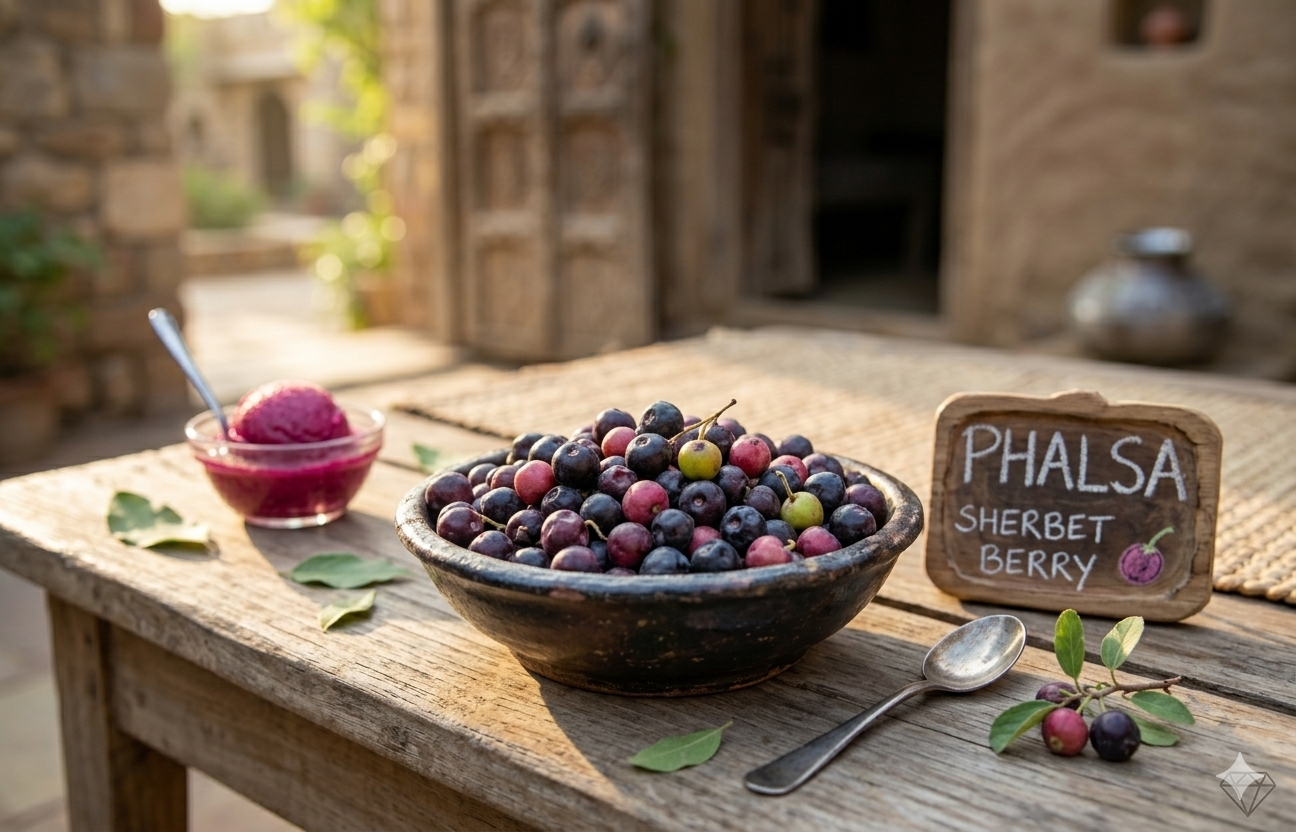
Phalsa are tiny tart summer fruits that are available seasonally in India, but their health benefits are often overlooked. They provide the body with natural cooling that is essential when the Indian Meteorological Department has issued a heatwave alert. Consumption of Indian gooseberry is gaining popularity as it has benefits for the gut as well as blood sugar control. Research published in the International Journal of Advanced Biochemistry Research details that daily consumption of Indian sherbet berry can function as a cooling tonic.
Additionally, the pleasant acid-flavoured ripe berries of phalsa contain a high amount of vitamins A and C (approximately 16.11 and 4.38 mg, respectively), minerals (calcium 820.32 mg/100 g, phosphorus 814.5 mg/100 g, and iron 27.10 mg/100 g), and fibre, but are low in calories, fat, and glycaemic index.
What Is Phalsa?
The small purple berry, or Grewia asiatica, is commonly available in North India during the peak summer months. The shelf-life of Indian sherbet berry is rich in antioxidants, vitamin C, and fibre content, and is known for its heat-relieving properties. Phalsa fruit is a nutrient-dense berry that contains carbohydrates, proteins, vitamins A, B3, and C, and minerals like potassium, calcium, iron, and phosphorus. Along with this rich nutritional profile, Indian sherbet berry also contains phytochemicals.
4 Ways How Phalsa Helps Beat Summer Heat
Research published in the Heliyon journal highlights that the Indian sherbet berry has a natural coolant that is known to reduce body heat. Furthermore, it also helps prevent acidity and reduce heat-related digestive discomfort.
It is also useful during heatwaves and can lower the chances of dehydration.
1. Supports Better Digestion And Gut Health
The Helyion journal also details that Indian sherbet berry, when consumed in moderation, could help improve the digestion process. This is mainly due to the high fibre content present in Indian sherbet berries, which improves bowel movement. Furthermore, it can also reduce bloating and support the gut microbiome, as it is able to nourish the gut with beneficial bacterial strains.
Indian sherbet berry is also a mild astringent, which makes it improve digestion as well. The fruit and seed of Phalsa contain 18 amino acids, the majority of which are aspartic acid, glutamic acid, and leucine.
2. Blood Sugar Control: Is Phalsa Safe For Diabetics?
Research published in the Annals of Phytomedicine details that Indian sherbet berry could be safe for diabetics when it is consumed in moderation. The low- to moderate-glycaemic index could help with the slow release of blood sugar levels. The high fibre content helps prevent blood sugar spikes and improve insulin response. If you are diabetic and on medications, it is best to consult a medical professional for the safe dose and timing for consuming phalsa daily.
3. Rich In Antioxidants: What It Does Inside The Body
The high dose of antioxidants that phalsa possesses nourishes the body with enough polyphenols and anthocyanins. This is what supports the body by:
- Reduces oxidative stress, as increased levels can trigger diseases.
- Supports immunity, as it is able to improve immune cell functioning, and it has a high dose of vitamin C.
- It may lower inflammation, which can happen when the heat is extreme.
4. Hydration And Electrolyte Balance In Summer
Indian sherbet-berry has high water content, which makes it ideal for preventing dehydration and fatigue. It also acts as a natural electrolyte booster, which is essential when the body is undergoing heat stress on a daily basis.
Also Read: An Expert Explains How Phalsa Berries Help Regulate Blood Sugar Spikes During Summer
Best Ways To Add Phalsa To Your Daily Diet
Indian sherbet-berry should be eaten fresh, as it has the maximum health benefits. While the best form to consume it is fresh, some people tend to drink phalsa juice, which can have a high amount of added sugars, which can spike their blood sugar levels significantly. Here are simple ways to add Indian sherbet berry to your diet:
- In smoothies or fruit bowls, they can be easily consumed as part of a healthy snack or breakfast.
- Traditional sherbet is a cooling option for summer.
Also Read: 3 Dietary Changes That Can Reduce Your Diabetes Risk By 31%, According To A New Study
Doctor Explains What Eating Daily Phalsa Does To Your Body
Ms Ruchika Jain, Chief Dietitian and Clinical Nutritionist at Fortis Hospital, Vasant Kunj, New Delhi, explains why phalsa (Indian Sherbet Berries) is highly recommended for diabetics and otherwise healthy individuals during the summer heat:
1. Low Glycaemic Index (GI): Phalsa has a naturally low glycaemic index, meaning it is digested slowly and does not cause immediate, sudden spikes in blood glucose levels.
2. High Fibre Content: The dietary fibre present in phalsa slows down carbohydrate absorption in the stomach, promoting stable, sustained energy rather than a sharp insulin reaction.
3. Hydration and Insulin Sensitivity: Extreme summer heat can cause dehydration, which inadvertently raises blood sugar concentrations. Being highly hydrating and packed with antioxidants, phalsa helps maintain fluid balance, supports kidney efficiency, and aids in better insulin management.
4. Safety and Side Effects: While highly beneficial, Ms Jain advises consuming them fresh and in moderation. Diabetics should completely avoid consuming phalsa in the form of processed, heavily sweetened commercial juices or sherbets, which counteract the berry's natural blood-sugar-regulating properties.
Who Should Avoid Eating Phalsa Daily?
While there are health benefits associated with Indian sherbet berry consumption, it should be avoided by those who have the following:
- Severe acidity
- Sensitive stomach
Even those on a strict diabetic diet should consult a doctor before starting daily Indian sherbet berry consumption.
Indian sherbet-berry should be consumed in moderation and can be safely eaten every day. The variety of health benefits it possesses can benefit you if you take the right approach, as well as help you beat the summer heat.
Disclaimer: This content, including advice, provides generic information only. It is in no way a substitute for a qualified medical opinion. Always consult a specialist or your own doctor for more information. NDTV does not claim responsibility for this information.