

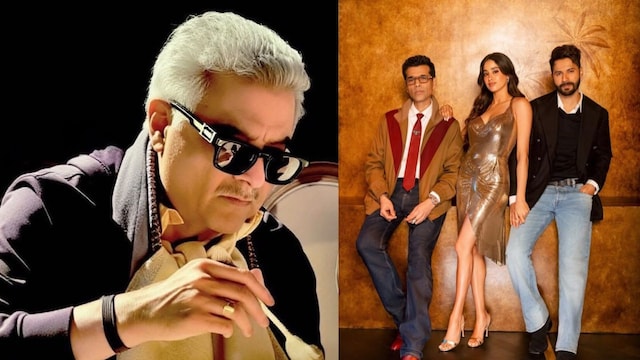
During the rapid-fire round of the third episode of Koffee With Karan, host Karan Johar asked Janhvi Kapoor, "One rumour you would like to spread about Boney Kapoor? She shared an interesting detail about her father, filmmaker Boney Kapoor. Janhvi jokingly replied that she wanted people to believe her father had not undergone a hair transplant and had instead grown his hair simply by concentrating. As the room erupted in laughter, her brother Arjun Kapoor reminded her that the rumour would be difficult to spread because advertisements featuring Boney Kapoor's hair transplant were visible across Mumbai. Janhvi then asked, "Have you seen those banners?" before revealing, "Can I tell you? He has been paid to get a hair transplant." While discussing his hair transplant, Boney Kapoor's experience of undergoing the procedure in his late 60s highlights a key health question: Is a hair transplant safe for people in their 60s, and what factors should they consider before opting for it?
The process of Hair Transplantation
Hair transplantation is a surgical procedure that involves moving hair follicles from a donor area, usually the back or sides of the scalp, to areas affected by hair loss. While age alone does not automatically rule someone out, factors such as overall health, the availability of donor hair and realistic expectations play an important role in determining whether the procedure is suitable.
According to Dr Sachin Gupta, Senior Consultant, Dermatology, Amrita Hospital, Faridabad, a person's medical history, scalp examination and expectations should be assessed before deciding on a hair transplant. He explains the precautions people in their 60s should consider before undergoing the procedure.
Can You Get A Hair Transplant In Your 60s?
Media reports have previously highlighted Boney Kapoor's hair transplant journey. He reportedly underwent the procedure in 2024, despite his late wife, Sridevi, being opposed to the idea. However, the conversation on the show was light-hearted, and the anecdote does not establish his medical history or the clinical details of the procedure.Yes, people in their 60s may be suitable candidates for a hair transplant. However, age alone cannot determine whether someone is fit for the procedure.
"Celebrity hair transformations, including Boney Kapoor's, invite an understandable question: can someone in their 60s safely consider a hair transplant? As a dermatologist, I would begin with their medical history, scalp examination, and expectations. A photograph cannot establish surgical suitability," says Dr Sachin Gupta. A person's general health becomes particularly important when considering an elective surgical procedure later in life. Conditions such as diabetes, hypertension and heart disease need to be evaluated before surgery.
A clinical review on hair-transplant candidacy published in Indian Journal of Plastic Surgery notes that people with these conditions may undergo transplantation when their illnesses have been appropriately identified and managed. However, the decision should be individualised after a medical assessment. People taking blood thinners should also discuss their medication with the treating doctor and surgeon before the procedure. These medicines must never be stopped or adjusted without medical advice.
5 Precautions To Take Before A Hair Transplant In Your 60s
1. Get Your Overall Health Assessed
Before considering a hair transplant, consult a qualified medical professional to review your health and determine whether surgery is appropriate. Conditions such as diabetes, high blood pressure and heart disease require careful assessment. The doctor may recommend relevant investigations or coordination with the physician managing an existing condition. Share your complete medical history, including previous surgeries, allergies, smoking habits and all medicines and supplements you take. This helps the treating team assess potential risks and plan the procedure safely.
2. Check Your Donor Hair Density
A hair transplant redistributes existing hair follicles rather than creating new ones. This makes the donor area, usually located at the back and sides of the scalp, an important consideration.
As hair loss progresses, the area requiring coverage may become larger, while the available donor supply remains limited. In some people, the donor region may also show thinning. Dr Gupta explains that donor density is an important factor in determining the feasibility of transplantation. A clinical review identifies donor density below 60 follicular units per square centimetre as low, although this measurement alone cannot predict the outcome. Hair thickness, the extent of hair loss and the amount of coverage required must also be considered before planning surgery.
3. Insist On A Detailed Scalp Examination
A detailed scalp examination helps determine whether the donor area can support the planned procedure and how many grafts may be harvested responsibly. Published hair-transplant practice guidelines recommend examining the scalp using a trichoscope, a magnifying instrument that allows clinicians to assess hair and scalp characteristics. Donor density should also be assessed at multiple points. This evaluation helps the surgeon plan the procedure according to the person's individual hair-loss pattern rather than recommending a fixed number of grafts. Before proceeding, ask the surgeon to explain the proposed treatment plan, the expected coverage and the limitations of the procedure.
4. Understand The Risks And Aftercare
Like other surgical procedures, hair transplantation carries potential risks, including bleeding, infection, scarring and unsatisfactory hair growth. The extent of these risks can vary depending on the person's health, the surgical technique and the care provided. Before consenting, discuss the possible complications with the treating surgeon and ask what recovery will involve. It is also important to understand the aftercare instructions, including scalp hygiene, activity restrictions, follow-up appointments and the time required for transplanted hair to grow.
Choose a qualified surgeon and an appropriately equipped facility. Do not make a decision based solely on celebrity results, promotional photographs or packages promising a particular number of grafts.
5. Set Realistic Expectations About Your Hairline
A hair transplant in your 60s may improve hair coverage, but it cannot guarantee the density or hairline you had in your twenties. Dr Gupta advises that a conservative, age-appropriate hairline may be a more sensible goal than trying to recreate a youthful appearance. The plan should account for the available donor hair, the extent of baldness and the possibility of further hair loss. An honest discussion about achievable coverage can help people make an informed decision and avoid unrealistic expectations.
Is A Hair Transplant Worth It After 60?
Whether a hair transplant is worthwhile after 60 depends on an individual's health, hair-loss pattern, donor hair availability, expectations and willingness to follow postoperative care. The procedure should not be approached as a standard cosmetic treatment with the same plan for everyone. A careful assessment helps determine whether transplantation is appropriate and how to use the available donor follicles without compromising future options.
Dr Gupta emphasises that the strongest treatment plan for someone in their 60s should be individualised, medically considered and realistic about the coverage that can be achieved.
Ultimately, Boney Kapoor's much-discussed hair transformation may have sparked curiosity, but anyone considering a similar procedure should prioritise medical suitability over celebrity inspiration. A consultation with a qualified dermatologist and hair-transplant surgeon is the first step towards understanding the available options and their potential risks.
Disclaimer: This content including advice provides generic information only. It is in no way a substitute for a qualified medical opinion. Always consult a specialist or your own doctor for more information. NDTV does not claim responsibility for this information.