

)
Cortisol is a hormone that is produced by the body which helps it to manage the stress response, metabolism, blood sugar levels, inflammation and more. Produced by the adrenal glands, cortisol is also known as the "stress hormone". This hormone is produced during danger or stress, which eventually helps during the body's "fight-or-flight" mode. When your body undergoes any form of stress, acute, chronic or trauma, cortisol is released in the body that can help lower the stress. However, high cortisol levels can also affect your health in several ways. It can lead to rapid weight gain, skin thinning with easy bruising, muscle weakness, severe fatigue, high blood pressure, and increased blood sugar, among others.
It is very important to manage your stress levels because when your stress reduces, it can help to lower your cortisol levels. And a drop in cortisol levels can help lower the chances of developing chronic conditions. Practicing yoga is one of the ways to reduce stress and manage cortisol levels. Here are some yoga asanas that can help relieve stress and reduce cortisol levels.
Yoga Asanas To Reduce Cortisol, Relieve Stress
1. Child's Pose (Balasana)
Start by kneeling on the mat with your knees wide apart and big toes touching. Fold forward over your thighs, extending your arms out in front or resting them alongside your body, and lower your forehead to the floor. Breathe deeply for one to three minutes, allowing your entire torso to relax. This forward fold stretches the hips, thighs, and ankles while compressing the abdomen softly. It stimulates digestion and eases emotional tension stored in the lower body.
2. Downward-Facing Dog (Adho Mukha Svanasana)
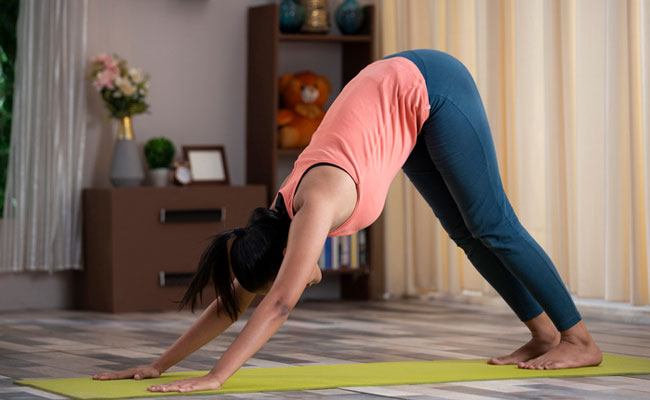
Get on a tabletop position on hands and knees, tuck your toes under, lift your hips skyward, and move into an inverted V shape. Bend your knees slightly if your hamstrings feel tight. Hold this position for 30 to 60 seconds, looking towards your navel. This full-body stretch lengthens the spine, calves, and hamstrings while strengthening the arms and shoulders. It can help counter the forward hunch that happens due to desk work. The mild inversion floods the brain with fresh blood and oxygen, quieting racing thoughts and getting rid of neck and back knots.
3. Cat-Cow Pose (Marjaryasana-Bitilasana)
On all fours, inhale to drop into Cow: arch your back, lift your chest and tailbone, and gaze upward. Exhale into Cat: round your spine, draw your belly in, and tuck your chin to your chest. Flow smoothly between them for five to ten breaths. This sequence massages the spine from top to bottom, improving flexibility and reducing rigidity in the vertebrae caused by tension.
4. Standing Forward Bend (Uttanasana)
Stand tall with feet hip-width apart, inhale to lengthen your spine, then hinge at the hips to fold forward, bending your knees for comfort. Let your head dangle and clasp opposite elbows or rest palms on shins. Stay for 30 to 60 seconds. The forward fold calms the mind by reversing blood flow, soothing overstimulation from screens and noise. This pose is beneficial for busy minds, fostering clarity.
5. Bridge Pose (Setu Bandhasana)
Lie on your back, bend your knees, and place feet flat on the floor hip-width apart, close to your sitting bones. Press into your feet to lift your hips while inhaling, interlace hands under your back if possible. Hold for 20 to 30 seconds, then lower slowly and repeat three to five times. This opens the chest and front body, and stimulates the thyroid gland to regulate metabolism and mood hormones.
6. Legs-Up-the-Wall Pose (Viparita Karani)
Sit sideways next to a wall, swing your legs up as you lie back, and move your hips close so your body forms an L shape. Rest arms by your sides and close your eyes for five to 10 minutes. This inversion drains fatigue and lymphatic fluid to improve circulation. It also relaxes the pelvic floor and adrenals, where stress hormones originate.
7. Corpse Pose (Savasana)
Lie flat on your back with legs slightly apart, arms at sides palms up, and neck neutral. Close your eyes and release any residual tension for five to 10 minutes. This pose allows the body to absorb all benefits from earlier yoga asanas, normalising heart rate and breath while lowering cortisol.
Disclaimer: This content including advice provides generic information only. It is in no way a substitute for a qualified medical opinion. Always consult a specialist or your own doctor for more information. NDTV does not claim responsibility for this information.