

)
Pilates is a low-impact form of exercise that focuses on improving strength, flexibility, balance, and body awareness. It focuses on building the core muscles, which include the abdomen, lower back, hips, and pelvis. Unlike high-intensity workouts, Pilates uses slow, controlled movements that are paired with proper breathing. Since the movements are gentle and do not require heavy equipment, many Pilates exercises can be done safely at home. Lower back pain is one of the most common health issues. Pilates can help by strengthening the muscles that support the spine, improving posture, and increasing flexibility around the hips and lower back.
Pilates also encourages better movement patterns, which can reduce unnecessary stress on the spine during daily activities. Regular practice may ease stiffness, improve stability, and lower the chances of recurring back pain over time. However, it is important to perform the movements with proper technique and avoid pushing through pain. Here are some Pilates exercises that can help reduce lower back pain.
Pilates Exercises For Lower Back Pain
1. Pelvic Tilt
This is one of the simplest Pilates movements for easing lower back pain. It helps activate the deep abdominal muscles while improving the movement of the lower spine. To do it, lie on your back with your knees bent and feet flat on the floor, hip-width apart. Slowly tighten your stomach muscles and tilt your pelvis so your lower back gently presses into the floor. Hold for a few seconds before returning to the starting position. Repeat 10-15 times. This can reduce stiffness and improve spinal alignment.
2. Knee Folds
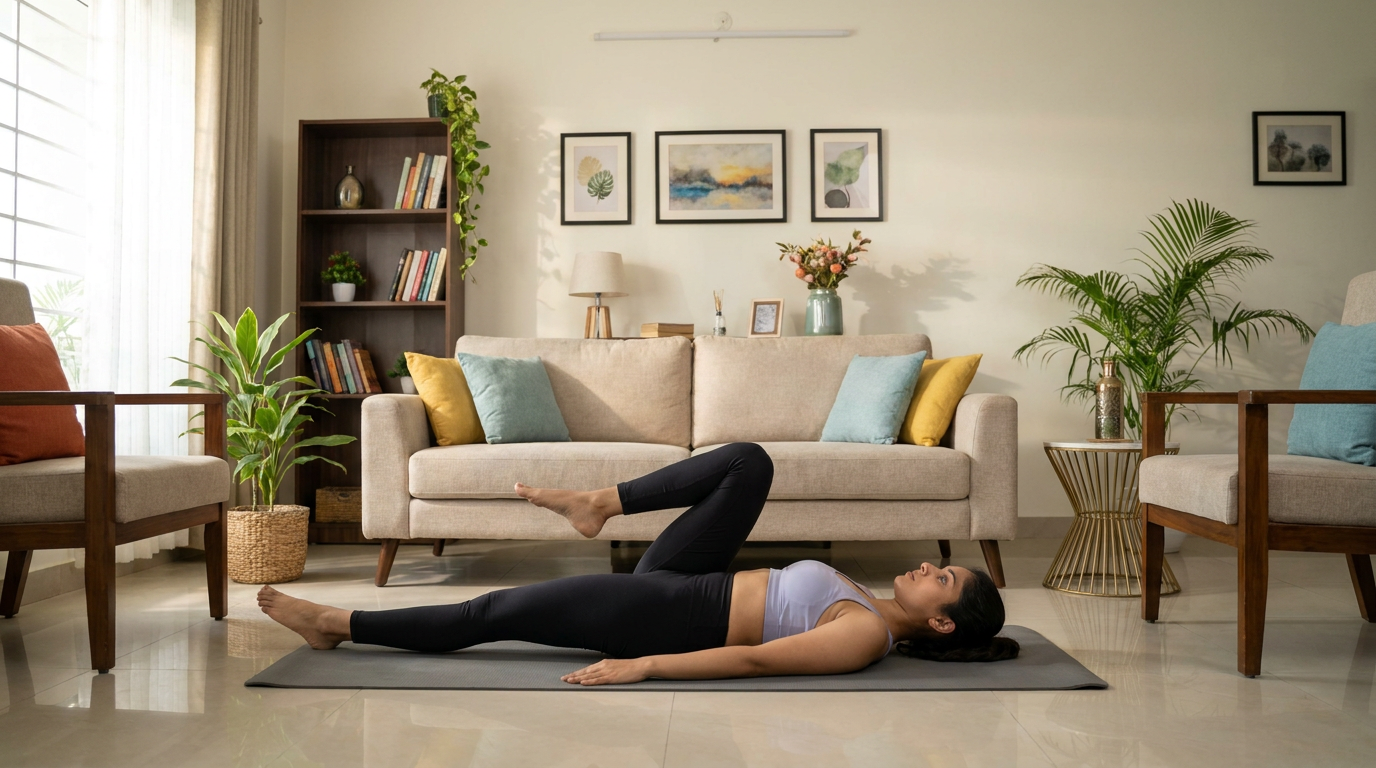
Knee folds help strengthen the core muscles that support the lower back. Lie on your back with your knees bent and feet flat on the floor. Tighten your abdominal muscles and slowly lift one foot a few inches off the floor while keeping your knee bent at a right angle. Lower it back down and repeat with the other leg. Keep your hips steady. Perform 10 repetitions on each side. This exercise improves stability and teaches your core muscles to support your spine during everyday activities.
3. Cat-Cow Stretch
Although commonly linked with yoga, the Cat-Cow movement is also used in Pilates to improve spinal mobility. Begin on your hands and knees with your wrists under your shoulders and knees under your hips. Slowly arch your back while lifting your head and tailbone. Then round your spine by tucking your chin and pelvis inward. Move slowly with your breathing and repeat 8-10 times. This movement relieves tension, improves flexibility, and can reduce stiffness.
4. Bridge
The bridge strengthens the glutes, hamstrings, and core, all of which help reduce pressure on the lower back. Lie on your back with your knees bent and feet flat on the floor. Tighten your core and slowly lift your hips until your body forms a straight line from your shoulders to your knees. Hold the position for a few seconds before lowering your hips slowly. Repeat 10-12 times.
5. Bird Dog
The Bird Dog is excellent for improving balance and strengthening the muscles that stabilise the spine. Start on your hands and knees with a neutral spine. Slowly extend your right arm forward and your left leg backward while keeping your hips level. Hold for a few seconds before returning to the starting position. Repeat on the opposite side. Perform 8-10 repetitions per side. Focus on controlled movements rather than lifting your arm or leg too high.
6. Toe Taps
Toe taps strengthen the deep abdominal muscles without placing excessive stress on the lower back. Lie on your back with your knees lifted so they are bent at 90 degrees. Tighten your core and slowly lower one foot until your toes lightly touch the floor. Bring the leg back up and repeat with the other side. Perform 10-12 repetitions on each leg while keeping your lower back gently pressed against the floor.
7. Spine Twist
The Spine Twist improves mobility through the spine while improving posture. Sit on the floor with your legs extended comfortably in front of you. Sit tall with your arms stretched out to the sides at shoulder height. Tighten your core and slowly rotate your upper body to one side without moving your hips. Return to the centre and repeat on the other side. Perform 8-10 twists on each side using slow, controlled movements.
Disclaimer: This content including advice provides generic information only. It is in no way a substitute for a qualified medical opinion. Always consult a specialist or your own doctor for more information. NDTV does not claim responsibility for this information.