





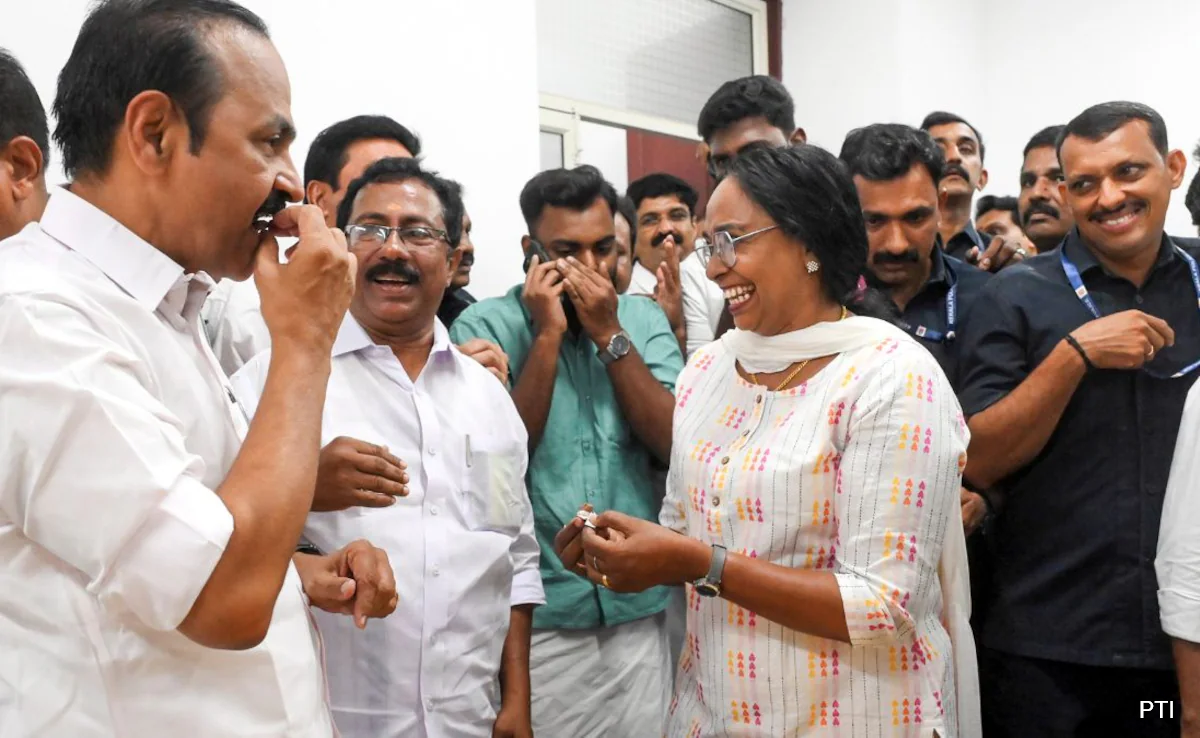
A major victory in the local body elections - held just prior to the Kerala Assembly polls in December last year - provided Congress with indications that it was poised to return to power in the state after a decade-long hiatus. While this instilled a sense of enthusiasm within the party, it also sparked apprehensions that, with power seemingly within reach, party leaders might begin squabbling amongst themselves behind the scenes. Five years earlier in Kerala, it was precisely this kind of internal discord among Congress leaders that had completely undone the hard work put in by senior leader Rahul Gandhi.
This time around, the Congress High Command was extremely vigilant. The party's greatest necessity - and its biggest challenge - was unity.
The process began with Thiruvananthapuram MP Shashi Tharoor. At the start of the year, various speculations were swirling regarding Tharoor. In the final week of January, Rahul Gandhi and Congress chief Mallikarjun Kharge held a discussion lasting nearly two hours with him to iron out differences after several statements led to speculation about a discontentment within the party. Tharoor was subsequently appointed as the co-convener of the campaign committee. He went on to campaign extensively for the party across the entire state.
Follow Election Results Live Updates Here
For the allocation of tickets, the Congress High Command dispatched its trusted leader Madhusudan Mistry to Kerala. Mistry, a veteran leader hailing from Gujarat, poured his entire wealth of experience into the ticket distribution process. The Congress leadership received feedback indicating that while the public desired a change in government, there was no significant resentment directed specifically against the sitting MLAs of the Left Front. Keeping this crucial insight in mind during ticket distribution, Congress made a strategic move by placing its bets on young leaders.
Mistry's committee also decided that no sitting Member of Parliament (MP) would be fielded as a candidate in the elections. This decision faced internal resistance. Just before the deadline for filing nominations in Kerala, Sudhakaran - a sitting MP and former state party president - defied the party leadership by demanding to be allowed to contest the election. In a hurried move, AK Antony was entrusted with the responsibility of placating him. Kharge spoke with Sudhakaran, and subsequently, Rahul Gandhi met with his entire family. This sent a clear message that the Congress High Command acknowledged and appreciated Sudhakaran's hard work and contributions. Following the distribution of tickets, KC Venugopal took on the responsibility of placating the rebel leaders. Venugopal was acutely aware that in Kerala, his own reputation was on the line more than anyone else's. Consequently, he personally visited the rebels at their homes to engage with them and successfully assuaged the grievances of the dissidents.
Just prior to the elections, the Congress party suddenly began to project the image of a disciplined, cohesive team. Deepa Das Munshi, the party in-charge, played a pivotal role behind the scenes in orchestrating this transformation.
Follow Kerala Election Results 2026 Live Updates Here
This was followed by the launch of a vigorous campaign characterised by sharp attacks on the CPM-led government and Chief Minister Pinarayi Vijayan, aimed at effectively communicating the party's electoral guarantees to the public. Rahul Gandhi himself took command of the campaign trail, leveling allegations of collusion against Chief Minister Pinarayi Vijayan. The Congress extensively publicised its promise of health insurance coverage worth up to Rs 25 lakh.
Given its alliance with the Muslim League, the Congress was confident of securing the community's vote. To ensure there were absolutely no lapses, poet and MP Imran Pratapgarhi was deployed to the forefront of the campaign. Christians have historically constituted a traditional voter base for the Congress. Shortly before the elections, the party had appointed Sunny Joseph - a member of the Christian community - as its state president. Furthermore, the Centre's proposed Foreign Contribution (Regulation) Amendment Bill served to further consolidate the Christian electorate.
All three of the Congress party's potential Chief Ministerial candidates - KC Venugopal, VD Satheesan and Ramesh Chennithala - hail from the Nair community. It is widely believed that the Congress reaped electoral dividends from this demographic factor as well. The BJP, for its part, had been actively attempting to make inroads into this very Nair vote bank.
In Kerala, a state with a historical precedent of changing its government every five years, the Pinarayi Vijayan administration was buckling under the weight of its own incumbency after a decade-long run. All the Congress party had to do was avoid any blunders. Indeed, the Congress committed no errors. The electorate resoundingly endorsed the party's campaign slogan: "Keralam Jayikkum, UDF Nayikkum", which translates to "Keralam will win, UDF will lead". This brought the Congress party's ten-year political "exile" in Kerala came to an end. For the first time in nearly sixty years, there is now not a single state across the entire country where a Left-wing party holds the reins of government.
Track Latest News Live on NDTV.com and get news updates from India and around the world

