





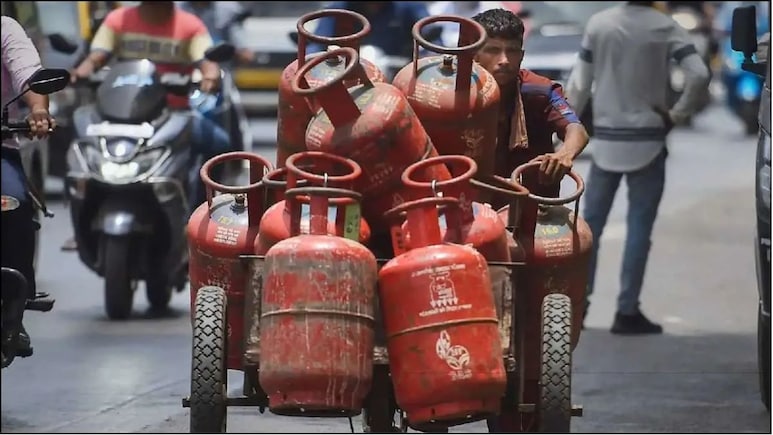
India is feeling the heat of the US and Israel's war on Iran in the form of an LPG crisis. The war, now in its fourth week, has disrupted the Strait of Hormuz, a shipping route through which nearly 20% of the world's oil and a large share of gas supplies pass.
India depends on imports for about 60–62% of its LPG needs, much of it coming from the small oil corridor. As shipments slow down, LPG deliveries to Indian ports have been delayed, tightening availability.
The crisis has also led to a rise in prices. A 14.2 kg domestic LPG cylinder has become costlier by up to Rs 60. The situation has also brought attention to a long-standing detail of India's LPG system, the fixed 14.2 kg cylinder size. Why this exact number?
The 14.2 kg standard goes back to the late 1950s, when LPG was first introduced in India by Burmah Shell (now Bharat Petroleum). At that time, the size wasn't fixed and was decided through trial and experience. Over time, 14.2 kg turned out to be the most practical and efficient, so it became the standard used across the country.
One reason for this specific number is weight and ease of use. A full LPG cylinder, including the metal body, weighs around 29-30 kg. This was found to be manageable for both households and delivery workers. If more gas were added, like making it 15 kg, the cylinder would become heavier and harder to lift and carry, especially since most handling is done manually.
Household usage was also taken into account. It was found that about 14 kg of LPG is enough for an average family's cooking needs for 30 to 45 days. This means people don't have to refill too often, but also don't run out quickly.
Safety was also a key reason for fixing the 14.2 kg limit. LPG is stored under high pressure, so some empty space is needed inside the cylinder for the gas to expand. If more gas is filled, it could become unsafe, or the cylinder would have to be made thicker and heavier. To avoid this, experts decided that 14.2 kg is the safest and most practical amount.
The chemical makeup of LPG also played a role. LPG is made by mixing two gases, propane and butane, and their proportion changes depending on the weather. These changes affect the pressure inside the cylinder. Keeping the quantity at 14.2 kg ensures there is enough space to handle these pressure changes safely.
Track Latest News Live on NDTV.com and get news updates from India and around the world

