

)
Extreme heat exposure, humidity, and excess oil production on the surface of the skin lead to acne. People tend to correlate the consumption of mangoes with acne flare-ups, but the underlying mechanisms require closer scrutiny. The common belief that acne is caused solely by eating mangoes is not rooted in science. In fact, research published in the Molecules journal suggests that mango extract functions as an anti-acne agent due to its rich antioxidant profile and mangiferin content, which exhibits anti-inflammatory properties.
While several factors cause acne, attributing it exclusively to excessive mango consumption is scientifically inaccurate. Acne in summer results from a combination of external and internal stressors such as pollution, radiation, climate, diet, smoking, cosmetics, psychosocial stress, and microbial ecosystems. A review published in Frontiers in Immunology highlights that these "exposome" factors vary based on daily exposure, influencing the skin's inflammatory response.
Do Mangoes Really Cause Acne?
Consuming mangoes in isolation or in large quantities can cause a spike in blood sugar levels. This glycemic load can worsen how the skin processes free radicals and trigger a hormonal cascade that increases sebum. However, a direct, causal correlation between the fruit itself and acne is not proven. When a potential spike in blood sugar is coupled with extreme external heat and high sebum production, a breakout becomes more likely. Mangoes are nutrient-rich but contain natural sugars that must be metabolized effectively to mitigate their impact on the skin. The risk of developing acne depends on how mangoes are consumed and their exact quantity, rather than the act of eating them.
Ingredient 1: Curd
Curd is the primary ingredient that, when combined with mangoes, helps balance the fruit's thermal and glycemic effect on the body. This mango with curd combination is a traditional staple that finds support in modern nutritional science.
Why Adding Curd Helps Balance Mango's Effect
Curd acts as a natural coolant, neutralizing the "thermogenic" property often associated with mangoes in traditional medicine.
Supports gut health and reduces inflammation: As a probiotic-rich food, curd supports the gut microbiome.
A healthy gut health and acne connection is vital; a balanced microbiome reduces systemic inflammation that otherwise manifests as skin eruptions.
The proteins and fats in curd slow down the absorption of sugar from the mango, preventing the rapid insulin spikes that trigger oil glands. These cooling foods are essential for maintaining a clear summer complexion.
Ingredient 2: Soaked Nuts or Seeds (Almonds Or Chia)
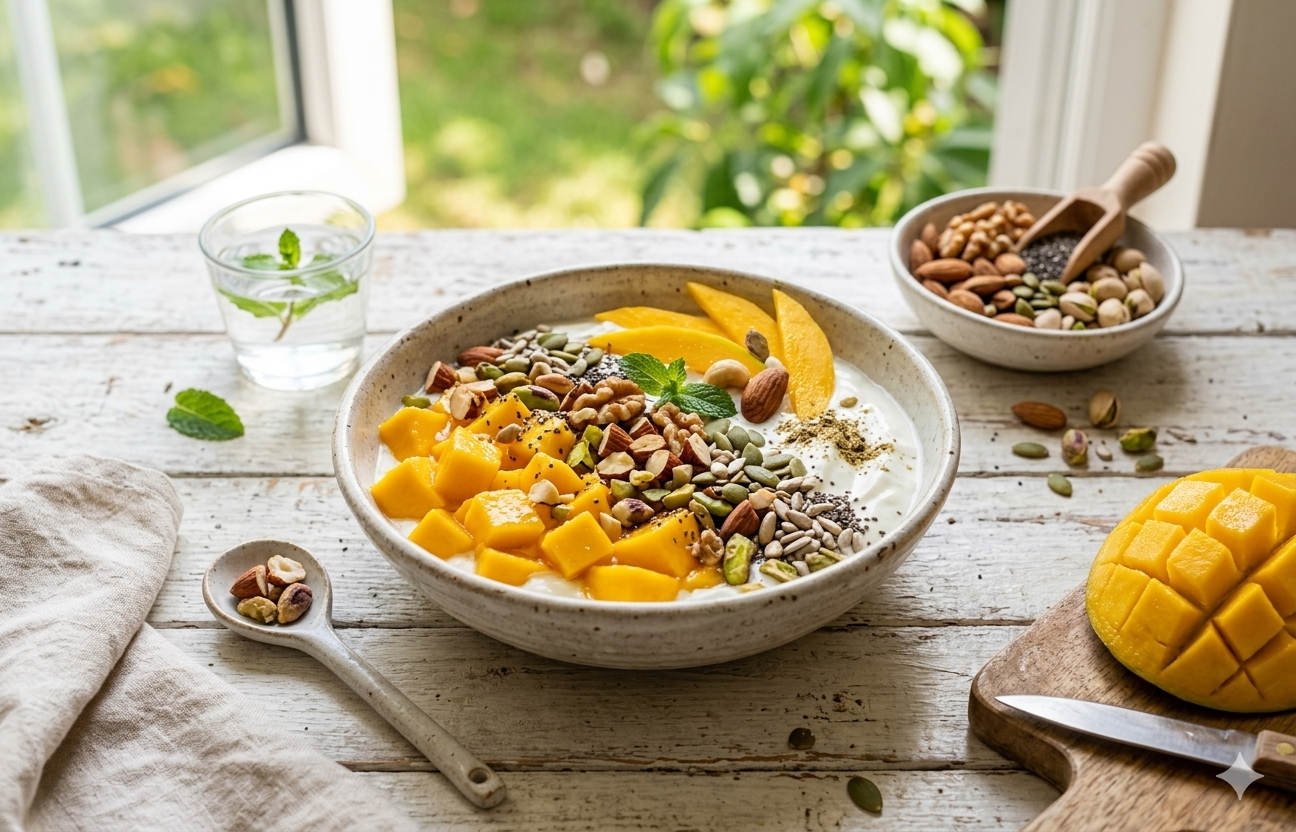
The second essential pairing involves adding healthy fats through soaked nuts or seeds. Combining mango with nuts creates a complex snack that treats the skin as well as the palate.
How Healthy Fats Prevent Sugar-Driven Breakouts
- The fiber and healthy fats in almonds or chia seeds further stabilize blood sugar.
- By preventing a "sugar rush," these acne-preventing foods ensure the body doesn't overproduce insulin, which is a known stimulant for sebum (oil) production.
- Seeds like chia provide omega-3 fatty acids, while almonds offer zinc and Vitamin E. These are skin-friendly fats that assist in skin repair and reduce the redness of existing lesions.
How These Pairings Reduce Acne Risk
The blood sugar and acne connection is the most critical factor in dietary skin care. When mango is eaten alone, the high glycemic index can stimulate Insulin-like Growth Factor 1 (IGF-1), which thickens the skin's outer layer and clogs pores.
The Blood Sugar-Skin Connection Explained
- Pairing mango with protein (curd) and fat (nuts) results in fewer insulin spikes.
- Stable insulin levels mean the sebaceous glands remain calm even in the heat.
- This dietary approach strengthens the diet and acne connection by ensuring the internal environment remains alkaline and anti-inflammatory.
Best Ways To Eat Mango For Acne-Prone Skin
To enjoy the king of fruits without the fear of breakouts, follow these preparation methods:
1. Mango and Curd Bowl: A simple bowl of fresh mango cubes mixed into unsweetened curd.
2. Mango Smoothie: Blend mango with curd and a tablespoon of soaked chia seeds. Avoid adding refined sugar or honey.
3. Portion Control: Limit consumption to one medium-sized mango per day.
4. Best Time of Day: Consume mangoes during the morning or as a mid-day snack when the metabolism is most active. Avoid eating them late at night.
These strategies represent the best way regarding how to eat mango in summer for those with acne-prone skin.
Also Read: Sourdough vs Normal Bread: Key Difference Between Microbial Ecosystems Explained
Who Should Be Extra Careful?
Certain individuals are more susceptible to the glycemic fluctuations of mangoes:
- Teenagers: Due to naturally higher hormonal activity.
- Hormonal Acne Sufferers: Women with PCOS or those prone to cyclical breakouts.
- Insulin Resistance: Those with prediabetes must monitor the total sugar load.
- Oily Skin Types: Individuals who already struggle with hyperactive sebaceous glands.
Common Mistakes That Trigger Acne
Many "mango-related" breakouts are actually the result of poor habits:
- Empty Stomach Consumption: This causes the fastest blood sugar spike.
- Mango Shakes with Sugar or Milk: The combination of dairy and refined sugar is a high-risk factor for inflammatory acne.
- Overconsumption in Peak Heat: Eating multiple mangoes when the body is already struggling with heat regulation.
- Identifying these acne-causing food habits is the first step in avoiding summer skin mistakes.
Mangoes do not directly cause acne; they are a source of vital vitamins A and C. However, pairing matters more than avoidance. By utilizing smart food combinations like curd and nuts, one can protect the skin while enjoying the seasonal fruit. To prevent summer acne, focus on the mango acne prevention strategy of stabilization and moderation.
Disclaimer: This content, including advice, provides generic information only. It is in no way a substitute for a qualified medical opinion. Always consult a specialist or your own doctor for more information. NDTV does not claim responsibility for this information.