

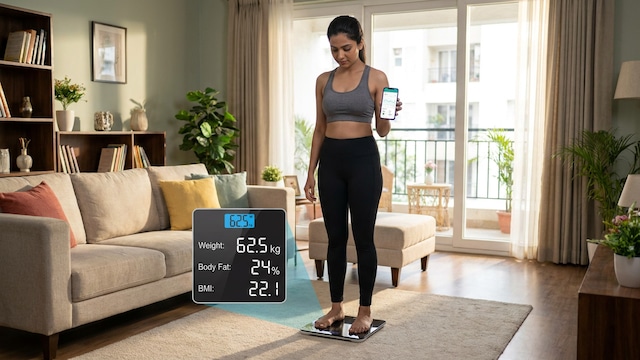
Smart weighing scales are becoming a popular addition to home fitness routines. Unlike traditional weighing scales, which only show body weight, these devices claim to measure several body composition indicators, including body fat percentage, muscle mass, body water and sometimes bone mass. The readings are usually displayed on a connected smartphone app. This allows users to track changes over days, weeks or months. For people trying to lose weight, build muscle or improve their fitness, these numbers can provide them with a more detailed picture than body weight alone.
However, there is an important limitation to understand: smart scales do not directly measure most of these values. They use electrical signals and mathematical estimates to calculate body composition. While the technology can be useful for tracking general trends, the results may not always reflect a person's actual body fat or muscle mass.
How Do Smart Weighing Scales Work?
Most smart weighing scales use a method called bioelectrical impedance analysis (BIA). When a person stands barefoot on the scale, the device sends a very small electrical current through the body and measures how easily it travels through different tissues.
Muscles contain more water and generally conduct electricity better than fat tissue. Fat offers greater resistance to the electrical current. The scale combines this information with other details such as a person's weight, height, age and sex to estimate body composition. These results are based on mathematical models, not direct measurements of fat or muscle.
How Accurate Are Body Fat Readings?
Smart scales can provide a rough estimate of body fat, but their accuracy varies by device and individual. A study published in JMIR mHealth and uHealth compared three commercially available smart scales with dual-energy X-ray absorptiometry (DXA) which is a method used to assess body composition. The researchers found that the scales measured body weight reasonably well but were less accurate at estimating fat and muscle mass.
This means a reading of 25% body fat on a smart scale does not necessarily mean that a person's actual body fat percentage is exactly 25%. The difference can be significant, depending on the device and the individual.
Can Smart Scales Accurately Measure Muscle Mass?
Muscle mass readings also need to be understood carefully. Smart scales estimate muscle mass using electrical resistance and calculations involving body water and fat-free mass. They do not directly measure the size or weight of individual muscles. Since water contributes significantly to the lean tissue, changes in hydration can impact the estimated muscle mass. For example, a reading may increase after drinking fluids without any actual increase in muscle tissue. Similarly, dehydration can affect the result.
Factors That Can Affect Smart Scale Readings
Several factors can influence the results displayed by a smart weighing scale.
- Hydration levels: Drinking more or less water can change the electrical resistance measured by the device. This may affect estimates of body fat and muscle mass.
- Recent meals: Eating and drinking before weighing yourself can temporarily change body weight and affect body composition estimates.
- Exercise: A workout can cause changes in fluid distribution and sweating, potentially affecting the readings.
- Time of day: Body water levels naturally fluctuate throughout the day. Morning and evening measurements may therefore differ, even if body composition has not meaningfully changed.
- Device differences: Different brands use different algorithms and measurement methods. Two scales may give different body fat and muscle mass estimates for the same person.
How Should You Use a Smart Weighing Scale?
To get the best information from a smart scale, consistency matters more than individual readings.
- Weigh yourself at the same time: Morning, after using the toilet and before eating or drinking, is a good option
- Follow the same routine: Use the scale on a hard, level surface and stand barefoot on the electrodes as instructed by the manufacturer
- Track long-term trends: Look at changes over several weeks rather than reacting to daily fluctuations
- Use the same device: Avoid comparing readings from different brands because their calculation methods may vary
- Consider other indicators: Waist circumference, how clothes fit, physical strength and exercise performance can give you useful context along with the scale's readings
- Check your weight separately: Smart scales generally measure body weight better than they estimate body composition
Smart weighing scales can be useful for people who want to monitor their weight at home and keep track of general fitness trends. The apps can make it easier to record measurements over time and maintain a consistent routine. However, their body fat and muscle mass readings should be treated as estimates rather than exact figures.
Disclaimer: This content including advice provides generic information only. It is in no way a substitute for a qualified medical opinion. Always consult a specialist or your own doctor for more information. NDTV does not claim responsibility for this information.