

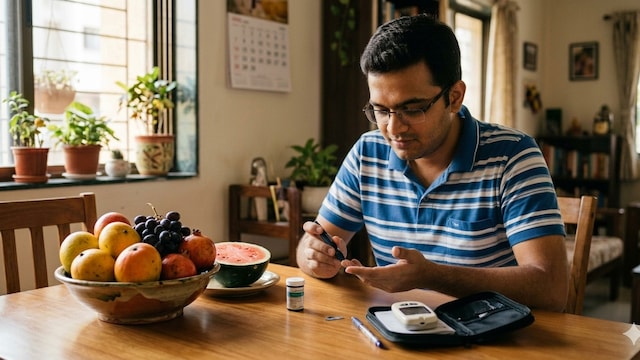
India is living longer. But are Indians living healthier? We are extending lifespan far more successfully than healthspan. We have become increasingly capable of diagnosing diabetes, prescribing medication and managing its complications. Yet we have not invested nearly enough in preventing the metabolic deterioration that often precedes the disease by years, sometimes decades.
The goal of healthcare cannot simply be to help people live to 80 or 90. It must be to ensure that they reach those years with functioning organs, healthy muscles, metabolic resilience and independence. This is the difference between lifespan and healthspan.
And diabetes is one of the biggest threats to that ambition.
The ICMR-INDIAB study estimated that 101 million Indians were living with diabetes in 2021. More telling still, another 136 million had prediabetes, and it was as common in villages as in cities. More Indians stand at the threshold of the disease than have crossed it, which suggests the window for prevention is still open. Among those who have crossed it, many do not know: a Lancet Global Health study published in 2025 found that roughly four in ten Indians aged 45 and above with diabetes were unaware they had it.
As a radiologist, I see this story long before a blood test tells it. Years before glucose crosses the diagnostic threshold, the precursors are visible on scans: fat accumulating around the abdominal organs, early fatty liver, and muscle that is losing quality.
This matters more for Indians than for most populations. Indians tend to develop type 2 diabetes five to ten years earlier than white Europeans, and often at a much lower body weight. This is the so-called "thin-fat" phenotype: more visceral fat and less muscle at the same weight. Poor sleep, chronic stress and inadequate physical activity then steadily undermine metabolic health.
Also read: World Diabetes Day 2026: Prediabetes Is Your Window To Act, Simple Ways To Reverse The Condition
The disease may be diagnosed in middle age, but its foundations are often laid much earlier.
We Are Treating The Disease, Not Changing The Environment
Consider the everyday life of an urban Indian. Long working hours, prolonged sitting, traffic congestion, irregular meals, inadequate sleep and a growing dependence on convenient processed foods have become normal. A 2024 Lancet Global Health analysis found that 49.4% of Indian adults are insufficiently physically active, and the gap between women (57%) and men (42%) is wide.
We routinely advise people to exercise more and eat better. But where are the safe walking spaces? How many workplaces actively encourage movement? Are children getting enough physical activity in school?
Our food environment works against us too. An ICMR-INDIAB dietary study published in Nature Medicine in 2025 found that Indians get roughly 62% of their daily calories from carbohydrates, much of it white rice, milled grains and added sugar. The same study found that replacing just 5% of those calories with protein from pulses, dairy, eggs or fish was associated with a lower likelihood of diabetes and prediabetes.
Prevention cannot remain an instruction given to individuals while the environment continues to work against them. India needs to recognise metabolic health as a development priority, involving not just the health ministry but also education, food regulation, agriculture, transport and urban planning.
Also read: The New Era Of Diabetes Treatment: Are We Finally Moving Beyond Just Controlling Blood Sugar?
The Evidence Is Beginning To Show Us What Works
Prevention is not an untested idea. A 2026 randomised controlled trial from Kerala, published in Diabetes Research and Clinical Practice, found that a structured lifestyle intervention achieved remission of prediabetes in 45.9% of participating women with isolated impaired fasting glucose, compared with 6.3% of those receiving standard care.
The nine-year follow-up of the Kerala Diabetes Prevention Programme, published in The Lancet Global Health in 2026, offers a more sobering lesson. A one-year, community-based peer-support programme achieved only a modest reduction in diabetes incidence, which was not statistically significant overall, although incidence was 28% lower when fasting glucose criteria alone were considered.
Read together, these findings suggest that awareness and one-off campaigns are not enough. Lasting change needs continuous, structured support built into primary care and the community.
Prevention Must Become Part Of India's Longevity Strategy
India's primary healthcare system offers an opportunity to make this shift. Ayushman Arogya Mandirs and the National Programme for Prevention and Control of Non-Communicable Diseases can become platforms for continuous metabolic health management, rather than functioning predominantly as screening and referral points.
People identified with prediabetes should have access to structured nutrition programmes, physical activity guidance, weight management and regular follow-up. Community health workers can make these interventions accessible beyond hospitals.
With affordable generic semaglutide now available in India, some will argue that medicines make lifestyle prevention unnecessary. These drugs are valuable for those who need them. But they treat individuals after metabolic risk has already developed, generally have to be continued long term, and do nothing to change the food and activity environment that is driving the epidemic.
Prevention must also begin in schools. Nutrition literacy, daily physical activity and healthier school food environments should be treated as essential investments in the country's future health.
At a policy level, the moment is live. The Supreme Court reserved judgment in September 2026 on how quickly front-of-pack warning labels must become mandatory, and every year of delay has a health cost. The government's own Economic Survey 2025-26 has called for restrictions on the marketing of ultra-processed foods to children. India also needs better access to affordable nutritious food and urban infrastructure that encourages everyday movement.
There is also a need to rethink what we measure. The national programme reports that about 40.7 crore people have been screened for diabetes, 4.68 crore diagnosed and 3.39 crore put on treatment. These numbers do not tell the full story. Governments should also track how many people are found with prediabetes, how many are enrolled in prevention programmes, and how many return to normal glucose or progress to diabetes.
Also read: Diabetes, Fatty Liver And Heart Disease: The Metabolic Triangle Indians Cannot Ignore Any Longer
The Next 100 Years Begin With Decisions Made Today
A healthspan-focused approach does not mean chasing expensive supplements or fashionable biohacks. It begins with the fundamentals: regular movement, resistance training to preserve muscle, adequate sleep, balanced nutrition and effective stress management.
These are not merely lifestyle recommendations. They are long-term investments in metabolic health. For India, the larger challenge is to make these choices possible for everyone, not just those who can afford private wellness programmes or preventive health consultations.
Diabetes clinics will always be necessary. Those already living with the condition deserve excellent care. But a country cannot build its health future around treating the consequences of metabolic decline.
If we want Indians to live to 100, we must start protecting their metabolic health at 30, 40 and 50, not wait until diabetes announces itself.
India needs to move from a culture of disease management to a culture of health preservation. The real success of our healthcare system should be measured not only by how effectively we treat diabetes, but by how many people we help avoid it in the first place.
Read more: When A Child's Thirst Is More Than Thirst: The Diabetes Warning Signs Parents Can Miss
(By Dr Navin Gnanasekaran, Longevity Physician, Head of Radiology & Clinical Services, Apollo Hospitals, Chennai, and Author, The 100 Year Blueprint)
Disclaimer: The opinions expressed within this article are the personal opinions of the author. NDTV is not responsible for the accuracy, completeness, suitability, or validity of any information on this article. All information is provided on an as-is basis. The information, facts or opinions appearing in the article do not reflect the views of NDTV and NDTV does not assume any responsibility or liability for the same.