

India has made remarkable progress in its fight against malaria, with cases and deaths declining by nearly 80% between 2015 and 2025. However, just as the country moves closer to its goal of eliminating malaria, emerging environmental and biological challenges could complicate the final stretch. President Droupadi Murmu has warned that climate change, unplanned urbanisation and increasing mosquito resistance to insecticides could threaten India's malaria elimination efforts.
Speaking at the inauguration of the Golden Jubilee celebrations of the Indian Council of Medical Research-National Institute of Malaria Research (ICMR-NIMR) on November 17, the President called for stronger disease surveillance, research, mosquito control and community participation. She also highlighted how changing temperatures and monsoon patterns could intensify the challenge posed by other mosquito-borne infections, including dengue.
The warning comes at a critical time for India's public health system. Although the number of high-burden malaria districts has fallen significantly, transmission continues in certain geographical pockets, particularly in tribal, forested and hard-to-reach regions.
So, how did India achieve this decline, why could climate change threaten these gains, and what will it take to eliminate malaria by 2030?
India records nearly 80% decline in malaria cases and deaths
Addressing the gathering, President Murmu said malaria cases and deaths in India had declined by nearly 80% between 2015 and 2025. The number of high-burden districts also fell from 155 to 33 during this period.
Another significant development is that 160 districts reported zero indigenous malaria cases between 2022 and 2025. Indigenous cases refer to infections acquired through local transmission rather than imported from another region or country.
The President acknowledged the contribution of improved healthcare services, modern diagnostic techniques, effective medicines, mosquito-control campaigns and community participation in achieving this progress. She also recalled how malaria once affected everyday life in rural India, particularly during the monsoon, when fever could prevent children from attending school and leave farmers and labourers unable to work. India's progress has also been recognised internationally. The country exited the World Health Organization's High Burden to High Impact initiative in 2024, marking an important milestone in its malaria-control efforts.
However, fewer cases do not mean the disease has disappeared. The remaining burden is increasingly concentrated in specific regions that require sustained and targeted interventions.
READ | Malaria Vaccine Rollout In Nigeria Sees Early Success Despite Challenges
Why is climate change a threat to malaria elimination?
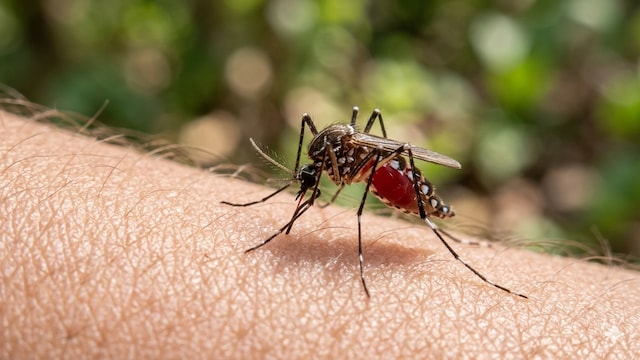
One of the biggest concerns highlighted by President Murmu is the changing relationship between climate and mosquito-borne diseases. Malaria is caused by Plasmodium parasites transmitted through the bites of infected female Anopheles mosquitoes. Temperature, rainfall and humidity influence mosquito breeding, survival and the development of parasites inside mosquitoes.
Changing climatic conditions can therefore alter when and where malaria transmission becomes possible. Rising temperatures may make certain geographical areas more suitable for mosquito survival and parasite development, while changing rainfall patterns can create or alter breeding habitats.
A study published in Tropical Medicine and Infectious Disease in December 2024 examined the relationship between climatic factors and malaria trends in India from 1961 to 2021. It found an association between rainfall and malaria incidence, highlighting the importance of environmental conditions in influencing transmission patterns.
The researchers also discussed the possibility that increasing temperatures could shift malaria transmission towards higher-altitude and northern subtropical regions. However, the relationship is not straightforward. Extremely high temperatures, insufficient rainfall and changes in humidity can also reduce mosquito survival or breeding suitability. The impact varies according to local geography, mosquito species and other environmental factors.
A 2025 modelling study published in Scientific Reports further examined how future climate scenarios could influence malaria transmission across different climatic zones in India. Its findings highlighted substantial regional variation, reinforcing the need for location-specific disease surveillance and prevention strategies. This means climate change does not necessarily translate into a uniform increase in malaria cases across India. Instead, it could change the geographical distribution and seasonal patterns of transmission.
How unplanned urbanisation and mosquito resistance complicate the fight
Climate change is not the only concern. President Murmu also warned that unplanned urbanisation and increasing insecticide resistance among mosquitoes could undermine malaria elimination efforts.
Rapid urban growth, inadequate drainage, construction activity and poorly managed water storage can create conditions favourable for mosquito breeding. Water stagnation in discarded containers, open drains, construction sites and poorly maintained surroundings can support mosquito populations.
Insecticide resistance presents another challenge. Mosquitoes exposed repeatedly to certain insecticides can develop resistance, reducing the effectiveness of conventional mosquito-control interventions. This makes it important to regularly monitor mosquito populations and adapt vector-control strategies according to local resistance patterns.
India's malaria-control programme has relied on interventions such as indoor residual spraying, long-lasting insecticidal nets, early diagnosis and prompt treatment. However, these measures need to be continuously evaluated to ensure they remain effective.
READ | Could A Mosquito Bite One Day Protect You From Malaria? What A New Research Found
Why India still has high-burden malaria districts
Despite the national decline, malaria transmission remains concentrated in certain states and geographical pockets. According to the Health Ministry, the 33 remaining high-burden districts are spread across nine states and Union Territories, including Mizoram, Odisha, Tripura, Assam, Andhra Pradesh, Chhattisgarh, Jharkhand, Maharashtra and the Andaman and Nicobar Islands.
These regions often face additional challenges, including difficult terrain, forest cover, remote settlements and limited access to healthcare facilities. Tribal and forest-dependent communities can be particularly vulnerable because of occupational exposure to mosquitoes and difficulties accessing timely diagnosis and treatment.
A uniform national approach may therefore not be sufficient. District-specific strategies, improved diagnostic access and community-level surveillance will be essential to identify and interrupt the remaining transmission.
India targets malaria elimination by 2030: What needs to happen?
Union Health Minister J P Nadda reiterated India's commitment to eliminating malaria by 2030, calling for renewed research, prevention and surveillance efforts. He highlighted that India, which accounts for approximately 16% of the global population, contributes around 0.7% of global malaria cases and 0.6% of malaria deaths, according to the figures shared at the event.
The government's approach involves strengthening the entire malaria-control chain, from identifying infections to ensuring patients receive appropriate treatment and tracking transmission.
Key priorities include:
- Early diagnosis: Ensuring people with suspected malaria have access to timely testing, including rapid diagnostic tests and microscopy.
- Complete treatment: Ensuring confirmed cases receive the appropriate antimalarial medicines and complete the prescribed course.
- Mosquito control: Strengthening indoor residual spraying, insecticide-treated bed-net coverage and environmental management.
- Disease surveillance: Identifying local transmission clusters quickly, particularly in districts reporting fewer cases.
- Research and innovation: Developing improved diagnostics, medicines, vaccines and strategies to address insecticide resistance.
- Community participation: Encouraging households to eliminate mosquito-breeding sites and seek timely medical attention for fever.
The President also emphasised the importance of ensuring that scientific research reaches villages and communities where it is needed most.
READ | Malaria Vaccine Works, But Completing All 4 Doses Is Key
India's nearly 80% reduction in malaria cases and deaths over the past decade represents a significant public-health achievement. However, the country's progress towards malaria elimination cannot be measured by falling national numbers alone.
Climate change, changing rainfall patterns, urbanisation and insecticide resistance could alter the disease's transmission landscape, making surveillance and prevention increasingly important.
With 33 high-burden districts still requiring focused attention, India's challenge is to ensure that the gains already achieved are not reversed. Reaching the 2030 malaria elimination target will require sustained research, stronger public-health infrastructure and community participation, particularly in the regions that remain most vulnerable.
Disclaimer: This content including advice provides generic information only. It is in no way a substitute for a qualified medical opinion. Always consult a specialist or your own doctor for more information. NDTV does not claim responsibility for this information.