

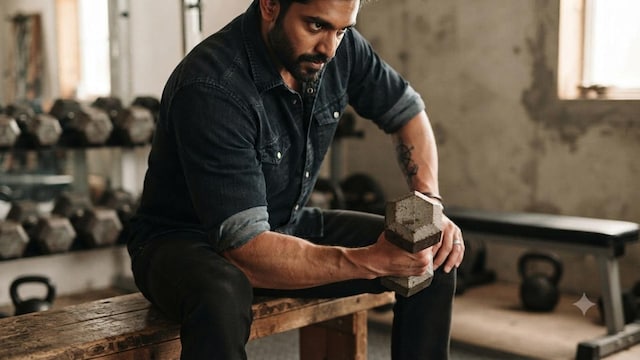
When it comes to working out, most people tend to focus on the muscles they can easily see in the mirror. Chest, biceps, shoulders, back and abs often dominate gym routines, with many people spending considerable time trying to build a well-defined upper body. However, a balanced fitness routine involves much more than developing these prominent muscle groups. Several smaller muscles and often-overlooked body parts play an equally important role in strength, stability, mobility and everyday movement. Neglecting them can create muscular imbalances, affect exercise performance and potentially increase the risk of injuries. For instance, weak forearms can limit your grip strength during heavy lifts, while undertrained rotator cuff muscles can affect shoulder stability. Whether you are a beginner or someone who has been lifting weights for years, paying attention to these neglected areas can make your workout routine more effective. Here are seven body parts you might be missing while training at the gym.
1. Forearms
Forearms are involved in almost every upper-body exercise that requires you to hold, pull or lift something. Yet, many people overlook direct forearm training because they assume exercises such as deadlifts, rows and pull-ups provide sufficient stimulation. Your forearm muscles are responsible for wrist movement and grip strength. Developing them can improve your ability to hold heavier weights, perform pulling exercises and maintain better control during strength training. Wrist curls, reverse wrist curls, farmer's walks and dead hangs are some exercises that can help strengthen your forearms. Farmer's walks are particularly useful because they challenge grip strength while engaging the shoulders and core.
2. Rear Deltoids
While front and side deltoids often receive considerable attention through shoulder presses and lateral raises, the rear deltoids are frequently neglected. Located at the back of your shoulders, these muscles contribute to shoulder movement, stability and upper-body pulling strength. Weak rear deltoids, combined with excessive emphasis on the front of the shoulders and chest, may contribute to muscular imbalances.
Exercises such as reverse pec-deck flyes, bent-over reverse flyes and face pulls can help target the rear deltoids. Including these movements in your shoulder or back routine can support balanced shoulder development.
3. Rotator Cuff Muscles
The rotator cuff is a group of four muscles and their tendons that surround the shoulder joint. These muscles help keep the upper arm bone stable within the shoulder socket while allowing controlled shoulder movement.Although they are relatively small, their role in shoulder function is significant. Neglecting rotator cuff strength can affect shoulder stability, particularly during overhead movements, pressing exercises and throwing activities.
External rotations with a resistance band or cable, side-lying external rotations and light cable rotations are useful exercises to strengthen these muscles. Focus on controlled movements rather than lifting heavy weights.
4. Gluteus Medius
Most gym-goers are familiar with exercises such as squats, deadlifts and hip thrusts to develop their glutes. However, the gluteus medius, a muscle located on the outer side of the hip, often receives less attention. This muscle plays an important role in stabilising the pelvis, controlling hip movement and maintaining balance while walking, running or standing on one leg. A weak or underactive gluteus medius may affect lower-body movement mechanics. Exercises such as side-lying leg raises, lateral band walks, clamshells and single-leg movements can help strengthen this muscle.
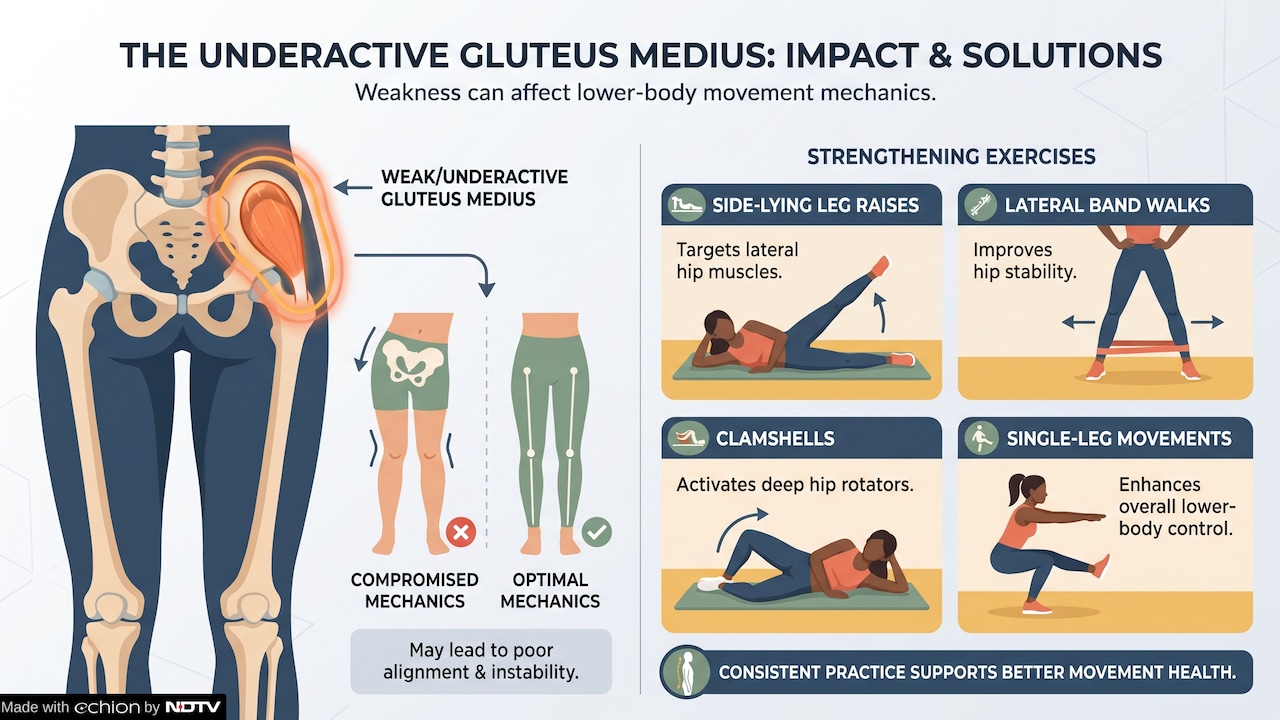
Gluteus Medius
5. Tibialis Anterior
The tibialis anterior is a muscle located along the front of your lower leg, next to the shin bone. It helps lift the foot towards the shin, a movement known as dorsiflexion, and plays an important role in walking, running and maintaining ankle control. While calf muscles receive considerable attention through standing and seated calf raises, the muscles at the front of the lower leg are often forgotten.
Tibialis raises, resistance-band dorsiflexion and controlled heel walks can help strengthen this area. Developing balanced strength around the ankle can support lower-leg function and improve control during physical activities.
6. Adductors
The inner-thigh muscles, collectively known as the hip adductors, help bring your legs towards the midline of your body. They also contribute to hip stability and movement control during exercises such as squats, lunges and running.
Although compound lower-body exercises recruit these muscles, they may benefit from additional targeted training, depending on your exercise routine and individual requirements. Adductor machine exercises, Copenhagen planks and side lunges are useful ways to strengthen the inner thighs. Strong adductors can contribute to better hip control and support movements that involve changing direction.
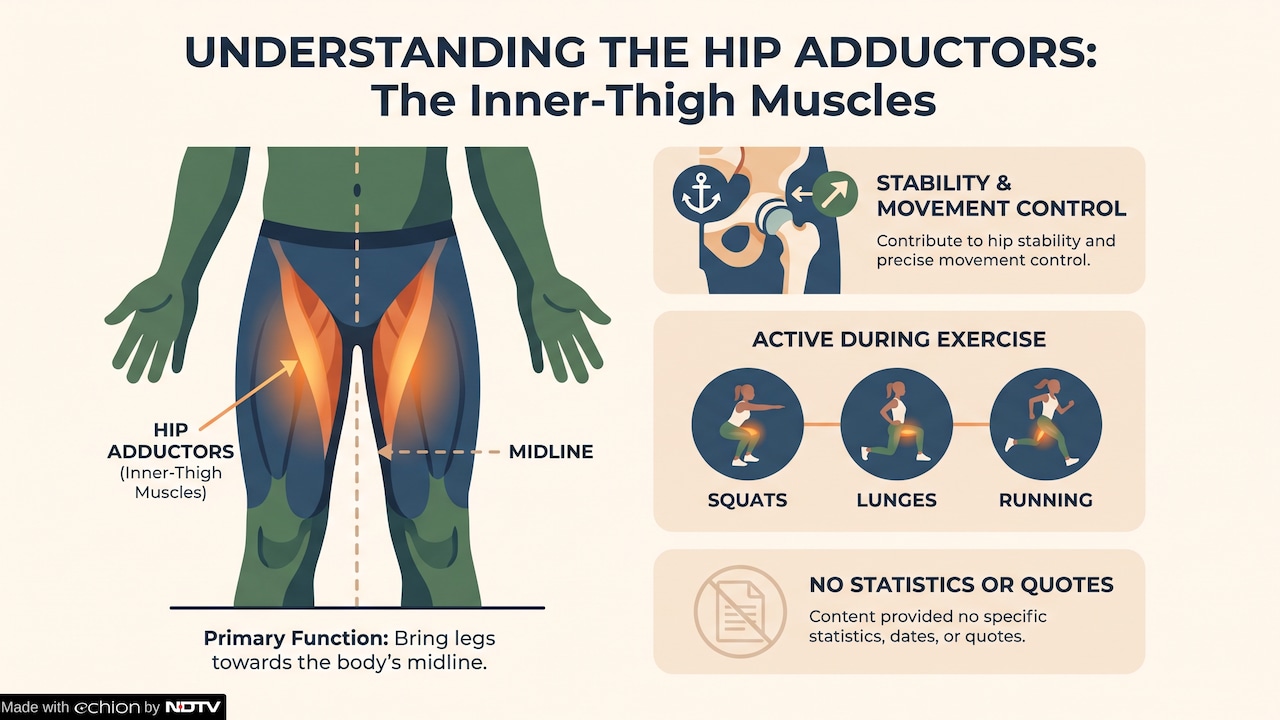
The inner-thigh muscles
7. Neck Muscles
Neck training is another area that many people overlook while focusing on larger muscle groups. The neck muscles help support the head, control its movement and contribute to cervical stability. People who spend long hours sitting at desks or looking at screens may also benefit from paying attention to neck mobility and posture. Gentle neck flexion, extension and lateral flexion exercises can help train the muscles responsible for neck movement. However, neck training requires particular caution. Avoid sudden movements, excessive resistance or uncontrolled neck bridges, especially if you have existing neck pain or a cervical spine condition. Consult a qualified professional before introducing loaded neck exercises.
READ | Leg Workout For Women: 6 Exercises You Can Perform At Home
Why Should You Train Smaller And Often-Neglected Muscles?
A well-rounded workout routine should not focus exclusively on building visible muscles. Smaller muscle groups contribute to joint stability, movement coordination, balance and overall physical performance. Training these areas can also help address muscular imbalances that develop when certain muscle groups receive significantly more attention than others. For example, strengthening the rear deltoids and rotator cuff muscles alongside the chest and front shoulders can support balanced shoulder function. However, this does not mean every muscle requires a separate workout session. Many smaller muscles are already involved in compound exercises. The idea is to identify areas that may not be receiving sufficient attention and include targeted exercises where necessary.
Building an impressive physique is not just about bigger arms, a broader chest or well-defined abs. A strong and functional body depends on several muscle groups working together. From your forearms and rotator cuff muscles to your gluteus medius and tibialis anterior, these often-neglected areas deserve attention in a balanced training programme.
Disclaimer: This content including advice provides generic information only. It is in no way a substitute for a qualified medical opinion. Always consult a specialist or your own doctor for more information. NDTV does not claim responsibility for this information.