

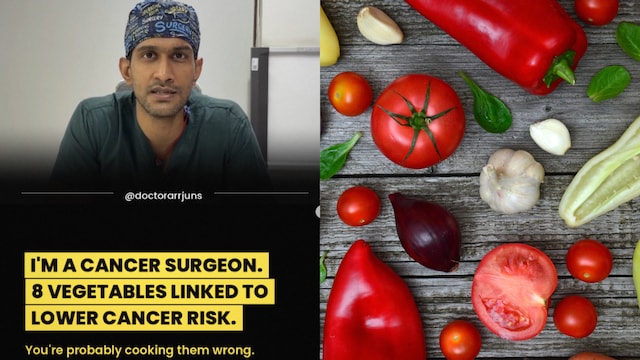
While no single food can prevent or cure cancer on its own, an overall healthy, plant-focused diet significantly lowers your risk. According to a study published in Nutrition Journal, 30% to 40% of all cancers can be prevented through healthy lifestyle and dietary choices. Vegetables particularly protect the body by providing fibre, vitamins, and specialised plant chemicals (phytochemicals) while helping you maintain a healthy weight. In an Instagram post, Dr Arrjun Sankaran, a Hyderabad-based Cancer Surgeon, shared a list of eight vegetables that can help reduce overall cancer risk.
"I am a cancer surgeon, and here are 8 vegetables linked to lower cancer risk. You are probably cooking them wrong," he wrote in the post.
8 vegetables that can help reduce cancer risk
1. Garlic
Garlic has been linked to a reduced risk of stomach cancer. To maximise its health benefits, crush or chop it and wait about 10 minutes before cooking. Add garlic towards the end of your cooking process to retain its potency. For a delicious twist, try adding raw, crushed garlic to raitas. Be cautious, though; cooking garlic for over 10 minutes can diminish its health benefits.
READ | Why Cervical Cancer Screening Matters Even When Women Feel Healthy
2. Onion
Onions are packed with nutrients, especially in their outer layers. For the best results, incorporate some raw onions into your daily diet, whether in a salad or raita. Alternatively, try making onion-tomato chutney to enjoy both raw and cooked benefits. Light cooking preserves most of their nutrients, so avoid overcooking them.
3. Tomato
Cooking tomatoes actually enhances their nutritional profile, especially their lycopene content, which has been associated with cancer risk reduction. "Oil helps you absorb lycopene, its red pigment," Dr. Sankaran wrote. However, be wary of store-bought ketchup, which often contains high levels of sugar and salt.
4. Carrot
Carrots are another vegetable linked with lower cancer risk. Light cooking with a bit of oil can significantly increase the bioavailability of vitamin A. According to Dr. Sankaran, cooked carrots provide 3-6x more vitamin A than raw ones.
READ | Oncologist Lists 7 Ultra-Processed Foods Linked To Colorectal Cancer That You Should Be Avoiding
5. Cauliflower
"Cauliflower is also linked to lower cancer risk. Steaming or a quick stir-fry will help retain most of its nutrients. Boiling can cause valuable compounds to leach into the water. You can add it to dal or make gobhi matar sabzi. Remember, gobhi manchurian doesn't count," recommends Dr. Sankaran.
6. Cabbage
Like cauliflower, cabbage is from the same family and should be washed thoroughly before cooking. The best methods include quick stir-frying or steaming. Try it in dishes like cabbage poriyal or thoran, but refrain from boiling it soft and draining the water to preserve its nutritional content.
7. Broccoli
For broccoli, the optimal cooking method is light steaming. Aim for just 3-4 minutes, until it's bright green, then finish with a pinch of crushed raw mustard seeds (rai) on top. This combination has been shown to increase sulforaphane, a compound linked to cancer protection. Be careful, as cooking at high heat can destroy beneficial enzymes.
8. Mushrooms
Mushrooms, particularly linked to a lower risk of breast cancer, should always be cooked before consumption. Sauté or grill them for 5-7 minutes to enjoy their health benefits. Dishes like mushroom-matar or an omelette work well. Remember, never eat wild mushrooms you might find, as some can be toxic.
READ | Oncologist List Tops Sources Of Essential Nutrients, Says "You Don't Always Need Supplements"
While aiming to incorporate all eight of these vegetables daily isn't necessary, a balanced approach of about 400 grams (approximately 5 handfuls) of fruits and vegetables each day is ideal. Embrace a variety of these vegetables to take advantage of their unique benefits. Ultimately, no single vegetable can cure cancer, but together, they can contribute to a healthier lifestyle.
"No vegetable cures cancer, your whole plate counts," Dr. Sankaran concluded.
Disclaimer: This content including advice provides generic information only. It is in no way a substitute for a qualified medical opinion. Always consult a specialist or your own doctor for more information. NDTV does not claim responsibility for this information.