

)
Insulin resistance has quietly emerged as one of the most defining health challenges that drives type 2 diabetes. It acts as the primary trigger for type 2 diabetes, a condition where the body's cells become stubborn and fail to respond effectively to the hormone insulin. When cells are unable to process insulin, glucose pools in the bloodstream instead of being converted into energy. Beyond diabetes, persistent insulin resistance is the driving force behind stubborn visceral fat (belly fat) and hormonal imbalance issues. While chronic physical inactivity is a primary contributor to this metabolic failure, introducing targeted daily exercise is an effective way to regain control.
Among the most discussed lifestyle interventions, two distinct strategies frequently face off: achieving the classic benchmark of walking 10,000 steps a day, or dedicating 20 minutes to a focused yoga practice. To understand which approach yields better results, evaluating the distinct pathways through which both types of exercises can repair metabolic health is essential.
How Walking 10,000 Steps Helps Reduce Insulin Resistance
Walking is often underestimated because of its simplicity, but a daily habit of 10,000 steps functions as a metabolic booster. When a person walks, large skeletal muscle groups, primarily the glutes, quads, and calves, tend to contract repeatedly.
These contractions activate a cellular mechanism that allows muscles to absorb glucose directly from the blood for fuel, completely independent of insulin. This process significantly enhances insulin sensitivity for up to 48 hours post-walk. Furthermore, logging 10,000 steps burns roughly 300 to 500 calories, depending on pace and body weight, directly targeting systemic fat reduction.
Core Walking Benefits For Insulin Resistance
- It is gentle on the joints, making it highly safe for individuals carrying excess weight or dealing with chronic inflammation.
- Requires no prior conditioning, specialized gear, or learning curve.
- Steps do not need to be completed all at once; short 10-minute bursts throughout the day prevent prolonged sedentary intervals that spike blood sugar.
Can 20 Minutes Of Yoga Improve Insulin Resistance?
While walking attacks the issue through physical energy expenditure, yoga works through a different internal highway: the neuroendocrine system. Chronic stress releases high levels of cortisol, a hormone that actively triggers glucose production in the liver and promotes insulin resistance.
A 20-minute daily yoga practice downregulates the sympathetic nervous system (the fight-or-flight response), reducing cortisol levels and clearing the path for proper insulin function.
Beyond stress reduction, specific twist-based asanas (postures) gently compress and stimulate intra-abdominal organs, including the liver and pancreas, optimizing metabolic rate and aiding hormonal balance.
Clinical research supports this practice. A prominent study published in the Journal of Clinical and Diagnostic Research observed that type 2 diabetes patients who practiced yoga for just 30 days experienced a significant reduction in fasting blood glucose levels and marked improvements in overall yoga for insulin resistance metrics.
Also Read: Staying Fit During A Heatwave: What Kind Of Exercise Is Best Suited To Your Age?
Walking vs Yoga: Which Works Better?
To evaluate how these routines compare directly, the primary metrics governing metabolic recovery can be structured across key health outcomes.
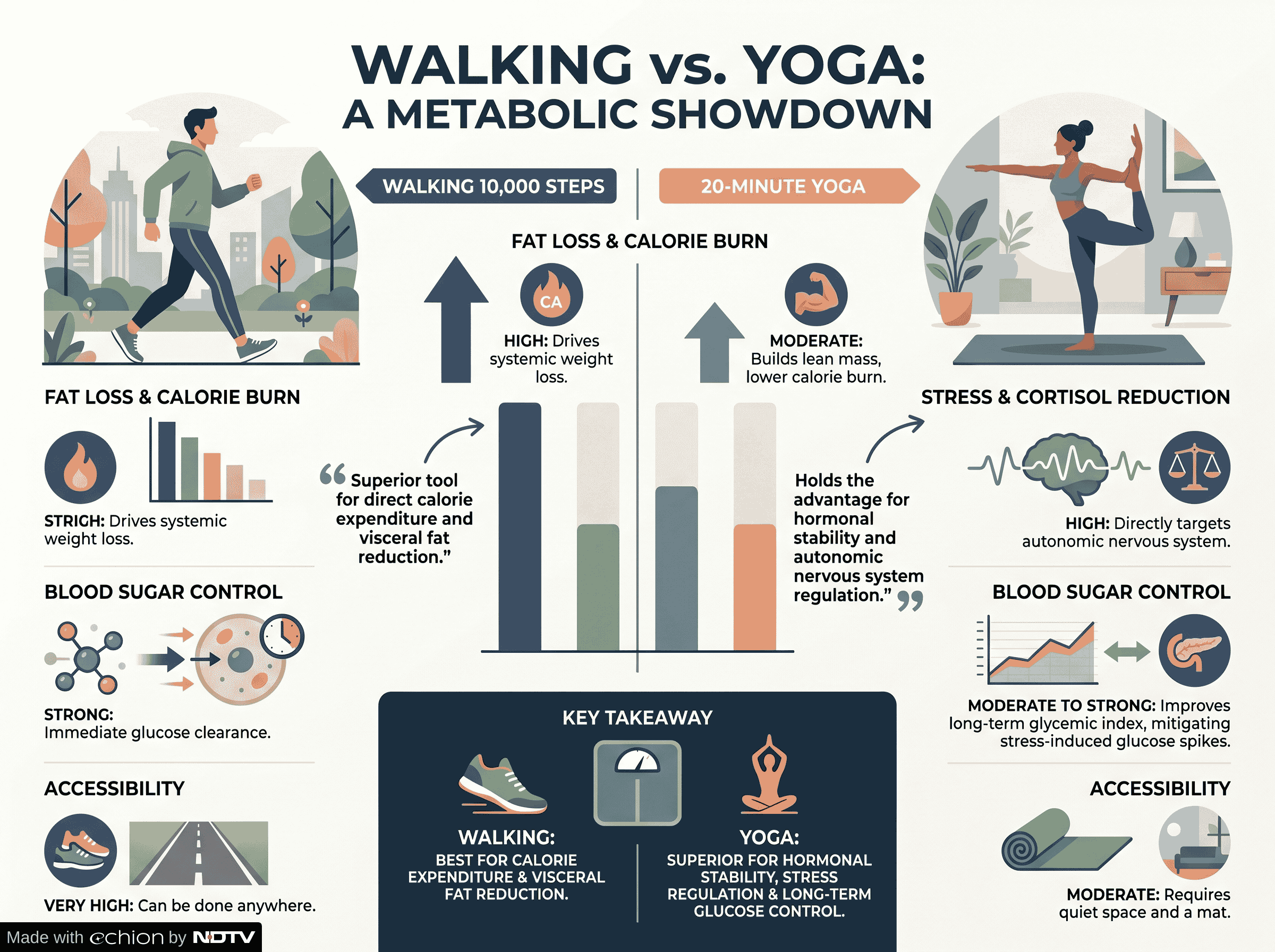
Expert Insights: The Integrative Approach
Medical professionals emphasize that viewing these exercises as opposing choices misses the bigger physiological picture.
"Both walking and yoga improve insulin sensitivity, but combining aerobic activity with stress-reducing practices gives the best results," says Dr. Gagandeep Singh, Consultant Physician, Diabetes and Metabolic Health Expert in New Delhi. Consistency in movement always outranks the sheer intensity of a single workout. While walking physically clears glucose out of the blood, yoga stops stress from pouring excess glucose into the blood in the first place.
Which One Should You Choose: Walking Or Yoga?
If a schedule allows for only one form of exercise, the choice should align with an individual's primary underlying metabolic driver:
- The overweight individual: If excess body weight and a high body fat percentage are the primary causes of insulin resistance, walking should take priority to optimize daily caloric deficit.
- The high-stressed or those with hormonal issues: If the individual struggles with intense daily stress, poor sleep, or hormonal chaos, a 20-minute yoga routine will offer targeted benefits by calming cortisol production.
- The Busy Professional: For those bound to desks for 10 hours a day, accumulating walking steps throughout the workday is the easiest way to break up harmful sedentary patterns.
Also Read: 8 Yoga Asanas And Breathing Techniques That Can Lower Body Heat
The Strategy To Reverse Insulin Resistance Faster
To accelerate the reversal of insulin resistance, relying on a single routine is rarely the quickest route. The most effective strategy blends both ways while supporting them with foundational lifestyle habits. Here is how you can do so:
- Aim for a consistent daily target of 8,000 to 10,000 steps.
- Dedicate 15 to 30 minutes to a restorative yoga flow daily or every other day to keep stress hormones low.
- Add brief strength training or resistance exercises two days a week to build glucose-storing muscle tissue.
- Pair physical movement with a balanced, whole-food diet rich in fiber, lean proteins, and complex carbohydrates while minimizing refined sugars.
There is no singular, one-size-fits-all miracle workout for metabolic health. For individuals looking to maximize insulin sensitivity, lower long-term disease risks, and feel their best, a balanced combination of walking and yoga delivers the dual-action defense against insulin resistance.
Disclaimer: This content including advice provides generic information only. It is in no way a substitute for a qualified medical opinion. Always consult a specialist or your own doctor for more information. NDTV does not claim responsibility for this information.