

)
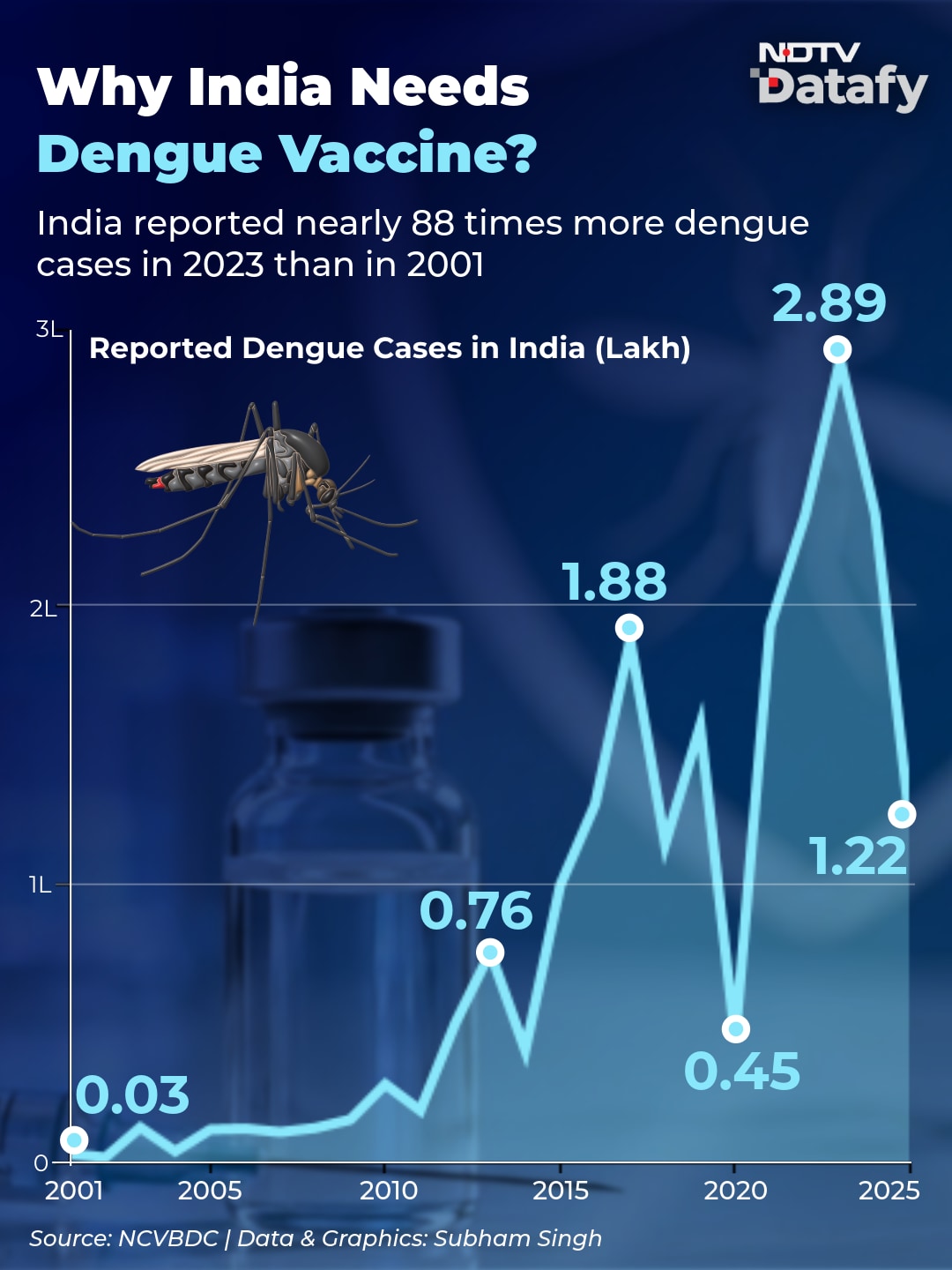
India has approved its first dengue vaccine, QDENGA, in a step against a disease that has become an increasingly large public health challenge in the country. The approval comes as dengue cases in the country have risen dramatically over the past two decades, from just 3,306 reported infections in 2001 to a record 2,89,235 cases in 2023. Even in 2025, India had recorded 1,21,824 cases of dengue.
The vaccine, approved by the Central Drugs Standard Control Organisation (CDSCO), is the first dengue vaccine cleared for use in India. Developed by Japanese pharmaceutical company Takeda, QDENGA is designed to protect against all four dengue virus types. It can be administered to individuals aged 4 to 60 years and follows a two-dose schedule, with the second shot given three months after the first. Also, it does not require prior dengue testing before vaccination.
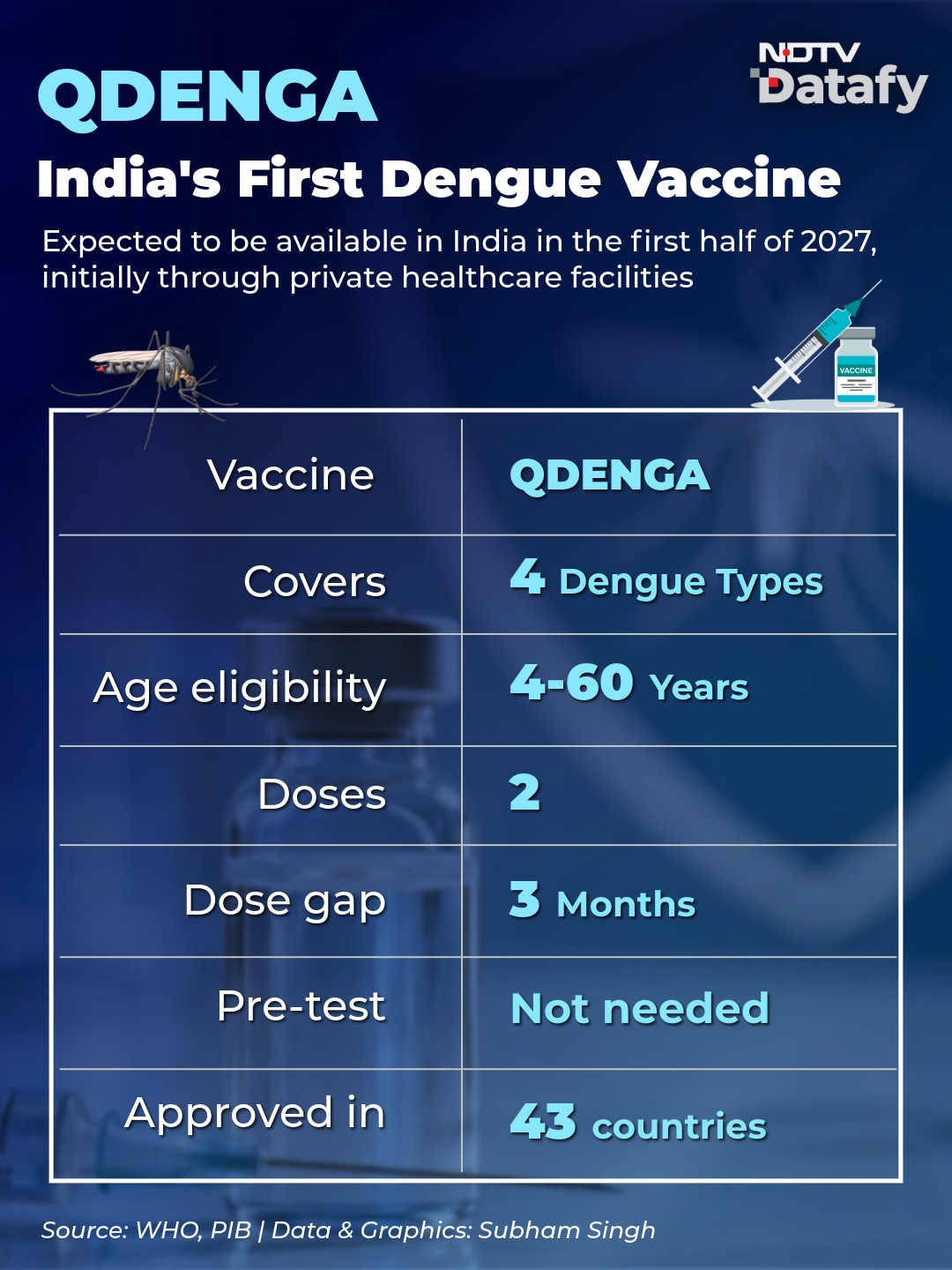
India's approval adds to a growing list of countries that have already authorised the vaccine. QDENGA has received approval in more than 43 countries and has also secured World Health Organization (WHO) prequalification.
Why India needs dengue vaccine
The historical trend of dengue in India helps explain why the vaccine's arrival is important. As per the data by National Center for Vector Borne Diseases Control (NCVBDC), reported cases remained below 30,000 annually until 2010. Since then, the numbers have climbed sharply, crossing 1 lakh for the first time in 2016 and approaching near 3 lakhs in 2023.
The state-wise data by NCVBDC show that the disease remains concentrated in southern and western states. Tamil Nadu reported the highest number of dengue cases in 2025 at 23,407, accounting for nearly one in every five cases recorded in the country. Maharashtra followed with 14,168 cases, while Kerala reported 10,923 infections.
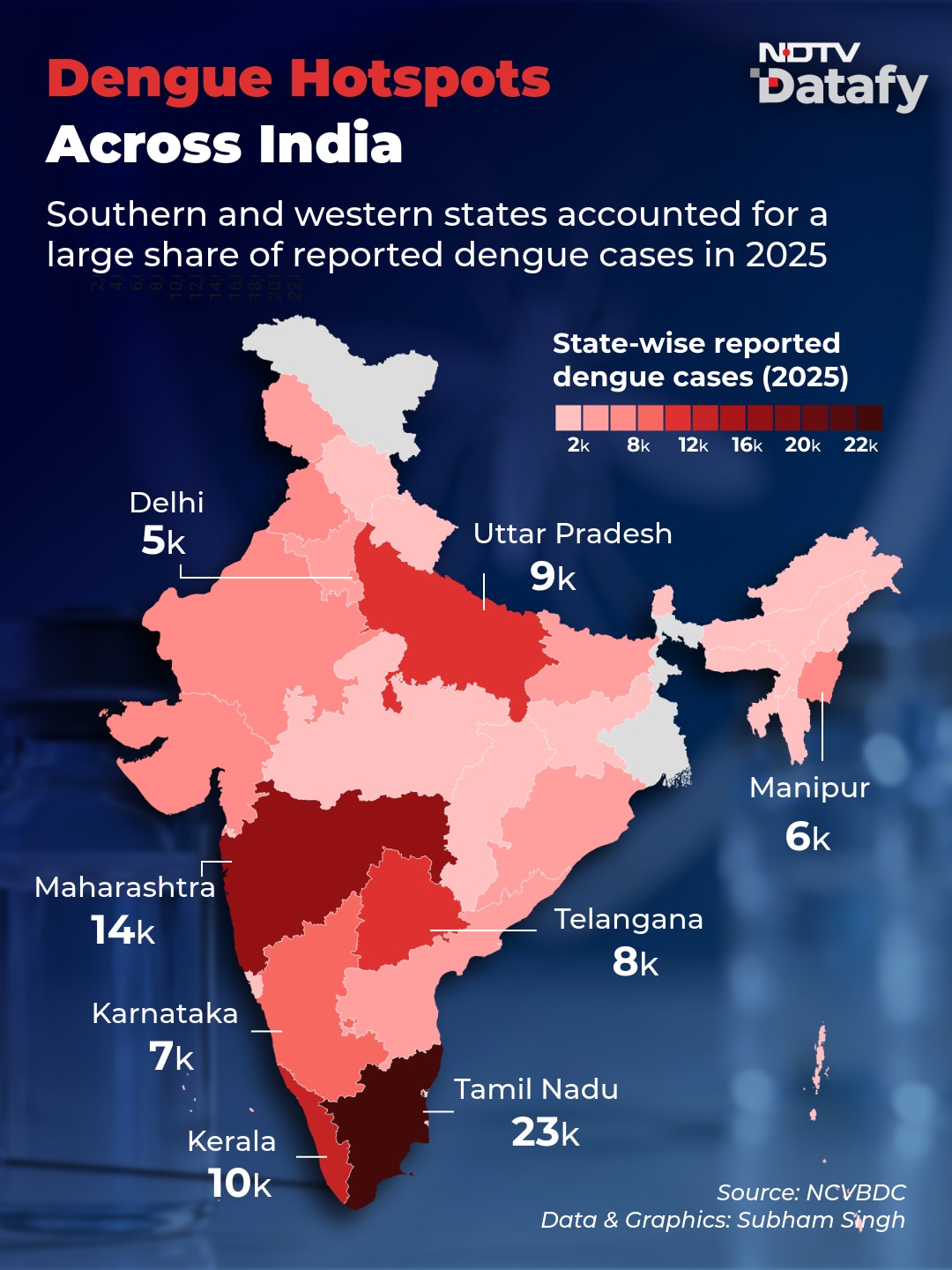
Uttar Pradesh recorded 9,206 cases, while Telangana reported 8,412. Karnataka, Punjab, Delhi, Rajasthan and Gujarat also reported thousands of infections, highlighting that dengue is no longer confined to a few traditional hotspots but affects large parts of the country.
However, after years of rising infections and recurring outbreaks, India now has a new tool in its fight against a disease that has steadily expanded its footprint across the country.
Disclaimer: This content including advice provides generic information only. It is in no way a substitute for a qualified medical opinion. Always consult a specialist or your own doctor for more information. NDTV does not claim responsibility for this information.