

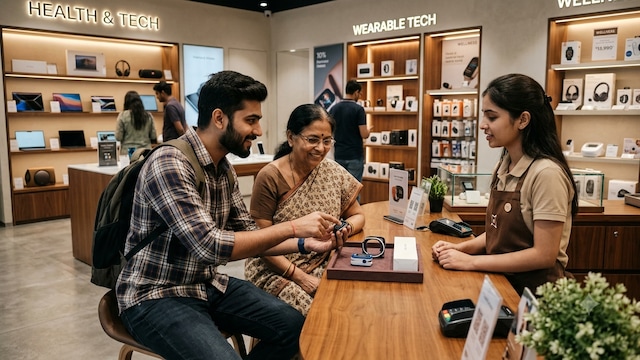
Festive sales are an attractive time to buy health gadgets, with discounts on smartwatches, fitness trackers, digital blood pressure monitors, pulse oximeters and wearable devices that record electrocardiograms (ECGs). For people monitoring heart health, blood pressure or oxygen saturation at home, these devices can offer useful insights and encourage healthier habits.
However, not every gadget marketed as a health monitor is designed or validated to detect a medical problem accurately. A device may look sophisticated, display readings within seconds and promise advanced health tracking, yet still provide information that is unreliable or unsuitable for clinical decision-making.
This distinction matters in India, where consumers increasingly shop for healthcare technology online and may be tempted by steep festive discounts, unfamiliar brands or exaggerated advertising claims. An inaccurate blood pressure reading, for instance, could create unnecessary anxiety or give someone with hypertension false reassurance.
"While these gadgets can encourage people to monitor their health, buyers must remember that a lower price should never come at the cost of accuracy, safety or reliability," says Dr Vivek Tandon, Director, Cardiology, ShardaCare - Healthcity.
Before purchasing a health gadget, here are six red flags to watch out for, according to Dr Tandon.
1. Missing Or Unverifiable Certification
A health gadget's packaging may display certification logos, regulatory claims or assurances of medical-grade accuracy. However, consumers should not assume these establish that a device is suitable for diagnosing or monitoring a medical condition.
"In India, certain medical devices require registration or licensing under the Medical Devices Rules," says Dr Tandon. The Central Drugs Standard Control Organisation (CDSCO) regulates medical devices under India's Medical Devices Rules, 2017. The applicable requirements depend on the device's classification and intended purpose.
Before purchasing a product advertised for medical use, check the manufacturer's details, intended use and relevant regulatory documentation. Where applicable, verify claims through official regulatory sources rather than relying on logos printed on packaging or product listings.
2. Claims That Promise Instant Diagnosis
Promises to detect a heart attack, prevent cardiac events or identify several diseases instantly should raise concerns. " A smartwatch or fitness tracker cannot replace a clinical examination or a medically validated diagnostic test," Dr Tandon explains.
Wearables can help track trends in heart rate, physical activity and, on certain devices, heart rhythm. Some ECG-enabled smartwatches can record a single-lead ECG and flag possible abnormalities. However, their capabilities differ, and a normal reading does not rule out a heart attack or other serious cardiac condition.
Similarly, a fitness watch's estimated blood pressure or oxygen saturation should not automatically be treated as equivalent to a measurement obtained using a validated medical device. Consumers should read the product's limitations and intended use carefully, especially when advertisements promise comprehensive health screening without a clinical assessment.
3. Vague Or Misleading Approval Claims
Terms such as "government-approved", "clinically certified" and "doctor-recommended" can influence purchasing decisions. However, such phrases are not substitutes for verifiable evidence. Dr Tandon advises buyers to independently check claims about regulatory approval and clinical validation.
For example, a CE marking indicates conformity with applicable European requirements; it does not automatically establish approval for every medical purpose in India. Similarly, evidence supporting one function of a wearable does not necessarily validate all its advertised features.
Consumers should also distinguish between a device tested for general wellness tracking and one supported by evidence for a specific medical use.
READ | What Does 'Medical Grade' Actually Mean? 5 Things To Check Before Buying Health Devices
4. Unusually Steep Discounts
A dramatic price reduction can be tempting, particularly during major online sales and festive shopping events. However, a price substantially lower than that offered by authorised sellers warrants closer scrutiny. "Compare prices and buy from reputable retailers," advises Dr Tandon.
Unusually cheap listings may involve counterfeit products, unauthorised stock or devices with uncertain warranty coverage. Check the seller's identity, product specifications, manufacturer information and return policy before placing an order.
Consumers should also examine reviews critically. Repeated complaints about inconsistent readings, defective sensors, battery problems or difficulty obtaining replacements can indicate potential quality concerns.
A discount alone does not prove that a product is unsafe, but it should not override checks on authenticity and reliability.
5. Refurbished Or Used Devices Sold As New
A product's condition can affect its performance, particularly when it relies on electronic sensors, batteries or components that require regular calibration. Dr Tandon recommends checking the product condition, serial number, warranty validity and return policy, as well as looking for signs of tampering with the packaging.
For devices such as blood pressure monitors, buyers should also check the condition and fit of the cuff. A damaged cuff, unsuitable size or faulty component can compromise measurements.
Before buying, establish whether the product is new, refurbished or previously used. Check whether the manufacturer will honour the warranty and whether replacement parts, servicing and technical support are available.
READ | Buying A Health Gadget For Your Parents Above 50? 7 Things To Check Before You Gift It
6. No Manufacturer Support Or Evidence Of Validation
A trustworthy health gadget should come with clear manufacturer details, accessible operating instructions and a route to customer support. "Look for clear manufacturer details, customer support, operating instructions and evidence supporting the device's intended medical use," says Dr Tandon.
For people monitoring hypertension, selecting a validated blood pressure monitor is particularly important. The American Heart Association recommends using a validated automatic upper-arm monitor with an appropriately sized cuff. Users should follow the instructions and share readings with their doctor rather than changing medication based on isolated measurements.
Pulse oximeters also have limitations. The US Food and Drug Administration notes that readings may be affected by factors including circulation, skin pigmentation, skin temperature and other conditions. A reassuring number should therefore not override concerning symptoms.
Health gadgets can help people become more aware of their health, but their usefulness depends on the quality of the information they provide. Before buying during a festive sale, verify regulatory claims, question exaggerated promises, compare prices, inspect warranty conditions and prioritise independently validated devices.
Most importantly, do not let a gadget replace medical advice. Chest pain, breathlessness, fainting or other potentially serious symptoms require appropriate medical assessment, regardless of what a wearable displays.
As Dr Tandon advises, consumers should choose clinical reliability over festive discounts. When it comes to health monitoring, a trustworthy reading is more valuable than an impressive feature list.
Disclaimer: This content including advice provides generic information only. It is in no way a substitute for a qualified medical opinion. Always consult a specialist or your own doctor for more information. NDTV does not claim responsibility for this information.