

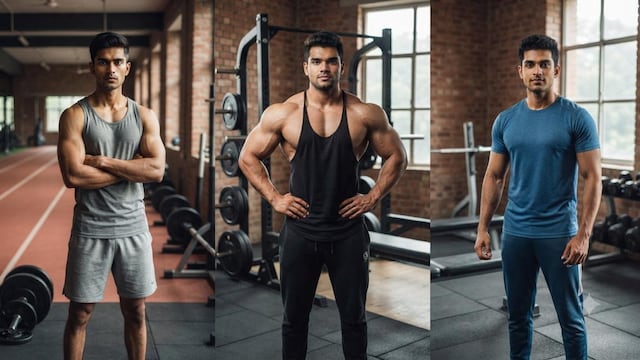
For decades you might have believed that the 'perfect' physique for men features broad shoulders, big biceps, defined pecs and six-pack abs. The role of social media, fitness influencers and popular culture only contributes to the notion that the pinnacle of male fitness is the muscular, especially heavily muscled physique. But the narrative around men's health and fitness is slowly changing. A growing number of men are asking whether it's really worth building muscle and getting bigger if it comes at the expense of strength, endurance and overall health? This International Men's Day, the conversation around men's fitness goes beyond aesthetics. While some aspire to a lean and defined physique, others prefer a combination of muscle, strength and athletic performance. For many, the goal is no longer simply to look good in the mirror but to build a body that can keep up with the demands of everyday life. The perspectives of men from different professional backgrounds highlight how fitness goals are evolving. From prioritising overall strength and fitness to pursuing athleticism over appearance, their choices reflect a broader understanding of what it means to be healthy.
Lean, Defined Or Muscular: What Is The Ideal Physique?
There is no single definition of an ideal male physique. While bodybuilding culture often celebrates muscularity and size, not every man aspires to look bulky. Some prefer a leaner appearance, with visible muscle definition and a body fat percentage that allows them to maintain an athletic look. For Ramarko Sengupta, AI Editor at NDTV.com, a lean and defined physique is more appealing than a bulky one. When asked what kind of physique he would like to build, he said, "Lean and defined, I don't like the bulky look." However, his fitness priorities extend beyond how his body looks. When it comes to choosing between building muscle, losing body fat or achieving overall fitness and strength, he believes the latter deserves greater importance. "Overall fitness and strength is most important. If you achieve that, you automatically look better too," he said. His perspective reflects an important distinction between exercising purely for appearance and working towards long-term physical well-being. Muscle definition may be a visible outcome of consistent training, but strength, endurance and functional fitness determine how effectively the body performs.
Losing Weight, Reclaiming Health: Why Men Need To Prioritise Fitness
For many men, fitness becomes a priority only after experiencing a health setback, struggling with weight gain or noticing that their physical health is affecting their everyday lives. Work commitments, family responsibilities and professional pressures can often push personal health further down the priority list. Praveen Mishra, SEO Manager at NDTV, believes this is an issue that deserves greater attention. Reflecting on the pressures men face while balancing professional and personal responsibilities, he said, "A man plays a very important role in his family. Today's work-life balance puts a lot of pressure on his shoulders. While managing work and family responsibilities, he often forgets about his own fitness and compromises his health."
He also pointed out that health concerns are increasingly affecting men at younger ages. His own experience became a turning point in his fitness journey. "You can see that many men are facing health issues at an early age. I am also someone who has faced health problems because I didn't pay enough attention to my fitness.
"So, I decided to work on myself." His decision translated into a significant change in his lifestyle and body weight. Praveen revealed that he previously weighed 87.5 kg and has since lost almost 8 kg, bringing his current weight to 79.4 kg. "I used to weigh 87.5 kg, and I had a heavy body. As of now, I have lost almost 8 kg, and my current weight is 79.4 kg. "I believe that a healthy man can build a stronger and happier family. That's why I want to achieve a lean and fit physique. I am working out consistently and moving towards that goal."
For him, the motivation is not restricted to losing weight or achieving a particular appearance. It is also about being healthy enough to fulfil personal and family responsibilities without neglecting himself. Sharing his message on International Men's Day, he said, "This International Men's Day, my message to every man is simple: Take care of your health. Your family needs you, but you also need to take care of yourself. His experience highlights an important aspect of men's health: prioritising fitness should not be a response reserved for a medical concern. Consistent physical activity, balanced nutrition and adequate recovery can help men take a more proactive approach to their health.
Athletics Over Aesthetics: Building A Body That Can Perform
While some men measure fitness progress through weight loss, muscle definition or changes in their appearance, others look at what their bodies can accomplish. For Kailash Menon, Founder of Lakshya Strength and Conditioning, athletic performance takes precedence over aesthetics. Rather than focusing on building bigger muscles, he prefers developing a body that is strong, fast, agile and capable of handling physical challenges. "For me it's always been athletics over aesthetics. I am more interested in what my body can do, than how it looks. I prefer a lean body that can lift heavy, run fast, and sail through all the challenges life throws at me without breaking a sweat."
His approach to fitness is centred on developing athletic qualities that extend beyond the gym. Strength is important, but so are speed, mobility, coordination and the ability to respond to different physical demands. Explaining the kind of athleticism he strives for, Kailash draws inspiration from one of the most agile animals in the wild. "Cat-like athleticism is what I pursue and train for. Something like a leopard, it's strong, it's fast, it's agile, and it's dangerous." The comparison reflects a fitness philosophy in which physical capability matters more than the size of individual muscles. A person may have impressive biceps or a muscular chest, but these features alone do not necessarily indicate functional strength or athletic ability.
Kailash further explains this through a simple analogy that challenges the conventional obsession with muscular measurements. "It's not about the size of your biceps, it's about what can you do with them. A seventeen inch arm means nothing if you can't open a jam jar."
His perspective brings attention to functional fitness, which focuses on developing strength and movement patterns that support everyday activities. Exercises such as squats, lunges, carries, pushes and pulls can help improve the body's ability to perform practical movements while building strength and coordination. It also reinforces the idea that fitness should be measured through more than physical appearance. Being able to lift, run, move efficiently and recover from physical exertion can be equally meaningful indicators of progress.
The Medical Perspective: What Doctors Say
According to Dr. Mahesh Wadhwani, Director & HOD - Cardio Thoracic Vascular Surgery, Fortis Manesar, as a heart surgeon and over 50 years of age, I advocate for an "active lean" physique, prioritising functional muscle over simple weight loss. True longevity and stamina require the hard work of building and maintaining muscle structure. To achieve this, aim for a healthy BMI between 18.5 and 22.9 (slightly less than the recommended upper range of 25), ensuring your weight reflects hard work to get lean mass rather than inactivity.
"For me, the ideal physique is not necessarily bulky or extremely lean, but one that reflects strength, fitness and overall health. As doctors, we should aspire to a body that is metabolically healthy, physically active and sustainable to maintain. Fitness is not about appearance; it is about longevity, discipline and quality of life," says Dr. Ravinder Singh Bhadoria, Additional Director Nephrology, Fortis Greater Noida.
Dr. Sanjay Raina, Head of Internal Medicine, Amrita Hospital, Faridabad, says, "The physique I would aspire to is one that makes ordinary life easier at 70. Can I rise from a low chair without using my arms? Can I carry groceries up a flight of stairs? Those questions reveal what muscle is for. A person can lose weight and still lose something worth keeping if part of that loss comes from muscle. In a 2022 British Journal of Sports Medicine review of 16 prospective cohort studies, muscle-strengthening activity was associated with a 10-17% lower risk across several outcomes, including type 2 diabetes and death from any cause. The studies tracked what people did and what happened to them over time. They support the value of strength training, while leaving open how much muscle any individual needs to gain."
Beyond The Mirror: What Should Men Really Work Towards?
The different perspectives shared by these men point towards a common understanding: there is no universal physique that every man needs to pursue. Some may feel confident with a lean and defined body, while others may prefer a more muscular appearance. There are also those who prioritise athletic performance, endurance and functional strength over visible muscle definition. However, the most important consideration should be whether a fitness routine supports overall health. Building muscle, reducing excess body fat and improving cardiovascular endurance can all contribute to better physical fitness when approached appropriately.
Men should also remember that fitness is not limited to spending hours in the gym. Regular physical activity, sufficient sleep, balanced meals, stress management and preventive health check-ups are important parts of maintaining long-term well-being. International Men's Day offers an opportunity to revisit the way men approach their health. Professional responsibilities and family commitments may demand considerable time and energy, but personal well-being should not become a casualty of a busy lifestyle. Ultimately, whether a man aspires to be bulky, lean, athletic or somewhere in between, the goal should be to build a body that is healthy, strong and capable. After all, the best physique is not necessarily the one that attracts the most attention but the one that allows you to live a healthier, more active and fulfilling life.
Disclaimer: This content including advice provides generic information only. It is in no way a substitute for a qualified medical opinion. Always consult a specialist or your own doctor for more information. NDTV does not claim responsibility for this information.