

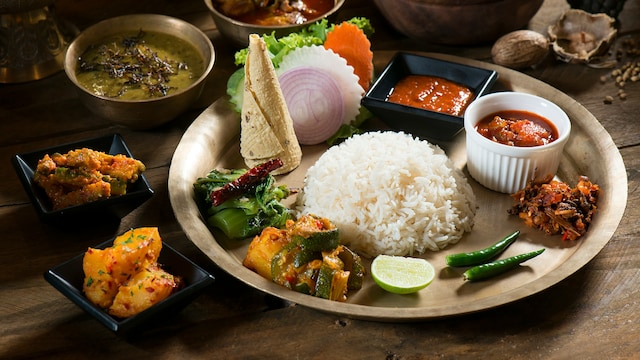
For me, festive food has always been about more than what is on the plate. It is the aroma of something freshly fried in the kitchen, the familiar taste of gulgulle, homemade sweets and namak pare, and the treats that seem to appear only around festivals. These are the flavours associated with childhood, family traditions and the excitement of everyone coming together.
There is a certain comfort in these familiar foods. They carry memories that no modern menu can quite replace. After all, what is a festival without the foods we have grown up looking forward to?
The Shift Toward Modern, Healthier-Sounding Menus
But this festive season, I have been noticing a change. Alongside traditional favourites, restaurant menus and party spreads increasingly feature millet dimsums, avocado tacos, grilled appetisers and baked or air-fried snacks.
Familiar dishes are being reinvented with ingredients and cooking methods that promise a healthier alternative without compromising on taste. For me, that makes festive eating feel a little less guilt-laden. We can enjoy celebrations and our favourite foods while making choices that may be better for our health.
That is a welcome shift. Healthy eating cannot realistically mean giving up everything we enjoy, particularly during a season built around celebrations and shared meals. But it raises an important question: Are we actually eating healthier, or have we simply become better at making indulgence sound healthy?
Why Is Festive Eating Changing?
The shift is not just about what people want to eat, but also about how they want to feel after a meal. With parties and social gatherings often stretching late into the night, hosts are increasingly looking for menus that offer variety without leaving guests feeling excessively full.
Vishal Sinha, founder of We The Chefs, has noticed this change in festive entertaining. With parties, card sessions and family get-togethers continuing late into the night, lighter options are finding greater favour. "Modern hosts are trying to strike a balance between mindful eating and indulgence. As celebrations stretch late into the night, there is a growing preference for lighter, less oily and more easily digestible options that leave guests feeling comfortable rather than weighed down," says Sinha.
Traditional comfort foods are also being reinvented. Millet risottos and contemporary khichdi preparations are appearing alongside millet-based appetisers and baked or air-fried snacks. The idea is to retain familiar flavours while experimenting with ingredients and cooking methods that may offer nutritional advantages.
But health-conscious choices will only find a lasting place on festive menus if they deliver on taste, Sinha believes. "Healthy food should never feel like a compromise. The real challenge is to combine wholesome ingredients with flavour, so people can enjoy what they eat without feeling that they have to choose between the two," he says.
READ | Can Too Much Festive Food Trigger A Cardiac Emergency? What Happens After A Heavy Meal
Redefining the Festive Mantra
Sakshi Tuli, founder, director and culinary curator at Tandoori Nights, has also observed a shift in how people approach festive menus. "The new festive mantra is: 'Don't eat less, eat right. Keep the tradition, change the ingredient,'" she says. Tuli points to growing interest in millet-based rice and breads, grilled and steamed preparations, and smaller portions that allow guests to sample different dishes.
Curated menus are increasingly being preferred over-elaborate buffets, with greater attention to variety and food wastage. Salads, too, are moving beyond their traditional role as side dishes. Quinoa and nut chaat, sprout-based preparations and salads featuring chickpea or lentil pasta are examples of how familiar flavours are being combined with ingredients perceived as more nutritious.
These changes could encourage greater variety, more vegetables and more mindful portions. But a dish that looks healthier on a menu does not necessarily offer better nutrition.
Can Healthy-Sounding Food Be Misleading Us?
This is where we need to look beyond food trends and examine what is actually on the plate. Millets can provide fibre, minerals and other nutrients, depending on the variety and preparation. Replacing refined grains with whole-grain alternatives can be beneficial.
But a millet-based dimsum is not automatically healthier than every conventional version. Its nutritional value depends on the ingredients, filling, cooking method, accompanying sauces and portion size. The same applies to avocado tacos. Avocados contain predominantly unsaturated fats and provide fibre. Yet a taco's overall nutritional profile depends on what else goes into it. A vegetable-rich taco with a modest amount of dressing is different from one loaded with cheese, creamy sauces and calorie-dense toppings.
Cooking methods matter, too. Baking or air-frying can reduce the amount of oil used compared with conventional deep-frying. However, these methods do not automatically make a dish low in calories, sodium or saturated fat. Often, we see one apparently healthy ingredient or cooking method and assume the entire dish is good for us.
READ | 7 Home Remedies To Manage Acidity While Enjoying Your Favourite Festive Treats
Expert Warnings on Trendy Labels
Nutritionist Ishi Khosla cautions against judging food by its name or headline ingredient alone. "A food's nutritional value cannot be judged by a single ingredient, a trendy label or the way it is marketed. Don't just go by the labels and names. Check the other ingredients, because a product described as millet-based may not be made entirely from millets," she says.
Khosla also advises consumers to pay attention to the ingredients used in restaurant preparations. "Look at the sauces and additives, including flavour enhancers, and pay attention to the fats used. Food should not contain vanaspati or margarine," she adds. Her observations are particularly relevant as more of our eating takes place outside the home.
Restaurant menus may highlight millets or avocado without telling diners how much oil, salt, sugar or dressing goes into the finished dish. The nutritional value can change considerably depending on the preparation. The useful question, therefore, is not simply whether an ingredient is considered healthy, but whether the complete dish offers a meaningful nutritional advantage.
Looking Beyond a Single Festive Meal
The conversation becomes even more important when we look beyond a single festive meal. Our health is shaped by our overall eating patterns: what we eat regularly, how varied our diets are and how often highly processed or energy-dense foods feature in our meals. One ingredient cannot compensate for an otherwise unbalanced diet, just as one indulgent meal does not undo healthy habits.
Dr (Hon) Manissha S Bhagat, functional nutritionist and founder of Zoii Peak Wellness, says consumers need to look beyond the claims attached to individual foods. "A health claim is not a nutritional guarantee. Millet-based, baked, gluten-free or plant-based foods are not inherently healthier. What matters is ingredient quality, degree of processing, added sugars, protein and fibre content, and portion size. These alternatives can offer real benefits when they genuinely improve nutritional quality," she says.
With dining out becoming increasingly frequent, Bhagat believes the focus should shift from trendy food labels to overall dietary patterns and metabolic health. "Ultimately, it is not occasional festive indulgence but consistent dietary habits that shape long-term health," she says. That is the distinction worth making. A healthier alternative can be a useful swap, but it is not a licence to overlook everything else on the plate.
Celebrating Without Compromising Health
Nor should the pursuit of healthier eating become another source of guilt. Food is part of our culture, our relationships and our celebrations. The pleasure of sharing a festive meal should not be reduced to counting calories or feeling guilty about every rich dish. Can we celebrate without compromising our health?
Perhaps the answer is not to treat festive eating as a battle between indulgence and discipline. We do not need to abandon gulgulle, gujiya or the homemade treats that make festivals special. But we can be more mindful of how often we eat them, how much we serve ourselves and how we balance the rest of our meals.
Choosing a grilled appetiser instead of a deep-fried one, including more vegetables, being mindful of portions and balancing richer dishes with simpler preparations can all help improve the overall quality of a meal.
READ | What Happens To Your Body When You Break A Long Fast? Post-Navratri Tips
The Role of the Modern Host
Hosts can make a difference, too. A festive spread can retain the dishes people look forward to while offering fresh salads, vegetable-based appetisers, whole-grain alternatives and a variety of cooking methods. It need not be an all-or-nothing choice between traditional indulgence and a strictly health-focused menu.
For diners, the more useful question is not whether a dish is marketed as healthy, but what makes it healthier. A millet dimsum may offer nutritional advantages depending on its ingredients. An avocado taco can contribute fibre and unsaturated fats. An air-fried appetiser may use less oil than its deep-fried counterpart. These can be worthwhile choices when we consider the complete dish rather than its name.
Expecting More From Our Food
Perhaps the real change underway is that we are beginning to expect more from our food: it should taste good, bring people together and fit into a healthier lifestyle. That is a welcome expectation. But a healthier-sounding menu and a healthier diet are not necessarily the same thing.
As we gather around festive tables this season, we can hold on to both things that matter: the joy of the foods that connect us to our memories, and the awareness to make choices that support our health. The goal is not to take the joy out of festive eating. It is to make sure that eating well and celebrating well can go hand in hand.
Disclaimer: This content including advice provides generic information only. It is in no way a substitute for a qualified medical opinion. Always consult a specialist or your own doctor for more information. NDTV does not claim responsibility for this information.