

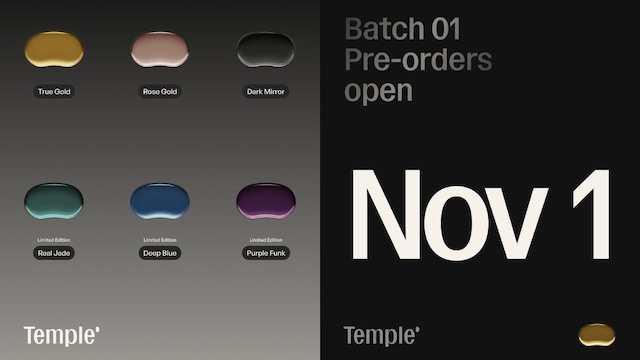
Temple, the health-tracking wearable developed by Zomato founder Deepinder Goyal, is set to open pre-orders for its first batch on November 1, 2026. Unlike a smartwatch or fitness band, which usually tracks metrics such as heart rate, steps and sleep, Temple focuses on changes in blood flow to the brain. The device is designed to help users understand how their bodies respond to factors such as exercise, rest and mental stress.
Goyal has said that each device in the first batch will be made to order, with deliveries expected within three months of purchase. In this post, he said, "The wait is over. Temple Batch 01 pre orders open November 1. Each @temple is hand-made to order and delivered to you within three months of your purchase."
The wait is over. Temple Batch 01 pre orders open November 1. Each @temple is hand-made to order and delivered to you within three months of your purchase. https://t.co/t6qth9sUeV
— Deepinder Goyal (@deepigoyal) October 21, 2026
The wearable should be worn on the sides of the forehead and it uses light-based sensors to monitor changes in blood flow. While the device could offer new insights into the body's functioning, it is important to understand what these readings mean.
What Is The Temple Device And How Does It Work?
Temple is a wearable that uses sensors to track changes in blood flow towards the brain. Its developers call this measurement BrainFlow. The idea is to observe how circulation changes during different activities and conditions, rather than relying only on conventional fitness measurements.
The device is worn near the temples on the side of the forehead. It uses light to detect changes in signals associated with blood flow. These readings can then be used to study patterns over time. Goyal has described the device as a way to better understand the body's responses to everyday activities and physical demands.
What Can The Temple Device Tell You About Your Health?
1. Brain Blood Flow
The main focus of the device is BrainFlow, which is a measure that aims to track changes in blood flow towards the brain. This could help users understand how readings change during exercise, rest or other daily activities. However, a change in the device's reading does not automatically mean that something is wrong with the brain. Blood flow is influenced by several factors.
2. Body's Response To Physical Activity
The device aims to help users understand how their bodies respond to physical activities. For example, tracking changes during and after exercise may give you information about patterns associated with activity and recovery. This could be useful for athletes and people interested in monitoring their performance. However, users should not assume that one particular reading can tell them whether they are fit enough or whether their heart and brain are functioning normally.
3. Entropy
Temple is also linked to an Entropy score which aims to highlight the body's overall physiological strain. The score is designed to account for factors such as rest, exercise, mental stress and caffeine. This may give you a picture of how different activities affect the body. However, a single score cannot fully explain why someone feels tired, stressed or unwell.
What The Temple Device Cannot Tell You
1. It Cannot Diagnose Brain Diseases
The device should not be used to diagnose conditions such as a stroke, brain tumour or other neurological disorders. Detecting changes associated with blood flow is not the same as identifying a disease. Diagnosis may require a doctor's examination, medical history, blood tests or imaging, depending on the symptoms.
2. It Cannot Replace Clinical Tests
An AI-powered wearable may provide additional information, but it cannot replace established medical investigations. An AIIMS-trained neurosurgeon has cautioned that Temple should not be considered a substitute for clinical evaluation.
3. It Cannot Explain Every Symptom
Headaches, dizziness, fatigue and difficulty concentrating can have many causes. A wearable that tracks changes in blood flow cannot necessarily identify the reason behind these symptoms. If symptoms persist, worsen or appear suddenly, users should speak to a doctor.
Disclaimer: This content including advice provides generic information only. It is in no way a substitute for a qualified medical opinion. Always consult a specialist or your own doctor for more information. NDTV does not claim responsibility for this information.