

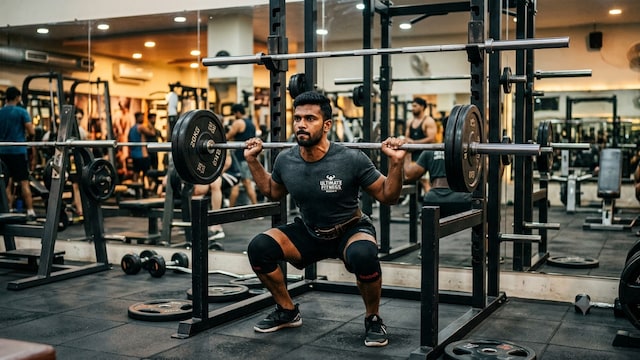
Losing weight doesn't necessarily involve hours on the treadmill, running huge distances or doing loads of cardio. Strength training and weightlifting can also be a big part of a weight loss programme. The benefits of lifting weights are that it builds and maintains muscle, increases strength and is good for overall body composition. When combined with a sensible diet, sufficient protein and regular exercise it can be a very effective route to achieving sustainable weight loss. One of the major benefits of lifting weights is that it helps to preserve lean muscle as you lose body fat. That's obviously a very important point as if you're losing weight too quickly or just relying on a very low calorie diet you can end up with a lot of muscle loss. Preserving muscle is key to maintaining physical function and it's a major contributor to your total energy expenditure. However, weightlifting is not limited to lifting heavy barbells or spending hours at the gym. Several compound movements engage multiple muscle groups simultaneously, making them useful additions to a strength training routine. Here are seven weightlifting exercises that can help support your weight loss journey while building strength and muscle.
1. Barbell Squats
Barbell squats are among the most effective compound exercises for strengthening the lower body. The movement primarily targets the quadriceps, hamstrings and glutes while also engaging the core muscles to stabilise the body. To perform this exercise, position a barbell across your upper back and stand with your feet approximately shoulder-width apart. Keep your chest lifted, brace your core and bend your knees and hips to lower yourself into a squat. Push through your feet to return to the starting position.
Since squats engage several large muscle groups, they require considerable muscular effort and can contribute to overall workout energy expenditure. They also help improve lower-body strength and functional fitness.
2. Deadlifts
Deadlifts are another compound movement that recruits multiple muscle groups, including the hamstrings, glutes, back and core. They help develop posterior-chain strength and improve overall muscular coordination. Stand with your feet approximately hip-width apart and a barbell positioned over the middle of your feet. Bend at your hips and knees, grip the bar and keep your spine neutral. Brace your core and push through your feet as you extend your hips and knees to stand upright. Lower the bar under control. Deadlifts can be particularly useful for people looking to build strength while maintaining muscle during a weight loss programme. Beginners should start with lighter weights and learn the correct technique before increasing the load.
3. Barbell Bench Press
Weight loss workouts should not focus only on the lower body. Upper-body strength training is equally important for maintaining balanced muscle development. The barbell bench press primarily works the chest muscles, while also engaging the triceps and front shoulders. Lie on a flat bench with your feet firmly placed on the floor. Hold the barbell slightly wider than shoulder-width apart and lower it towards your mid-chest with control. Push the bar upwards until your arms are extended without forcefully locking your elbows.
This exercise helps build upper-body strength and preserve muscle mass. Including pressing movements in your routine also ensures that your chest, shoulders and arms receive adequate training.
4. Bent-Over Barbell Rows
Bent-over rows are an effective exercise for strengthening the upper and middle back. They primarily target the latissimus dorsi, rhomboids and trapezius, while the biceps and core muscles assist during the movement. Hold a barbell with your hands slightly wider than shoulder-width apart. Hinge forward at your hips while keeping your back neutral and knees slightly bent. Pull the bar towards your lower abdomen by driving your elbows backwards. Slowly lower the weight to the starting position. Building back strength can improve posture, upper-body stability and muscular balance. It also helps ensure that your workout routine includes pulling movements alongside exercises such as the bench press.
READ | 7 Body Parts You Might Be Missing In Your Workout Routine
5. Dumbbell Lunges
Dumbbell lunges are an excellent lower-body exercise that works the quadriceps, hamstrings and glutes. They also challenge balance and stability because each leg works independently. Hold a dumbbell in each hand and stand upright with your feet hip-width apart. Step forward with one leg and lower your body until both knees are bent, keeping your front knee aligned with your foot. Push through your front foot to return to the starting position and repeat with the other leg. Lunges engage large muscle groups and can increase the physical demands of your workout. They are also useful for improving unilateral strength and identifying differences in strength between the two legs.
6. Dumbbell Shoulder Press
The dumbbell shoulder press is a compound upper-body exercise that primarily targets the deltoid muscles, particularly the front and middle portions of the shoulders. The triceps also assist in pressing the weights overhead. Sit on a bench with back support or stand upright while holding a dumbbell in each hand at shoulder level. Brace your core and press the dumbbells overhead until your arms are extended. Slowly lower them back to shoulder height. This exercise helps develop shoulder strength and upper-body muscle mass. Maintaining shoulder strength is also important for performing everyday activities that involve lifting or reaching overhead.
7. Barbell Hip Thrusts
Hip thrusts are particularly effective for strengthening the gluteal muscles. They also engage the hamstrings and core, making them a useful addition to a lower-body strength training routine. Sit on the floor with your upper back resting against a stable bench. Position a padded barbell across your hips and bend your knees with your feet firmly planted on the floor. Push through your heels and lift your hips until your torso becomes approximately parallel to the floor. Squeeze your glutes at the top before lowering your hips slowly.
Strong gluteal muscles support hip stability, lower-body strength and functional movements such as walking, running and climbing stairs.
How Does Weightlifting Help With Weight Loss?
Weightlifting supports weight loss primarily by helping build and preserve lean muscle mass. When people lose weight, they may lose both fat and muscle, particularly if their diet and exercise routine are not properly structured. Resistance training helps reduce muscle loss during a calorie deficit.
Muscle tissue also requires energy to maintain, although the increase in resting calorie expenditure from gaining muscle is generally modest. The more immediate energy expenditure comes from the workout itself.
Strength training can also improve insulin sensitivity, support metabolic health and make everyday physical activities easier. When combined with regular walking, cardio exercises and a calorie-controlled diet, it can contribute to a more sustainable approach to weight management.
How Often Should You Lift Weights To Lose Weight?
For most healthy adults, strength training at least two days a week, covering all major muscle groups, is a useful starting point. People who are comfortable with resistance training can gradually increase their frequency depending on their fitness levels, recovery and goals. It is important to allow trained muscles sufficient recovery time between demanding sessions. Beginners should prioritise proper technique, start with manageable weights and gradually increase resistance as their strength improves.
Nutrition also plays an important role. Consuming adequate protein, maintaining a moderate calorie deficit and getting sufficient sleep can help support muscle recovery and fat loss. Weightlifting can be a valuable part of a weight loss programme, but no single exercise can specifically burn fat from a particular body part. The goal should be to reduce overall body fat while preserving muscle mass and improving strength.
Exercises such as squats, deadlifts, bench presses, rows, lunges, shoulder presses and hip thrusts can help create a well-rounded strength training routine. Combine them with a balanced diet, regular movement and adequate recovery to work towards a stronger and healthier body.
Disclaimer: This content including advice provides generic information only. It is in no way a substitute for a qualified medical opinion. Always consult a specialist or your own doctor for more information. NDTV does not claim responsibility for this information.