

)
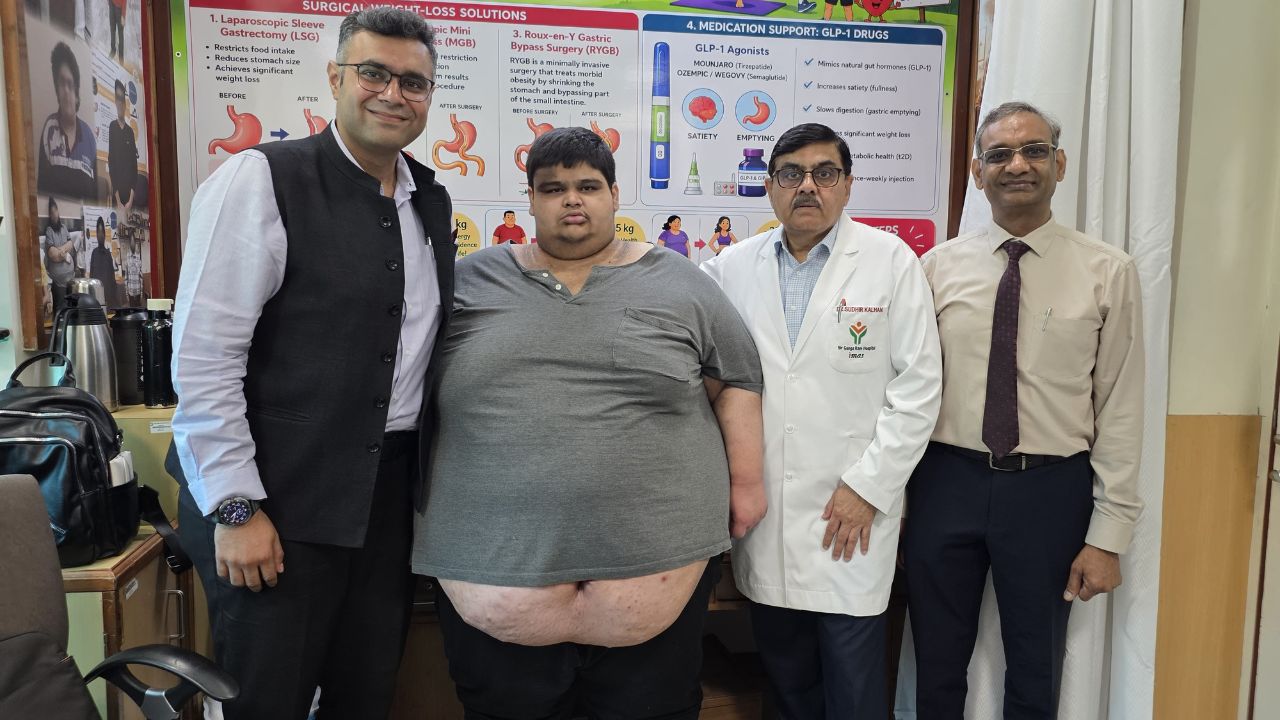
In a complex and high-risk bariatric surgery case, a 16-year-old boy from Delhi, weighing approximately 275 kg, underwent a successful laparoscopic sleeve gastrectomy at Sir Ganga Ram Hospital. At the time of admission, the teenager was suffering from severe breathing difficulties, obstructive sleep apnea, and extensive skin infections.
Due to extreme obesity, the teenager could not fit into a standard car and had to be transported to the hospital in a 'Matador' van. Hospital examinations revealed severe obstructive sleep apnea and widespread skin infections. He was kept in the Pediatric Intensive Care Unit (PICU) for approximately two weeks for stabilisation and treatment of respiratory complications.
With his BMI reaching nearly 100, a comprehensive multidisciplinary evaluation was conducted prior to surgery. A team of around 20 specialists, spanning pediatric critical care, bariatric surgery, pediatric gastroenterology, pediatric cardiology, anesthesiology, and other disciplines, assessed the critical risks associated with the surgery, anesthesia, patient positioning, the laparoscopic procedure, and post-operative respiratory care.
Following detailed discussions with the family, the team concluded that bariatric surgery was the most suitable option available to address the extreme obesity and its associated complications. The surgery was performed by Dr Daksh Sethi, Dr Sudhir Kalhan, Dr Mukund Khetan, and Dr Suviraj John from the Institute of Minimal Access, Metabolic, and Bariatric Surgery at Sir Ganga Ram Hospital, New Delhi. Despite technical challenges arising from the patient's excessive weight and body habitus, the team successfully completed the laparoscopic sleeve gastrectomy.
Dr Daksh Sethi, Lead Bariatric Surgeon at Sir Ganga Ram Hospital, said, "This was not a routine bariatric surgery. Every step had to be meticulously planned due to the patient's age, weight, and severe sleep apnea. Our primary objective was to medically stabilise him for the surgery and ensure that a team of specialists was prepared to handle any potential challenges that might arise during or after the procedure."
The multidisciplinary team played a crucial role in stabilising the teenager prior to the surgery and managing his care during and after the procedure. Dr Anil Sachdev, Head of the Department of Pediatric Critical Care, played a pivotal role in the patient's optimisation and intensive care management. The anesthesia team comprised Dr Rakesh Saxena, Dr Shikha Sharma, and Dr Savitar Malhotra. Dr Nishant Wadhwa, a pediatric gastroenterologist, performed an upper gastrointestinal endoscopy before the surgery, while Dr Neeraj Aggarwal, a pediatric cardiologist, conducted the cardiac assessment.
The laparoscopic sleeve gastrectomy was successfully completed, and the teenager made a good recovery. He was discharged from the hospital just three days after the surgery.
The initial results, observed approximately two months post-surgery, have been encouraging. His weight has dropped from around 275 kg to 223 kg, a reduction of nearly 50 kg. However, the treating team states that the goal is not merely weight loss, but the improvement of the patient's long-term health, mobility, and quality of life.
Dr Sudhir Kalhan, Chairman of the Institute of Minimal Access, Metabolic, and Bariatric Surgery at Sir Ganga Ram Hospital, said, "For a patient battling severe obesity at such a young age, our priority was not just immediate weight loss, but improving his long-term health and quality of life. His progress over the past two months has been extremely encouraging, and we hope this marks the beginning of a healthier and more active life for him."
The long-term goal is to achieve sustained weight loss and mitigate obesity-related health risks. These include sleep apnea, metabolic and cardiovascular complications, mobility issues, and a diminished quality of life.
Dr Daksh Sethi added, "The decision to perform bariatric surgery on such a young patient is never taken lightly. The objective goes beyond weight loss; it is about transforming the patient's health trajectory and enabling him to lead a more active and healthy life."
The teenager continues to be monitored through regular multidisciplinary follow-ups and a structured weight-management program aimed at ensuring sustained weight loss, improved mobility and better long-term health.
Disclaimer: This content including advice provides generic information only. It is in no way a substitute for a qualified medical opinion. Always consult a specialist or your own doctor for more information. NDTV does not claim responsibility for this information.