

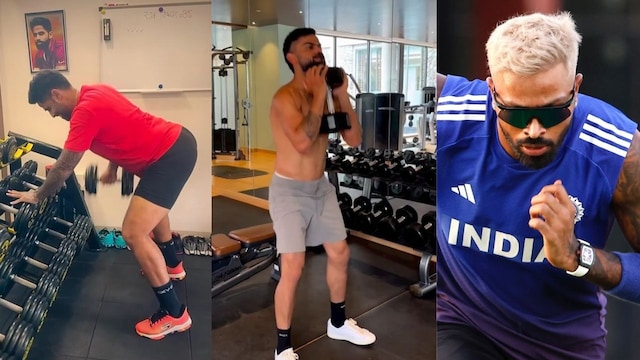
Cricket may look like a game of skill, timing and technique, but staying competitive at the highest level also demands considerable physical fitness. From sprinting between the wickets and maintaining concentration during long innings to bowling at high speeds and diving to save runs, cricketers need a combination of strength, stamina, flexibility, balance and recovery. Over the years, Indian cricketers have increasingly embraced structured fitness programmes that go beyond traditional nets and running drills. Some focus on strength training and explosive movements, while others incorporate yoga, meditation, outdoor sports and carefully planned recovery sessions into their routines. Virat Kohli's disciplined approach to training has often been discussed, while Hardik Pandya's workouts demonstrate the importance of strength and mobility. Meanwhile, MS Dhoni has spoken about staying active by playing different sports, and Suryakumar Yadav has highlighted the role of sleep, recovery and consistency. Here is a look at 10 cricketers and their distinctive approaches to fitness, along with the health and exercise principles readers can learn from them.
1. Virat Kohli: Strength Training, Agility And Consistency
Virat Kohli is among the cricketers most closely associated with India's modern fitness culture. His transformation over the years has highlighted how structured exercise, dietary discipline and recovery can support sporting performance. In an interview with The Indian Express in 2023, Kohli discussed combining strength training, agility drills and endurance exercises. He also emphasised the importance of adequate sleep and recovery between intense training sessions. His approach is not limited to building muscle. Agility drills help athletes practise quick changes of direction, coordination and balance, while endurance training supports the ability to sustain physical effort over time. Strength training, meanwhile, can help improve force production and maintain muscle strength. Kohli has also spoken about meditation and mindfulness as part of his approach to self-care.
A well-rounded exercise programme should include resistance training, cardiovascular activity and recovery. Consistency is more useful than relying on occasional intense workouts.
2. Hardik Pandya: Strength Training And Mobility
As an all-rounder, Hardik Pandya has to meet the physical demands of both batting and bowling. His fitness routines have featured strength-focused gym sessions, running, stretching and exercises designed to improve balance. A workout routine highlighted by NDTV in September 2024 included exercises such as leg presses, dumbbell bench presses, side lunges and Bulgarian split squats. Bulgarian split squats are a single-leg exercise that trains the quadriceps, glutes and other muscles involved in lower-body movement. They also challenge balance and coordination. Side lunges work the legs through a lateral movement pattern, which can complement the forward-and-backward movements commonly used in exercise. For an athlete, combining strength with mobility is important because raw muscle strength alone does not guarantee efficient movement. The body must also coordinate muscles and joints during rapid changes in direction. Include exercises for the upper body, lower body and core rather than training only the muscles you can see in the mirror. Begin with manageable resistance and prioritise correct technique.
3. MS Dhoni: Staying Active Through Different Sports
MS Dhoni has spoken about using different sports to remain physically active. In a January 2025 interaction reported by The Indian Express, the former India captain said playing a variety of sports helped him maintain his fitness alongside paying attention to his diet and going to the gym. This approach offers an alternative to following the same repetitive workout every day. Different sports place different demands on the body, challenging coordination, reaction time, balance and cardiovascular fitness. For people who find conventional gym sessions monotonous, recreational sports can also make physical activity more enjoyable. Football, badminton, swimming and cycling are examples of activities that can be incorporated into a varied fitness routine, depending on an individual's ability and health. However, recreational sports should complement rather than automatically replace strength training, particularly for adults seeking to preserve muscle mass as they age. Choose activities you enjoy and rotate them sensibly. A sustainable routine is easier to maintain when exercise feels rewarding rather than like a daily obligation.
4. Suryakumar Yadav: A Combination Of Gym Workouts, Yoga And Recovery
Suryakumar Yadav's approach to fitness combines physical training with changes in everyday habits. In an October 2026 interview reported by NDTV, the cricketer discussed how his lifestyle changes helped him improve his fitness and cricketing performance. His routine has included gym workouts, running, batting practice, yoga, meditation, stretching and recovery. He has also discussed the importance of managing food portions rather than permanently eliminating favourite dishes.
READ | Virat Kohli On Staying Fit: The Mind-Body Connection Explained
Yoga and stretching can help maintain flexibility and improve movement, while meditation may support relaxation and mental focus. Running and gym workouts address different physical demands, making them complementary when programmed appropriately. Recovery is another important part of this approach. Sleep, sufficient nutrition and appropriate rest between demanding sessions help the body adapt to exercise. The fitness takeaway: Fitness is not determined by workouts alone. Sleep, nutrition, stress management and recovery all influence how consistently you can exercise.
5. Shubman Gill: Athletic Conditioning And Strength
Shubman Gill's training approach reflects the physical requirements of modern cricket, where players must combine technical skill with speed, coordination and strength. A 2023 report by GQ India, which spoke to his strength and conditioning coach, explored the athletic training that supports Gill's performance. His conditioning is designed around the needs of cricket rather than simply achieving a particular physique. For a batter, physical preparation can involve strength development, movement drills, acceleration and conditioning. These abilities help players accelerate between the wickets, change direction efficiently and maintain control during demanding movements. Strength and conditioning programmes also need to account for the volume of cricket practice a player is undertaking. A heavy gym session immediately before an intense match or training session may not always be appropriate. The fitness takeaway: Train for the activity you want to perform better at. Combining resistance training with movement practice and cardiovascular conditioning can build a more functional level of fitness.
6. KL Rahul: Running, Outdoor Sports And Yoga
KL Rahul has described fitness as something that extends beyond the gym. In an interview with GQ India, he discussed the importance of nutrition, sleep, recovery and massage, alongside activities such as running, cycling, hiking and playing different sports. He has also identified squats and pull-ups among his preferred exercises. Squats train the muscles of the lower body, while pull-ups develop pulling strength in the back and arms. Rahul's broader approach is a reminder that physical conditioning does not have to involve lifting weights every day. Outdoor activities and different forms of movement can contribute to cardiovascular health, coordination and general physical capacity.
Yoga can also form part of a routine aimed at improving flexibility and body awareness, although its benefits depend on the type of practice and the individual's needs. The fitness takeaway: A balanced routine can combine strength training, running, outdoor activities and mobility work. Adjust the mix to your goals, schedule and recovery needs instead of copying an athlete's entire programme.
7. Rohit Sharma: High-Volume Strength And Conditioning
Rohit Sharma's fitness transformation before his October 2025 return to international cricket attracted considerable attention. His trainer, Abhishek Nayar, described a demanding programme that included high-repetition strength workouts and movement-based conditioning. According to Nayar, Rohit trained six days a week during the three-month period, with sessions lasting around three hours. The early phase involved high repetitions with lighter weights, followed by 15 to 20 minutes of CrossFit-style conditioning at the end of each session. The programme was designed for Rohit's particular goals and circumstances. It should not be interpreted as a routine that everyone needs to follow to lose weight or become fitter.
High-volume training can place considerable demands on muscles, joints and the body's recovery systems. For someone new to exercise, attempting hundreds of repetitions or training for several hours daily can increase the risk of excessive fatigue and injury.
The fitness takeaway: Progress should be individualised. Start with a manageable training volume, increase it gradually and allow enough recovery time. A workout that suits a professional athlete may be excessive for a beginner.
8. Jasprit Bumrah: Managing Workload And Listening To The Body
For a fast bowler such as Jasprit Bumrah, fitness involves more than lifting weights or running long distances. Fast bowling places substantial demands on the body, making workload management and recovery particularly important. In a May 2025 conversation reported by The Indian Express, Bumrah discussed the need to be selective about how he uses his body and to understand the demands of a long international career.
A bowler's conditioning programme must account for the cumulative stress of training, practice and matches. Strength and conditioning can support physical capacity, but the intensity and volume of bowling also need to be managed carefully. Rest is not necessarily a sign of inadequate commitment. For athletes who repeatedly perform high-intensity movements, recovery periods can be essential to maintaining performance over time. Listen to your body and distinguish ordinary post-workout fatigue from persistent pain or unusual symptoms. Increase training gradually and seek professional advice when an injury is suspected.
9. Ravindra Jadeja: Consistency And A Balanced Lifestyle
Ravindra Jadeja's fitness philosophy centres on maintaining an active lifestyle alongside structured training and a balanced diet. In an interview with The Telegraph in 2022, Jadeja discussed the importance of following a routine that included waking up early, eating well, working out and spending time with family. As an all-rounder and an exceptional fielder, Jadeja needs the physical capacity to bat, bowl and move quickly across the field. This requires a combination of strength, stamina, coordination and repeated bursts of activity. His approach also highlights the value of consistency. Fitness is not built through a single demanding workout but through repeated training sessions, adequate nourishment and habits that can be sustained over time. Establish a routine that fits your daily life. Regular exercise, a balanced diet and sufficient recovery are more sustainable than repeatedly switching between extreme fitness plans.
10. Rishabh Pant: Fitness, Skill Training And Mental Preparation
Rishabh Pant has discussed the importance of combining physical preparation with technical practice and mental conditioning. In an interview published by The Week in April 2022, Pant described his process as involving dietary planning, gym training, skill training and attention to the mental side of cricket. His experience also underlines the importance of individualised recovery and rehabilitation. Following his serious road accident in December 2022, Pant underwent extensive rehabilitation before returning to competitive cricket. In a subsequent interview reported by The Times of India, he discussed working on fitness and nutrition during his recovery and the importance of gradually increasing his workload.
Rehabilitation after a major injury is different from a routine gym programme. It requires appropriate medical supervision, progressive loading and an assessment of whether the body is ready for increasingly demanding activity. Physical fitness and skill development work best when they are supported by mental preparation and appropriate recovery. After an injury, follow a qualified professional's rehabilitation plan rather than rushing back into intense exercise.
What Can You Learn From These Cricketers' Fitness Routines?
Although these 10 cricketers have different training approaches, several common principles emerge. They prioritise regular physical activity, adapt training to their sporting requirements and recognise the importance of nutrition and recovery. For the average adult, the goal should not be to replicate a professional cricketer's training schedule. Elite athletes have access to coaches, nutritionists, physiotherapists and medical teams, and their exercise demands are very different from those of most people. Instead, consider the following principles:
- Combine strength and cardiovascular exercise: Both contribute to physical fitness, although the right balance depends on your goals and health.
- Include mobility and balance work: These exercises can complement resistance training and help develop control during everyday movements.
- Prioritise recovery: Adequate sleep, sufficient food and rest between demanding sessions help support training adaptations.
- Maintain consistency: A moderate routine you can follow regularly is often more practical than an intense programme you cannot sustain.
- Avoid copying elite-athlete routines blindly: Start at your current fitness level and seek guidance from a qualified trainer when needed.
The larger lesson is that fitness is not a single workout, diet or supplement. It is a combination of physical activity, recovery, nutrition and habits that work together over time.
Disclaimer: This content including advice provides generic information only. It is in no way a substitute for a qualified medical opinion. Always consult a specialist or your own doctor for more information. NDTV does not claim responsibility for this information.