
Most people who book a trip to Mauritius are thinking about one thing: the water. That particular shade of turquoise that looks almost digitally enhanced in photographs and turns out to be exactly that colour in real life. The coral reefs, the lagoons, the overwater villas, the sunset cruises. Mauritius has built one of the world's most recognisable travel identities around its coastline, and it has earned it. But here is the thing: a country that also has volcanic mountain peaks, a sacred crater lake ringed with Hindu temples, a capital city with one of the best street food scenes in the Indian Ocean, and a geological formation where the earth is literally seven different colours deserves more than ten days on a lounger. Mauritius is one of those rare destinations where the postcard version is real, but the full picture is considerably more interesting.
Also Read: Which State Is Known As The Valley Of Lakes?
What Mauritius Actually Is
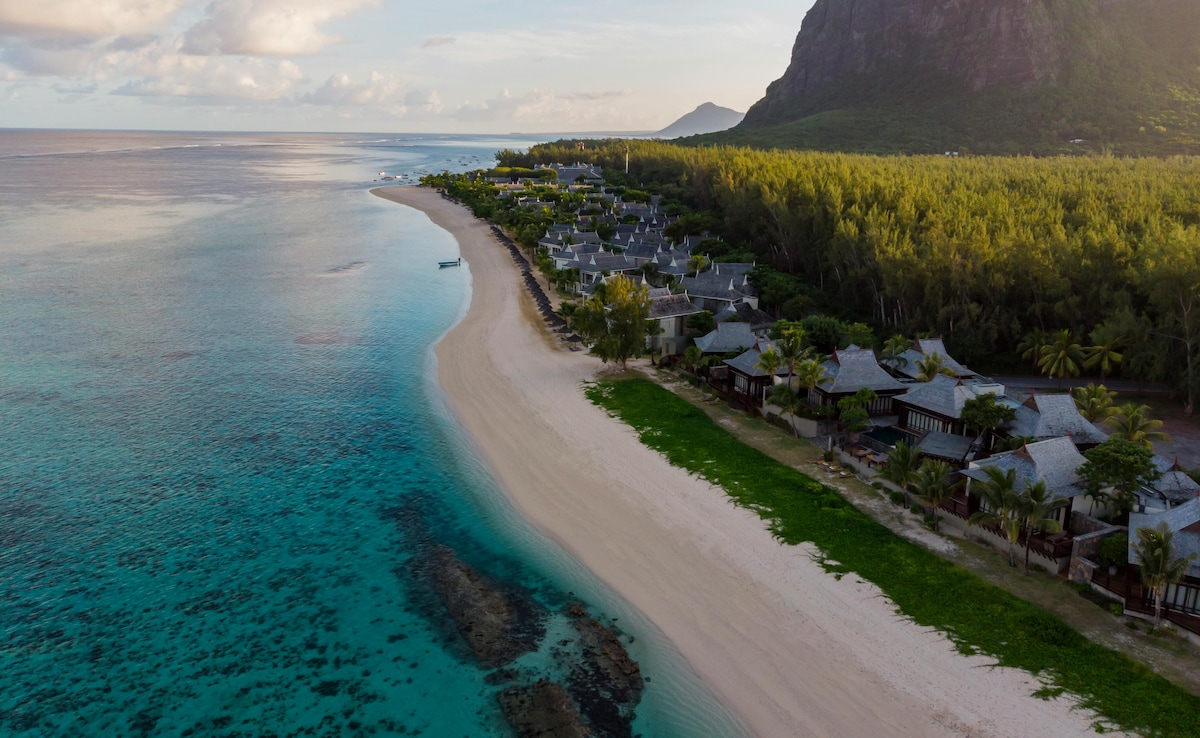
Photo Credit: Instagram
Mauritius is a small island nation in the southwestern Indian Ocean, about 2,000 kilometres off Africa's southeastern coast. Measuring roughly 65 kilometres long and 45 kilometres wide, it can be driven across in under two hours. Despite its size, it offers a remarkable diversity.
The island's population is a blend of Indian, African, Chinese, and European descent, resulting in a unique culture, cuisine, and social fabric. Dinesh Burrenchobay, chairman of the Mauritius Tourism Promotion Authority, aptly describes it as “one island but also several continents on one island.” This is evident in the proximity of a Tamil temple, a Chinese shrine, a mosque, and a colonial French church within the same city block.
For Indian travellers, Mauritius holds special significance. About 70% of the population is of Indian origin, mainly descendants of indentured labourers brought by the British post-slavery abolition. Consequently, Mauritius feels familiar, with Hindi and Bhojpuri widely spoken, Hindu festivals celebrated publicly, dhal puri as a national street food, and Ganga Talao as a major Hindu pilgrimage site outside India.
How To Get There
Indians have excellent flight options to Mauritius, with direct services from Mumbai and Delhi by Air Mauritius and Air India, taking about six to seven hours. Connections are also available via Dubai and Singapore. The local currency is the Mauritius Rupee (MUR), with an exchange rate of approximately 1 INR to 0.40 MUR. Indian passport holders enjoy a free visa on arrival for up to 90 days, facilitating spontaneous travel. The ideal visiting period is May to November, offering cooler, drier weather between 17 and 25 degrees Celsius. December to April is warmer, wetter, and lush, though cyclone risks exist.
Beyond The Beach: Where To Actually Go
Le Morne Brabant

On the southwestern tip of the island, Le Morne Brabant is a 556-metre basaltic mountain that dramatically rises from the turquoise lagoon beneath it, challenging photographers and painters for centuries. Recognised as a UNESCO World Heritage Site, it holds geological significance and a rich history as a refuge for escaped enslaved people during the colonial era, who lived in its cliffs and caves to avoid captivity. This historical weight adds depth to the experience beyond what a scenic photograph can capture.
Hiking to the summit is possible with a guide, offering spectacular views across the lagoon to the open ocean on one side and inland across the island on the other. The hike is moderately challenging, suitable for most reasonably fit individuals, and can typically be completed in a morning.
The 7 Coloured Earth Geopark, Chamarel
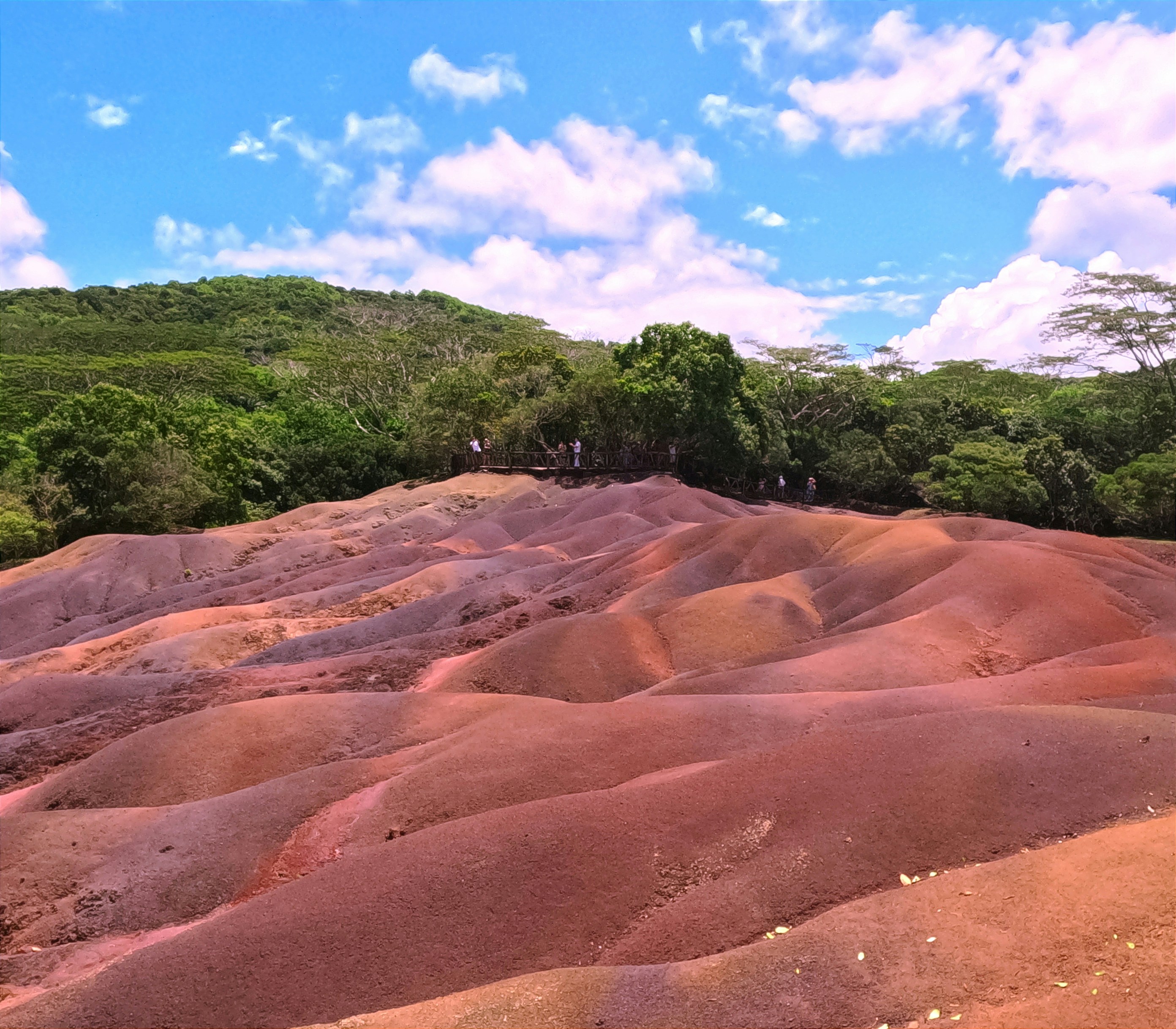
In the Chamarel plain in the southwest, there is a geological formation where the earth has settled into bands of different colours: red, brown, violet, green, blue, purple, and yellow, all shifting and blending depending on the light and the time of day. The science behind it involves different rates of cooling in volcanic soil, but the result simply looks like something that should not be possible in nature. It is one of those places where your first reaction is mild disbelief, followed quickly by the urge to photograph it from every possible angle.
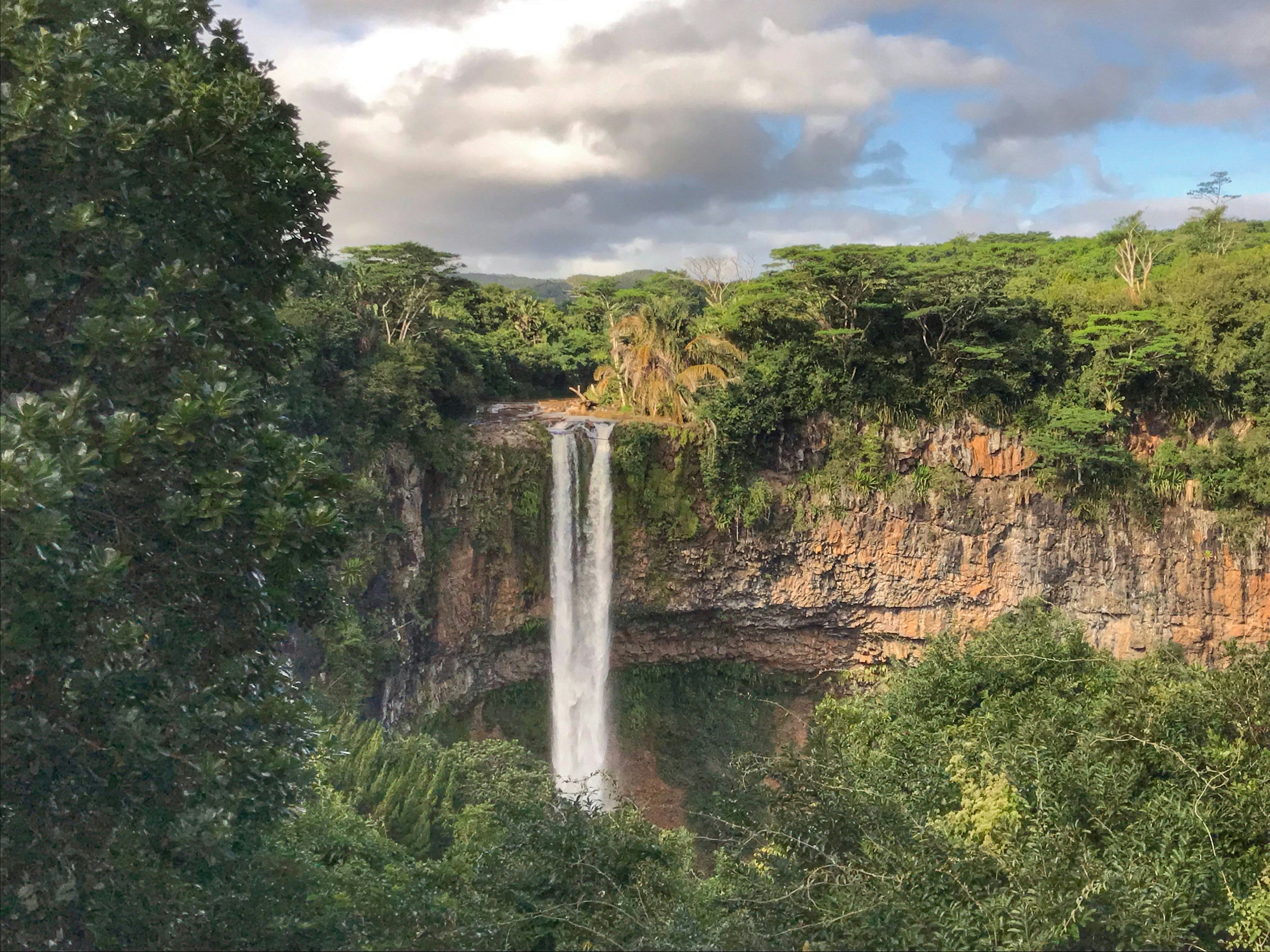
Just nearby, the Chamarel Waterfall drops about 100 metres into a gorge surrounded by dense tropical vegetation. Visiting both on the same half-day trip makes sense since they are close together and the surrounding countryside, a patchwork of sugar cane fields, rum distilleries, and viewpoints over the coast, is as beautiful as either landmark.
Black River Gorges National Park
This is Mauritius's largest protected natural area, covering about 6,574 hectares of forest, gorges, and plateau in the island's interior. There are more than 50 kilometres of hiking trails within the park, ranging from easy walks to more demanding full-day routes. The park is where you go to understand what Mauritius looked like before human settlement: dense native forest, deep valleys, waterfalls, and an extraordinary bird life that includes the Mauritius kestrel, the echo parakeet, and the pink pigeon, all of which came close to extinction and have been slowly brought back through conservation programmes.
The Black River Peak viewpoint, accessible on foot, gives you a panorama across the southern coast and out to the sea that makes the effort of getting there immediately worthwhile. The park is also significantly cooler than the coast, which is worth knowing if you are visiting during the warmer months.
Ganga Talao (Grand Bassin)

For Indian travellers, this is the site that tends to matter most. Ganga Talao is a sacred crater lake in the central highlands, surrounded by an extensive complex of Hindu temples, shrines, and statues. The largest statue on the island, a towering figure of Lord Shiva, stands near the entrance to the lake and is visible from some distance away. The lake itself is considered the most holy Hindu site in Mauritius, and during the festival of Maha Shivaratri, hundreds of thousands of Hindu devotees walk from across the island to collect water from the lake and carry it to temples around Mauritius in a pilgrimage that is one of the largest Hindu gatherings outside India.
Visiting outside festival season, the site is serene and deeply atmospheric, with the lake reflecting the surrounding hills and the smell of incense from the temples drifting across the water. It is a place that means something very specific to the large Hindu population of Mauritius, and understanding that context makes the visit considerably more meaningful.
Port Louis: The City Worth A Full Day
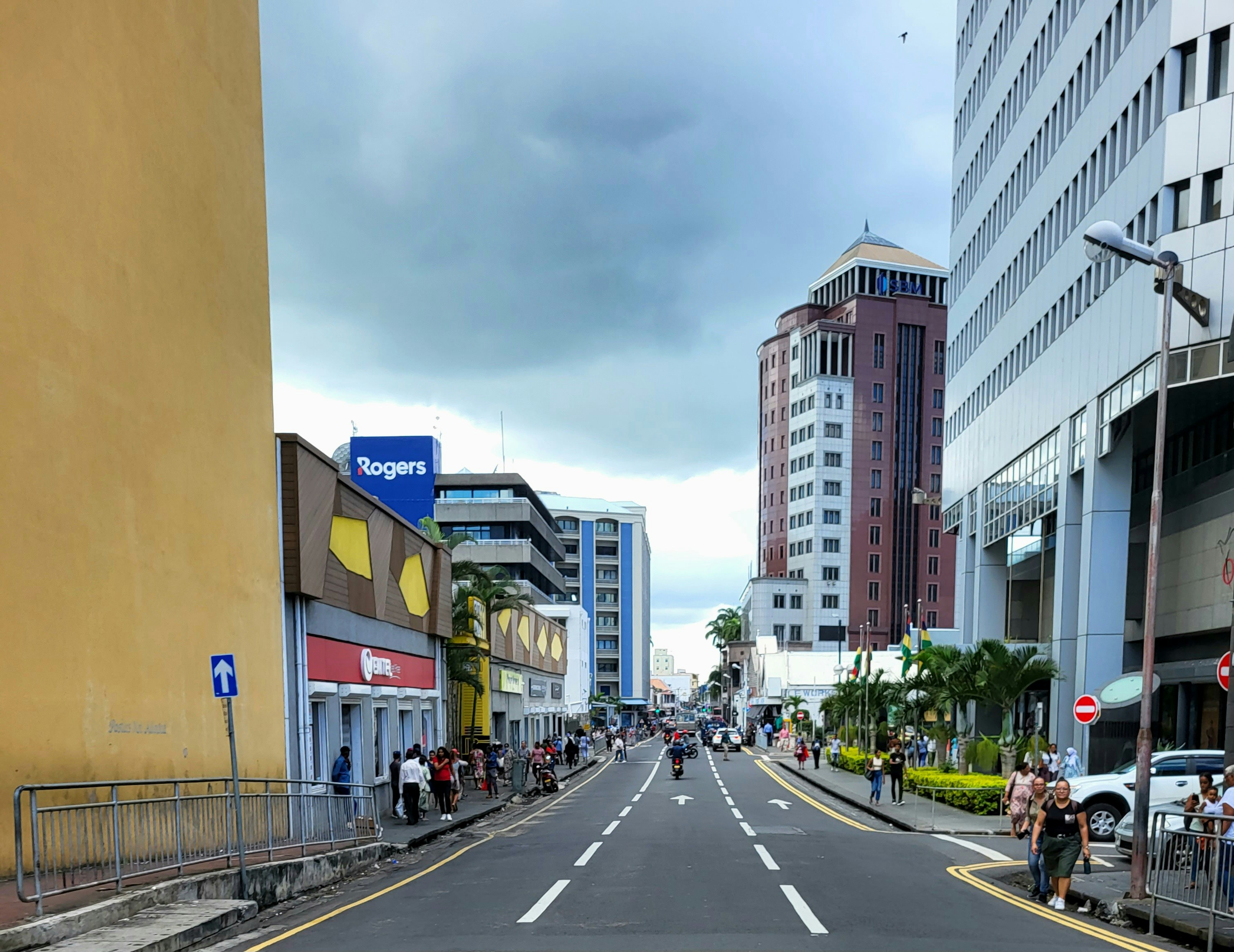
Most people treat Port Louis as a transit point or a half-day market excursion. That is a significant underestimation of a capital city that rewards proper exploration.
Start at the Central Market, one of the oldest and most vibrant in the Indian Ocean, where vendors sell spices, tropical fruits, street food, and textiles in a riot of colour and noise that feels genuinely lived-in rather than curated for tourists. This is where you eat dhal puri, the thin flatbread filled with ground yellow split peas, served with an array of chutneys and curries, which is effectively the national street food of Mauritius and costs next to nothing.
From the market, the Caudan Waterfront area along the harbour is worth a walk for its colonial-era architecture and waterfront restaurants. The Blue Penny Museum houses one of the world's rarest postage stamps and has excellent exhibits on the island's history and natural heritage. Chinatown, which has been steadily revived by Port Louis's Chinese community, has good dim sum and a distinct neighbourhood character.
The Jummah Mosque, one of the oldest in the Indian Ocean, is open to visitors outside prayer times and is an architecturally striking building that speaks to the depth of the island's Muslim heritage. The Marie Reine de la Paix shrine on the slopes above the city offers both a significant Catholic pilgrimage site and an excellent view across Port Louis and the harbour.
Also Read: Which Tea Town Is Called The Peru Of India?
The Food You Should Not Leave Without Eating
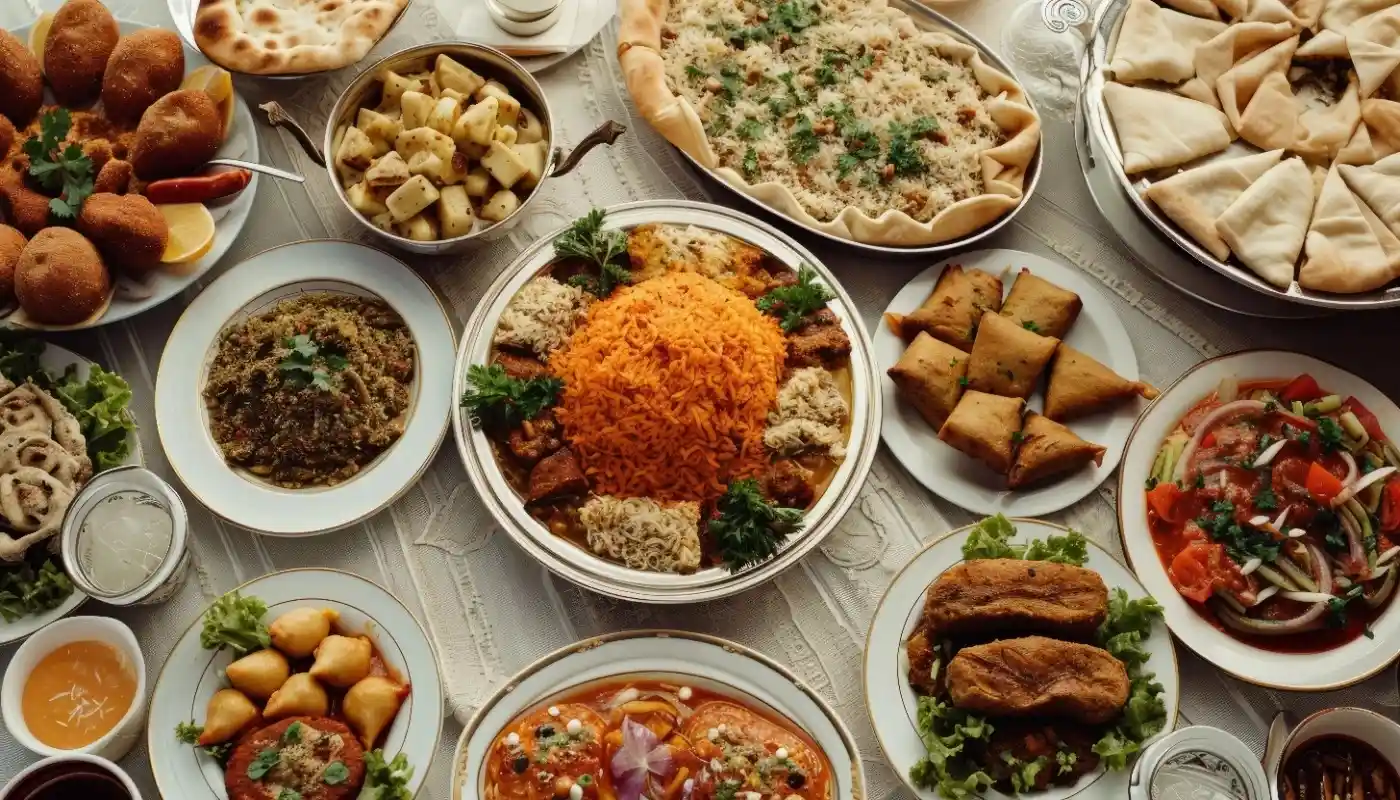
Mauritian food is what happens when Indian, French, Chinese, and African culinary traditions spend three centuries living next door to each other. The results are specific and extraordinary.
Beyond dhal puri, look for gateau piment, the deep-fried split pea fritters seasoned with chilli and coriander that are eaten at any time of day from street vendors and are completely addictive. Octopus curry cooked in a rougaille, the spiced Creole tomato sauce that appears alongside almost everything, is worth seeking out in any coastal restaurant. Biryani here has its own character, lighter and more fragrant than the Mughal-derived versions familiar to most Indians, influenced by the Creole cooking traditions that absorbed Indian techniques and ran them in a different direction.
For Indian travellers, the food of Mauritius is a fascinating parallel evolution: recognisable in its foundations, distinctly different in where it has ended up.
Pro Tips For Indian Travellers
Rent a car or hire a driver for at least part of your trip. The interior of Mauritius is not particularly well served by public transport, and many of the best inland experiences require mobility. The roads are good and driving is on the left, same as India.
Stay in at least two different parts of the island if your schedule allows. The north around Grand Baie has the most tourist infrastructure and nightlife. The south and west around Le Morne and Chamarel are quieter, more dramatic, and more beautiful in a wilder way. They feel like different islands.
Book a dolphin watching trip from Tamarin Bay on the west coast. The spinner dolphins here are resident rather than seasonal, and early morning boat trips almost always result in encounters that are genuinely moving rather than the managed, performative dolphin experiences you get at tourist parks.
Mauritius is small enough that you can do a great deal in 10 days. The Mauritius Tourism Promotion Authority recommends using the whole island, and the observation that in ten days you can do much more than just lying on the beach is both correct and something most visitors only realise on their last day.
Also Read: Why Bengaluru Turns Pink Every Spring With Exotic Flowers Brought By The British
Going Beyond The Beaches
There is a version of Mauritius that exists purely as a backdrop for holiday photographs: turquoise water, white sand, a cocktail, perfect light. That version is real and it is genuinely beautiful. But the island that has a sacred lake that draws hundreds of thousands of pilgrims, a mountain with the history of a people's resistance to slavery, a national park where birds that almost vanished are slowly coming back, a capital city where four different food cultures have been fusing for centuries, and a geological formation that looks like a paint chart designed by a particularly ambitious artist: that Mauritius is available to anyone willing to look up from the lagoon for long enough to find it. It is worth finding.
Track Latest News Live on NDTV.com and get news updates from India and around the world


