
Every year, for a few short weeks between late February and mid-March, something quietly extraordinary happens to Bengaluru. The city, more accustomed to being discussed in terms of traffic and tech parks, turns pink. Not metaphorically, not partially, but genuinely, overwhelmingly, stop-your-scooter-and-stare pink. The trees lining its oldest roads shed their leaves and erupt instead into dense canopies of soft rose-coloured blooms. Petals drift across footpaths and settle on car bonnets. Strangers take photographs on street corners. The whole city slows down, just slightly, to look up. If you have never been in Bengaluru during trumpet flower season, you have missed one of the most beautiful things that happens in any Indian city all year.
Also Read: Which Country Is Called The Land Of Morning Calm?
What Are These Flowers, Exactly?
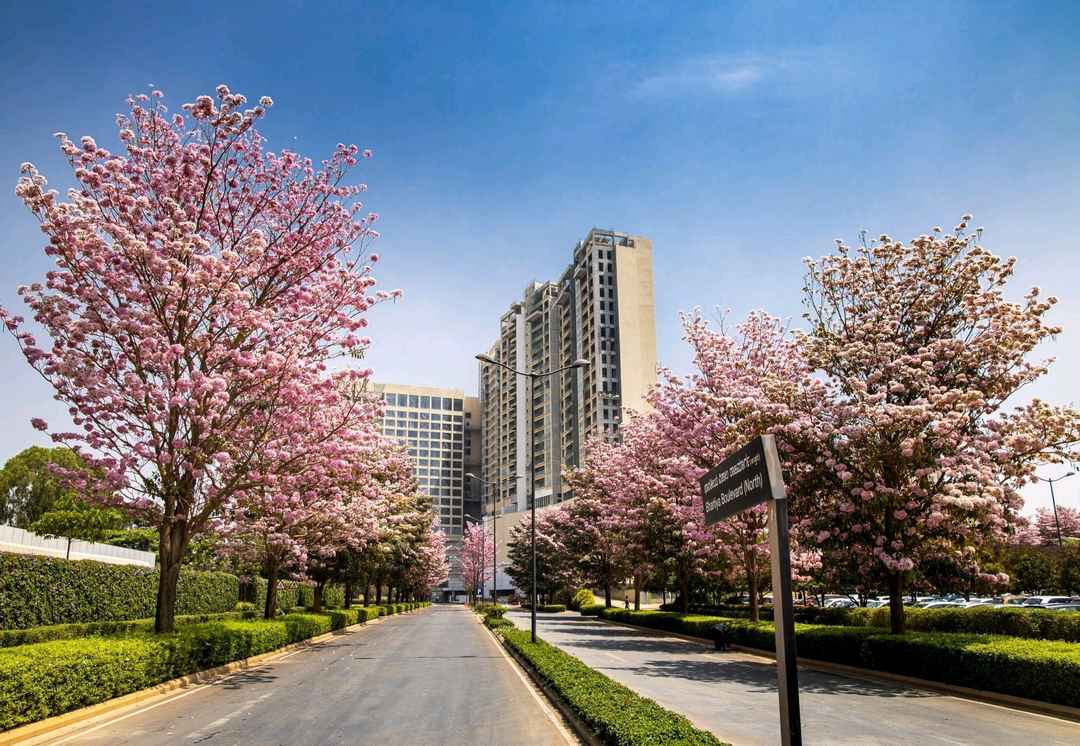
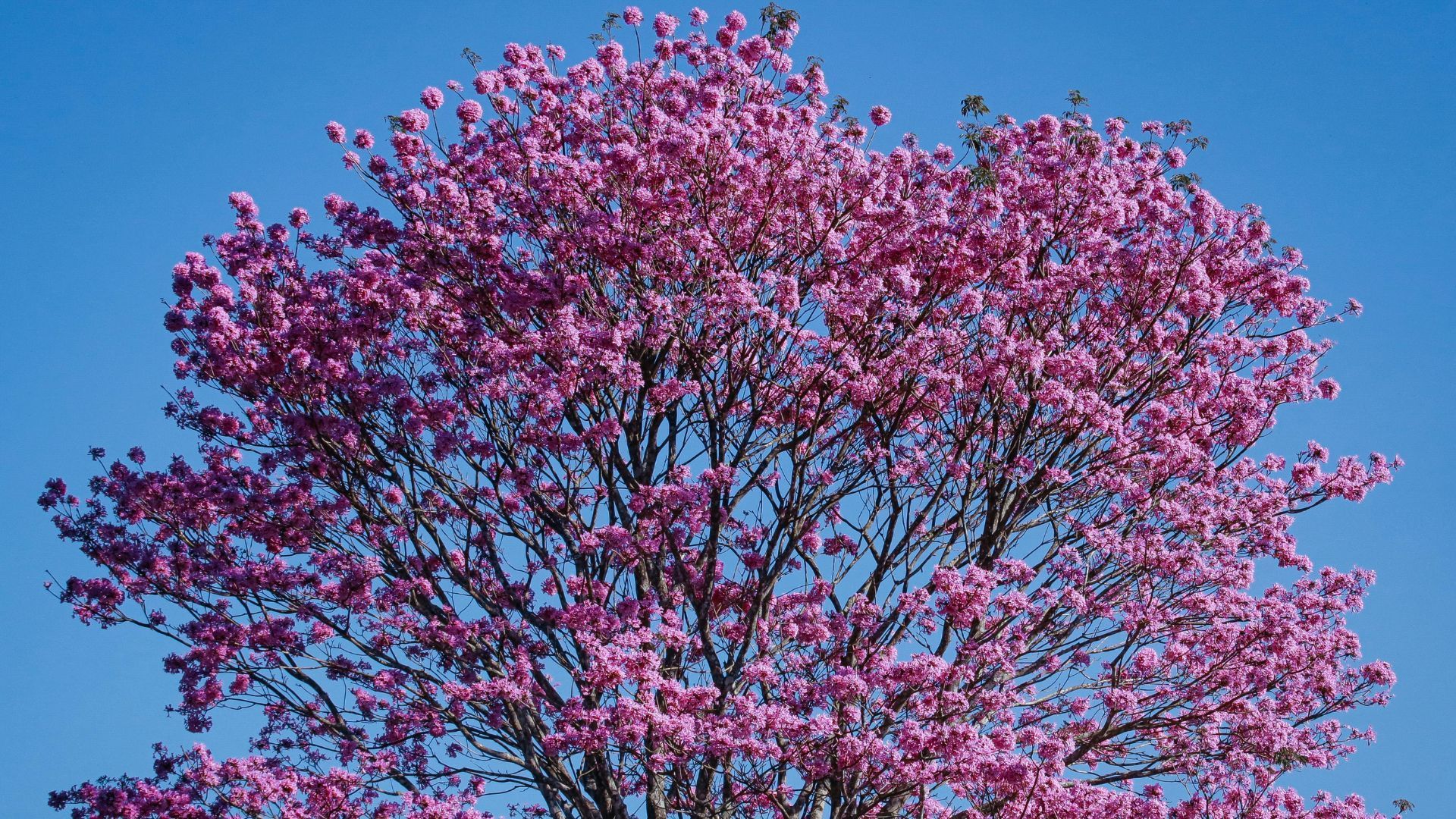
Tabebuia trees, often mistaken for cherry blossoms, are a common sight in Bengaluru. Their soft pink clusters, bare branches, and brief bloom period evoke the sakura, leading to frequent social media posts captioned “Bengaluru's cherry blossoms.” However, these trees, scientifically known as Tabebuia rosea, are native to Central and South America and belong to the Bignoniaceae family. Their trumpet-shaped flowers, growing in dense clusters along bare branches, give the appearance of decoration rather than growth. Typically reaching 20 to 30 feet in height, they have a wide, spreading canopy.
Bengaluru features multiple varieties: the baby pink Tabebuia avellanedae, the deep fuchsia Tabebuia rosea, and the striking yellow Tabebuia argentea. While the pink is most noticeable, the yellow trees add a burst of sunshine, creating a deliberate colour palette. Beyond their beauty, Tabebuia trees absorb carbon dioxide, improve air quality, and stabilise soil, especially in areas prone to heavy rainfall. Historically used in traditional medicine, they are cherished by Bengalureans for their environmental benefits.
How Did A Mexican Flower End Up On Every Street In Bengaluru?
This is the part of the story that most people do not know, and it is genuinely interesting.
The journey of the pink trumpet tree to Bengaluru began during British colonial rule in the late 19th century, when army settlements were established in and around the city. The British brought exotic flora with them, and the pink trumpet tree was among the plants that caught their attention.
The Mysore king of the period took a particular fancy to these flowers and ordered the planting of hundreds of pink trumpet trees in Lalbagh Garden and across the city. He even hired renowned European horticulturists John Cameron and Gustav Hermann Krumbiegel as economic botanists and supervisors of Lalbagh to oversee the entire project. Krumbiegel in particular was a significant figure in shaping Bengaluru's botanical identity, and his influence on the city's tree-lined avenues is still felt today.
The trees spread and established themselves over the following decades, becoming part of the landscape rather than a novelty. Then, in 1980, the effort was formalised and significantly scaled up. Renowned horticulturist and Indian Forest Offical S.G. Neginhal made the decision to plant Tabebuia avellanedae systematically as avenue trees across Bengaluru, which is what turned the city into a pink paradise every spring. The avenue planting strategy meant that entire roads would bloom simultaneously, creating the canopy effect that Bengalureans now photograph obsessively every March. It was a deliberate urban design choice, and it worked beautifully.
What is remarkable is how completely the trees have been adopted as part of the city's identity. A flower from the tropical forests of Central America, brought here by colonial administrators with an eye for the exotic, has become one of the things Bengaluru is most proud of. The city even has a live crowd-sourced bloom tracker at blrbloom.com, where residents log sightings and map the progress of the bloom across the city in real time. There is a local equivalent of Japan's cherry blossom forecast, except it is for a Bangalore road and it was built by software engineers.
When To Go
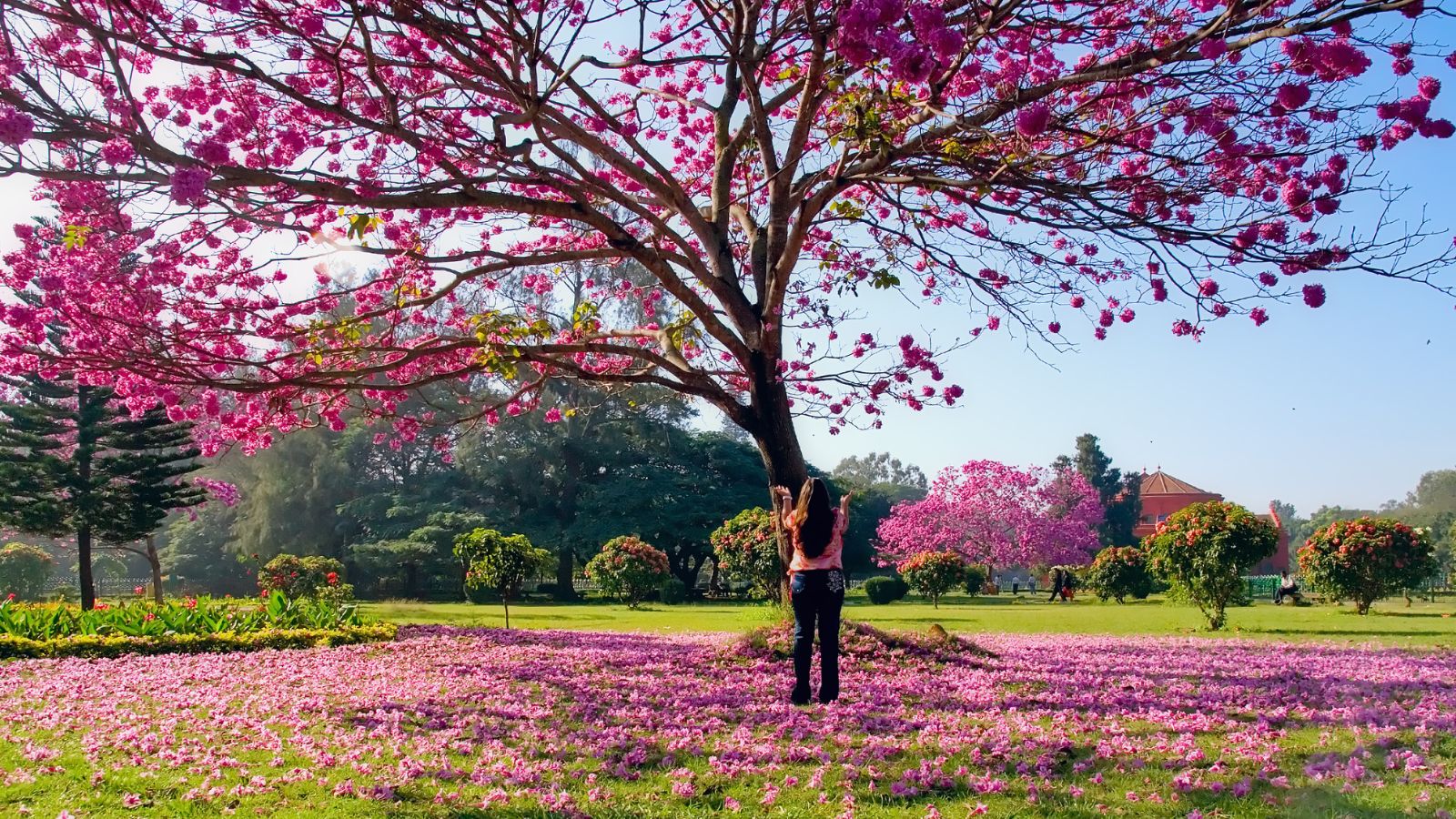
The bloom typically begins in late December and lasts until the end of March, with the peak season falling around mid-March. During peak bloom, the trees shed their leaves entirely, which is what creates the dramatic effect: no green, just pink, the whole branch given over entirely to flowers.
The timing does shift slightly from year to year, depending on temperature and rainfall patterns. A cooler winter generally means a slightly delayed bloom, while a warm, dry February can push the peak earlier. If you are planning a trip specifically for the flowers, mid-March is your safest bet, but checking the blrbloom.com map in the week before you travel will give you a live read on where the bloom is peaking.
Also Read: Why Naukuchiatal, A Quiet Lake Town In Uttarakhand, Is Ideal For A Crowd-Free Summer
The best time of day to see the trees is early morning, before the traffic and the heat build up. The light is softer, the petals are at their freshest, and the streets are quiet enough to actually stop and appreciate what you are looking at. Evening works well too, particularly on older tree-lined roads where the canopy overhead creates a tunnel effect in the golden hour.
The Best Places In Bengaluru To See The Blooms
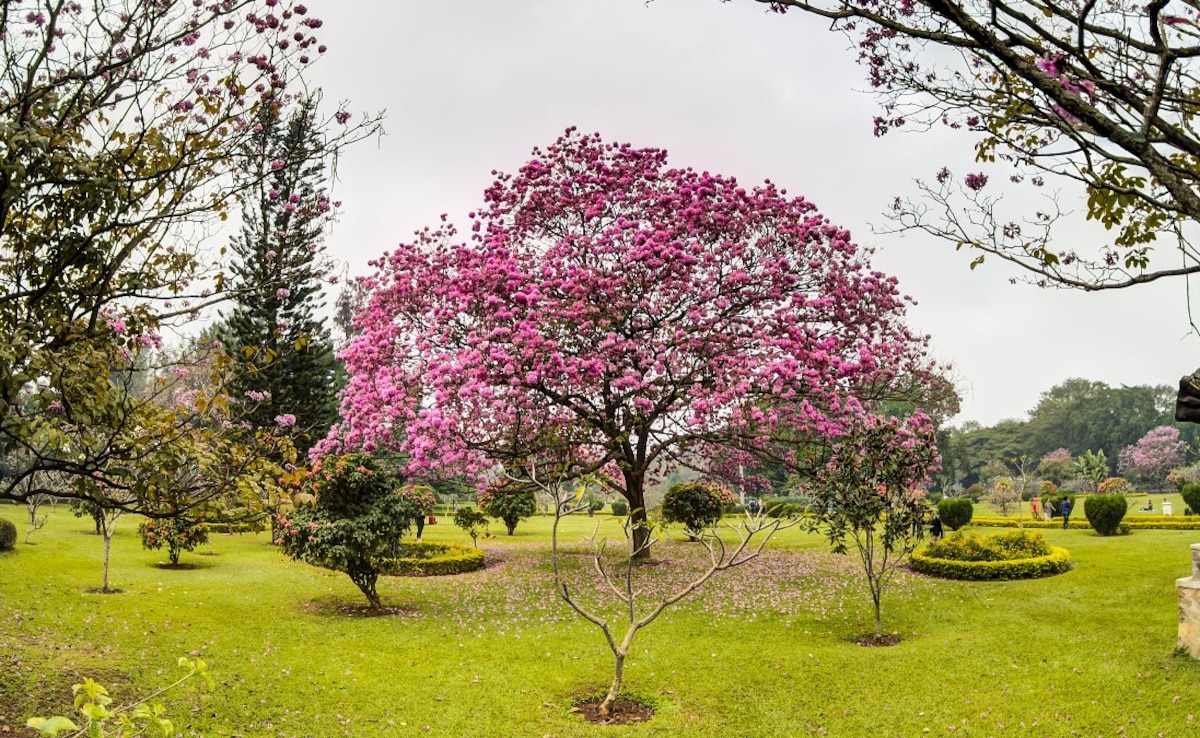
- Cubbon Park: This is the obvious starting point, and it earns the reputation. Built in 1870 and spread across 300 acres, Cubbon Park is home to some of the finest Tabebuia trees in the city. The area around the Central Library within the park is particularly beautiful, with large old trees that form a complete canopy overhead when in full bloom. Bring a book, a thermos of coffee, and no particular agenda. The park is also one of the few places in Bengaluru where you can see the bloom at eye level, at ground level, and from a distance all at once.
- Lalbagh Botanical Garden: Lalbagh is one of the three most celebrated locations for pink trumpet trees in Bengaluru and it makes sense, given that this is where the original plantings under the Mysore king and Krumbiegel were concentrated. The garden's combination of centuries-old botanical planning and the annual trumpet flower bloom makes it a genuinely special place to spend a morning during the season.
- Malleshwaram: The streets of Malleshwaram are among the best spots for pink trumpet sightings in the city, and what makes this neighbourhood different from the parks is that the trees are integrated into daily life here. You see the blooms above a morning vegetable market, arching over old houses, framing the entrance to a neighbourhood coffee shop. It is the most genuinely Bengaluru version of the experience.
- Jayanagar and Basavanagudi: These neighbourhoods are known for their tree-lined roads that turn into pink tunnels during the bloom season, especially around the 3rd and 4th blocks of Jayanagar. These are older, well-planned residential areas where the avenue trees have had decades to grow into their full spread, and the results are extraordinary. A slow drive or a long walk through these blocks in mid-March is one of the city's great simple pleasures.
- Yelahanka and Koramangala: Both Yelahanka and Koramangala have significant concentrations of Tabebuia trees, making them worth visiting for residents in the north and south of the city, respectively. Yelahanka in particular has some large old trees that predate the area's rapid urbanisation.
- IIM Bangalore Campus, Bannerghatta Road: The campus of IIM Bangalore and the surrounding areas on Bannerghatta Road are well known for their pink trumpet trees, and the combination of the blooms against the campus architecture makes for an unusually photogenic setting. The area is accessible and makes a good half-day outing if you are combining the bloom with a drive down to Bannerghatta.
- Silkboard Junction: This one is purely for the surreal pleasure of it. Silkboard, usually associated with some of the worst traffic in Bengaluru, is also lined with pink trumpet trees, and during the bloom season, it becomes temporarily, improbably beautiful. There is something very Bengaluru about a famous traffic bottleneck becoming a flower-viewing spot for a few weeks every year.
- Kundanahalli Gate: A slightly lesser-known spot, Kundanahalli Gate has a notable presence of Tabebuia trees and tends to be quieter than the more famous locations. Worth visiting if you want to experience the bloom without the crowds that gather at Cubbon Park and Lalbagh.
Why This Season Matters
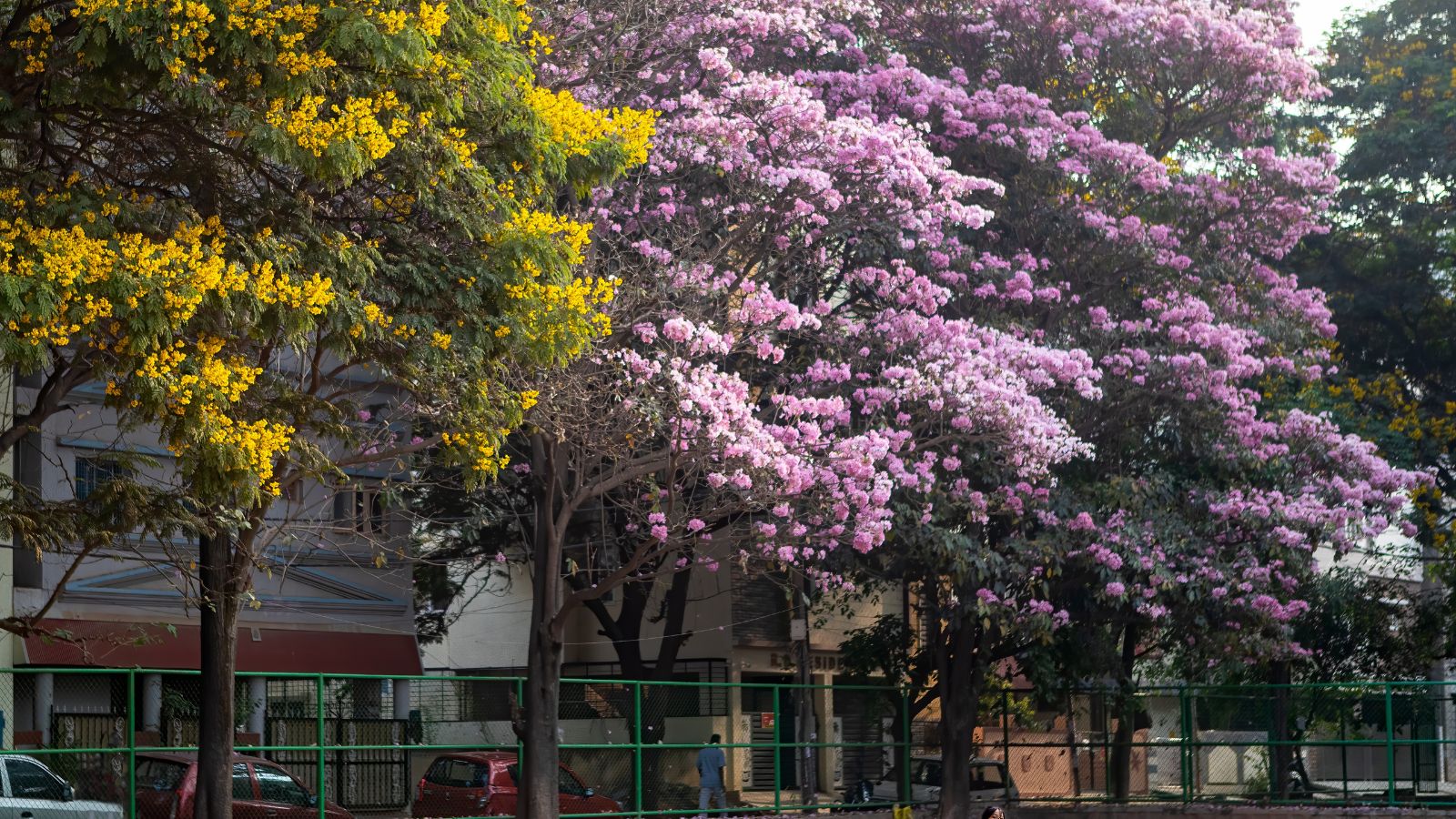
Bengaluru has an ambivalent relationship with its own beauty. The city is quick to catalogue its problems, and they are real and well-documented: the traffic, the construction, the loss of lakes and green cover to rapid development. The trumpet flower season is one of the things that cuts through all of that, briefly and insistently. Every year, the trees bloom regardless of what is happening to the city around them. The roots are deep, the timing is reliable, and for a few weeks, Bengaluru looks like the garden city it has always wanted to be.
What makes this bloom special is that you do not need to head to the hills to witness it. Bengaluru's pink season happens right where life does: along everyday commutes, weekend markets, and quiet neighbourhood lanes. That is what separates it from a typical travel destination. You do not go somewhere to see it. You are already there, and it happens around you.
Also Read: Best Holi Getaways In India 2026: Where To Celebrate The Festival Of Colours This Year
Bengaluru Blushes Pink
Bengaluru's trumpet flower season lasts only a few weeks, which is precisely what gives it its power. The city is full of people who have lived here for years and never quite managed to stop and look up during the bloom, always meaning to and never quite getting there. If that sounds familiar, this is your reminder. The trees do not wait. They shed their leaves, put out their flowers, hold them for a little while, and then let them go. The petals make a carpet on the footpath for a day or two before the rains or the wind clear them away, and then the green comes back and the city looks ordinary again until next year. Bengaluru is extraordinary for those few weeks. Go outside and see it.
Track Latest News Live on NDTV.com and get news updates from India and around the world


