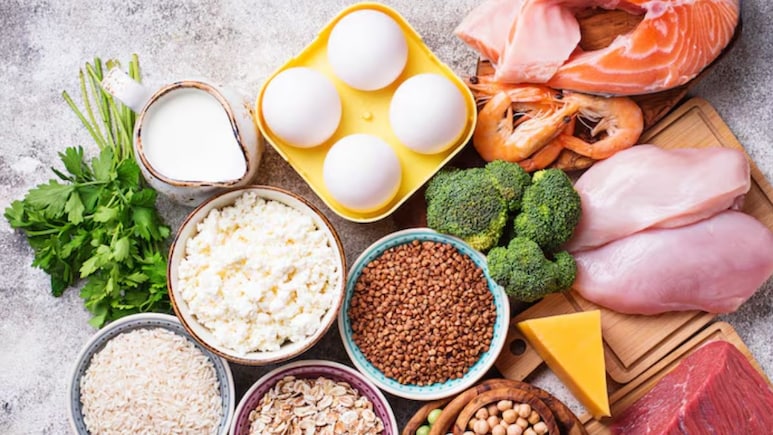
Since the pandemic, the amount of information we consume online about food and nutrition has been limitless. One influencer posts something, and we start clearing the pantry, believing every word without doing any research or speaking to an actual expert.
This is where myths are born, and we continue to believe them as truths, passing them to the next generation. Krish Ashok, author of Masala Lab: The Science of Indian Cooking, shared a video on his Instagram, busting five popular myths around food and nutrition.
-

-
 Who Is Rajiv Mehta? Lilavati Hospital Trustee To Speak At NDTV World Summit 2026
 -
 Ex-CIA Director To Decode 'War In Times Of AI' At NDTV World Summit
 -
 From Call Centre To Billion-Dollar Disruptor: Nikhil Kamath At NDTV World Summit
 -
 'Every 5 Years, You'll See A New India': Swami Sarvapriyananda Ahead Of NDTV World Summit
 -
 AI Can Think, But Can It Be Conscious? Swami Sarvapriyananda Weighs In
 -
 Alain Ebobisse, Africa50 CEO, To Attend NDTV World Summit 2026. All About Him
 -
 Kriti Sanon At NDTV World Summit: A Look At Her Career And Business Ventures
 -
 Ex-CIA Director To Decode 'War In Times Of AI' At NDTV World Summit
 -
 Who Is Vikram Rai, CEO, South Asia GE Aerospace, Set To Attend The NDTV World Summit 2026
 -
 Rahul Kanwal: The World Is Changing. What Comes Next? | NDTV World Summit 2026
He said, "They [myths] are grounded in partial truth taken out of context."
Myth 1: Coffee Dehydrates You
"Yes, caffeine is technically a mild diuretic, meaning that it will make you urinate more. But you are drinking it in, let me check my notes, water. Black coffee is 99% water. A typical milk coffee is 90% water. Since milk itself is 87% water. So the net effect is hydration, not dehydration," he said.
This is also supported by a study published by the National Library of Medicine. "Studies show coffee drinkers are not becoming dried fish because they don't eat coffee powder. They drink coffee," the author quipped.
Myth 2: Egg Yolk Cholesterol Will Clog Your Arteries
Clearing the doubt, the author noted, "Dietary cholesterol is not equal to blood cholesterol for most people. Your liver makes most of your cholesterol anyway and adjusts based on what you eat. The egg is the most complete and affordable source of protein."
Hence, there is no harm in eating a whole egg, making an omelette of it, and enjoying a bowl of egg curry with some rice on the side. Unless your doctor asks you to avoid the yolk, you can and should eat a whole egg.
Myth 3: Dal Is A Complete Protein
Most vegetarians often counter non-vegetarians by saying that dal is rich in protein. Apart from Krish Ashok, many nutritionists have come forward and busted this myth. "Dal is an amazing source of resistant starch. But calling it protein-rich is not right. 100 g of cooked dal only has 6-9 g of protein compared to 25 g or more in chicken, eggs, or paneer," the author said.
You can have dal with wheat or rice, making it a complete protein, but it's not enough protein on its own. It does bring the whole meal together, but you should add something more to the plate to consume the right amount of protein.
Myth 4: Supermarket Eggs Will Hatch
"Commercial eggs are unfertilised," said the author, busting one of the most common myths surrounding eggs. A chicken lays eggs irrespective of whether it mates. "You could sit on a supermarket egg for the rest of your life, and the only thing you will hatch is lower-back pain," he joked.
Myth 5: MSG Is Bad For You
"This myth came from a 1968 letter, not a scientific study, to a journal that was never validated. MSG is glutamate plus sodium," said Krish Ashok. In fact, a Harvard study concluded that it is safe. The side effects are only associated with large dosages.
The author also explained that glutamate and sodium are naturally present in tomatoes, Parmesan, and our bodies. "The Parmesan they shave on top of your pasta in those fancy Italian restaurants, it's European MSG, which we think is better than Asian MSG. The chemistry is identical; the racism is not," he joked.
"Food anxiety is often a function of privilege and information overload. You are worrying about the wrong things. Remember, your body is a product of millions of years of evolution. It can handle an egg with some MSG, with coffee on the side," the author said, concluding the video.
Also Read | Why Eating Colourful Fruits And Vegetables Is Good for Your Gut, Explains Doctor
Track Latest News Live on NDTV.com and get news updates from India and around the world
