In January 1896, Samuel Langhorne Clemens, the legendary American writer, humourist and essayist, better known as Mark Twain, arrived in Banaras.
He was travelling through India for what would later become his celebrated travelogue, Following the Equator. What he encountered on the banks of the Ganges was unlike anything he had seen before. The city, its rituals, and its unfiltered closeness to life and death left him 'stunned'.

Following the Equator. Photo: Amazon
Twain was particularly stunned by the early morning cremations and the rhythmic aarti along the river. He would go on to describe Banaras as being "older than history, older than tradition, older even than legend, and looks twice as old as all of them put together". More than a century later, those words still feel uncannily accurate.
The city has worn many names over the centuries. Varanasi, Kashi, Banaras or Benares, and Avimukta. Yet despite changing rulers, invasions and empires, its soul has remained untouched. Time does not move in straight lines here. It coils, pauses and flows, much like the river it worships.
Mark Twain was right. That was exactly the feeling we were left with when we landed in the "city of light" from Delhi for a short weekend escape, checking into one of Varanasi's oldest and most storied landmarks, Brij Rama Palace.
The City Of Light
There is a reason Banaras is spoken of in almost reverential tones even by Mark and other historians. Believed to be one of the oldest continuously inhabited cities in the world, its recorded history stretches back over 3,000 years, though its spiritual significance is considered far older.
Set along a sweeping curve of the Ganges, the city is shaped almost entirely by its ghats, more than 84-88 of them, each with a purpose of its own.
Some ghats bustle with prayer and commerce, others with quiet devotion, while a few bear witness to the final rites of life itself. At Dashashwamedh Ghat, evening aarti draws thousands every single day, priests moving in synchronised rhythm as lamps rise and fall. At Manikarnika and Harishchandra Ghats, funeral pyres burn ceaselessly.
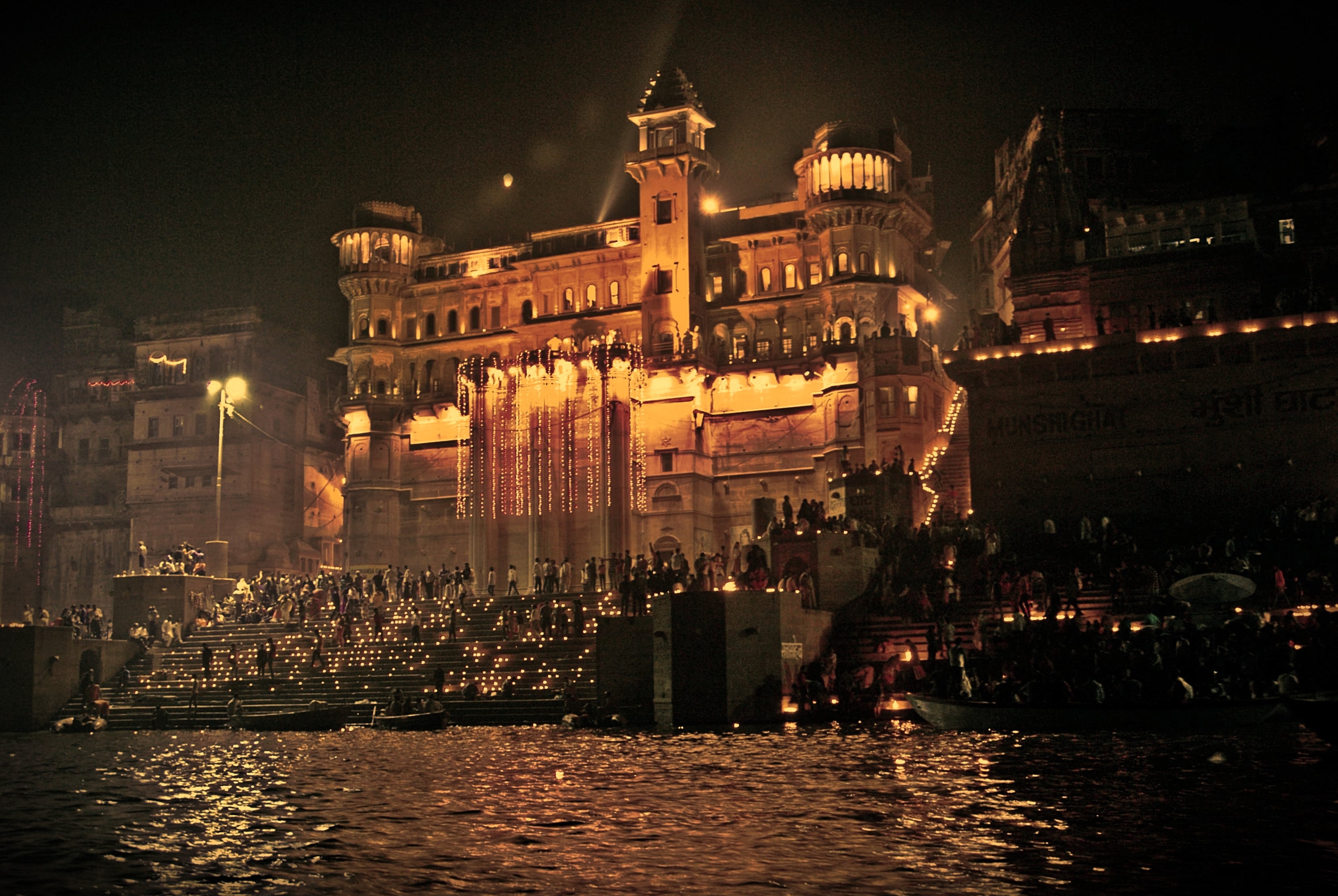
Approximately 25,000 to 30,000 people attend the daily evening Ganga Aarti at Dashashwamedh Ghat in Varanasi.
As we made our way towards the palace by boat, weaving past pilgrims, burning ghats and bodies, flower sellers and priests, one of the staff members accompanying us spoke about the city, "People come here not just to worship, he said, but often to die. It is believed that those who leave their body in Banaras attain moksha, liberation from the cycle of rebirth."
A Ceremonial Arrival
Because of its location along the ghats, Brij Rama Palace is easily accessed by river. We disembarked at the palace's private boat, where the transition from the chaos of the ghats to the calm of the palace felt almost surreal.
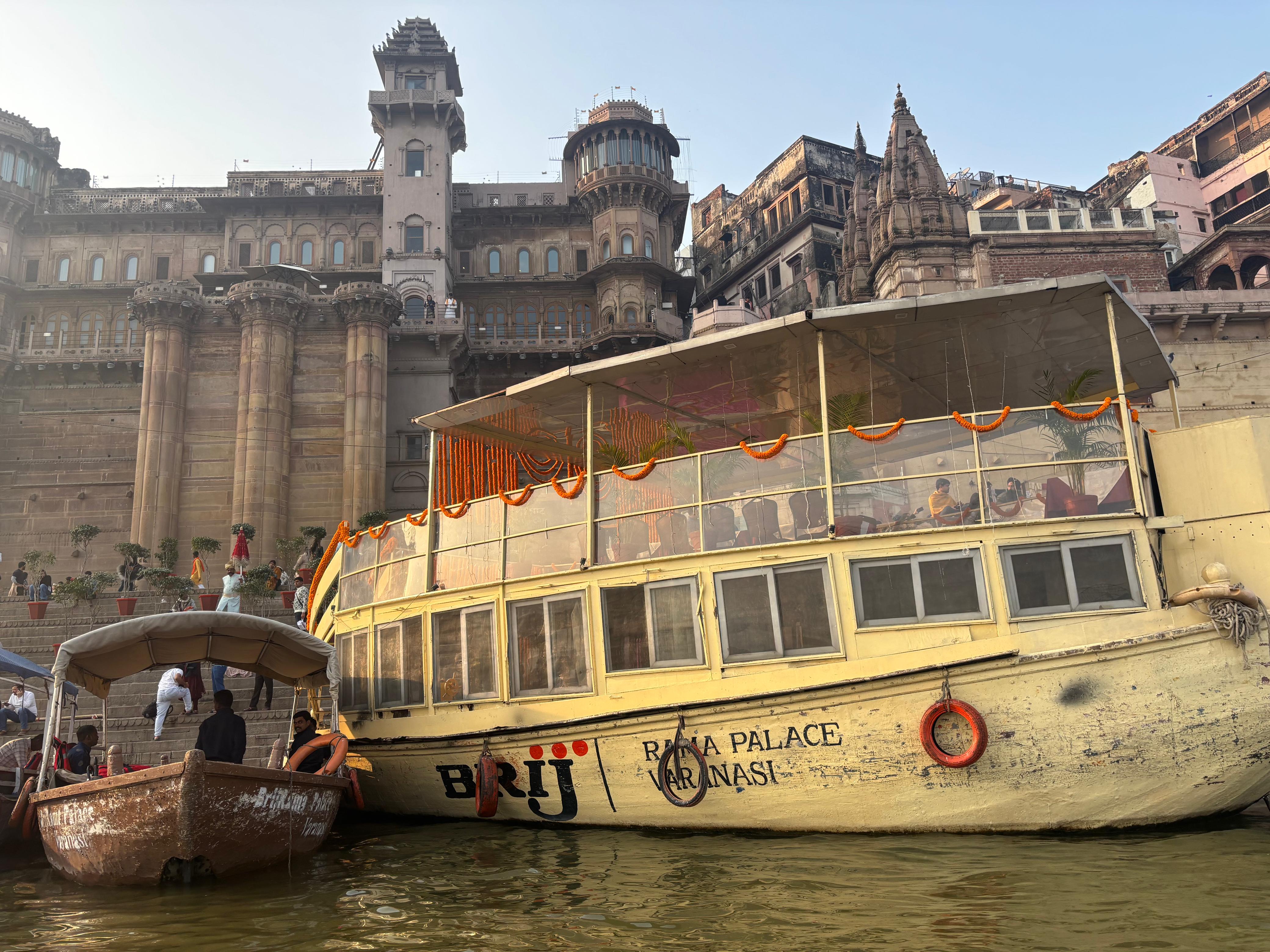
The palace's private boat. Photo: Author
Staff members dressed in traditional attire greeted us, and Mukesh, who has been with the property for ages, welcomed us with an umbrella far bigger than him. Traditional dance followed and a priest welcomed us with a quiet chanting, a Rudrask Mala and a tilak.
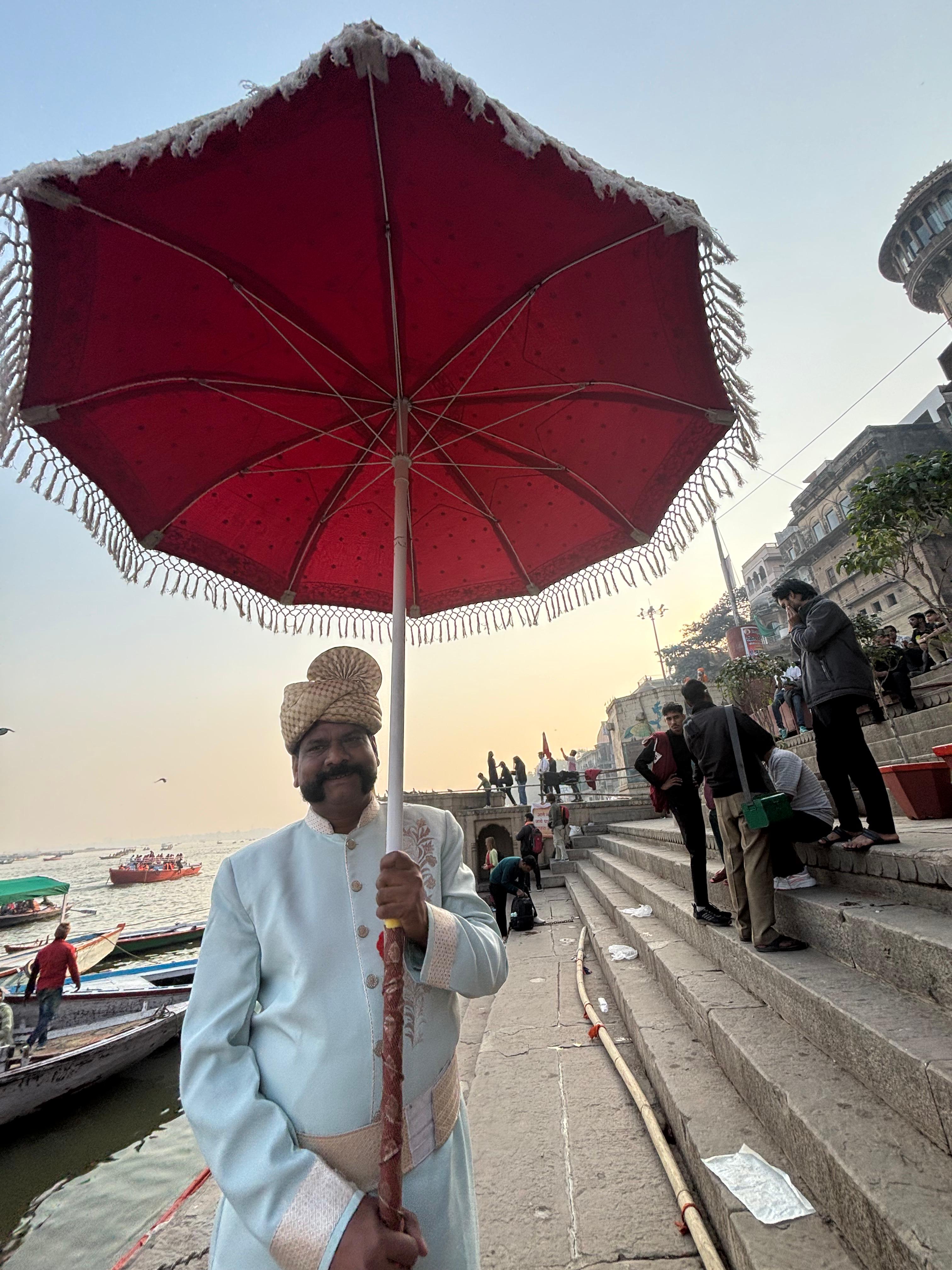
Staff members like Mukesh dressed in traditional attire greeted us. Photo: Author
The sound of bells mingled with the distant hum of the river, setting the tone of what our weekend would look like.
A Palace On The Ghats
Once the priest was done, we were led inside the palace and towards what was referred to as one of 'India's oldest lifts'. Installed in 1918, the elevator still functions today, its age visible in the iron framework and wooden panels, yet remarkably steady as it slowly carried us upwards.
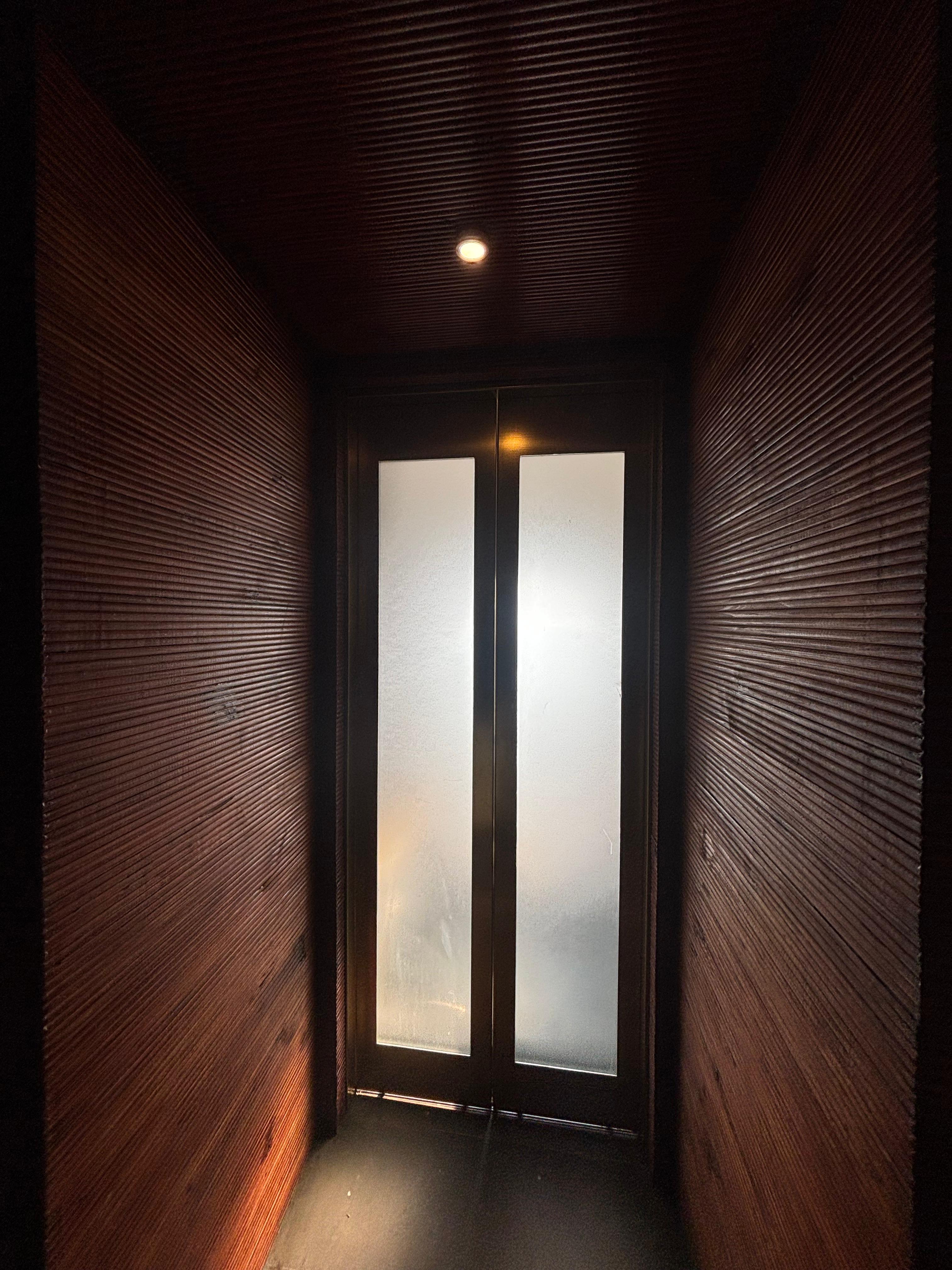
Inside one of India's oldest lifts. Photo: Author
As the doors opened into the reception, we saw the city from the palace as it is perched directly on the banks of the Ganges at Darbhanga Ghat.
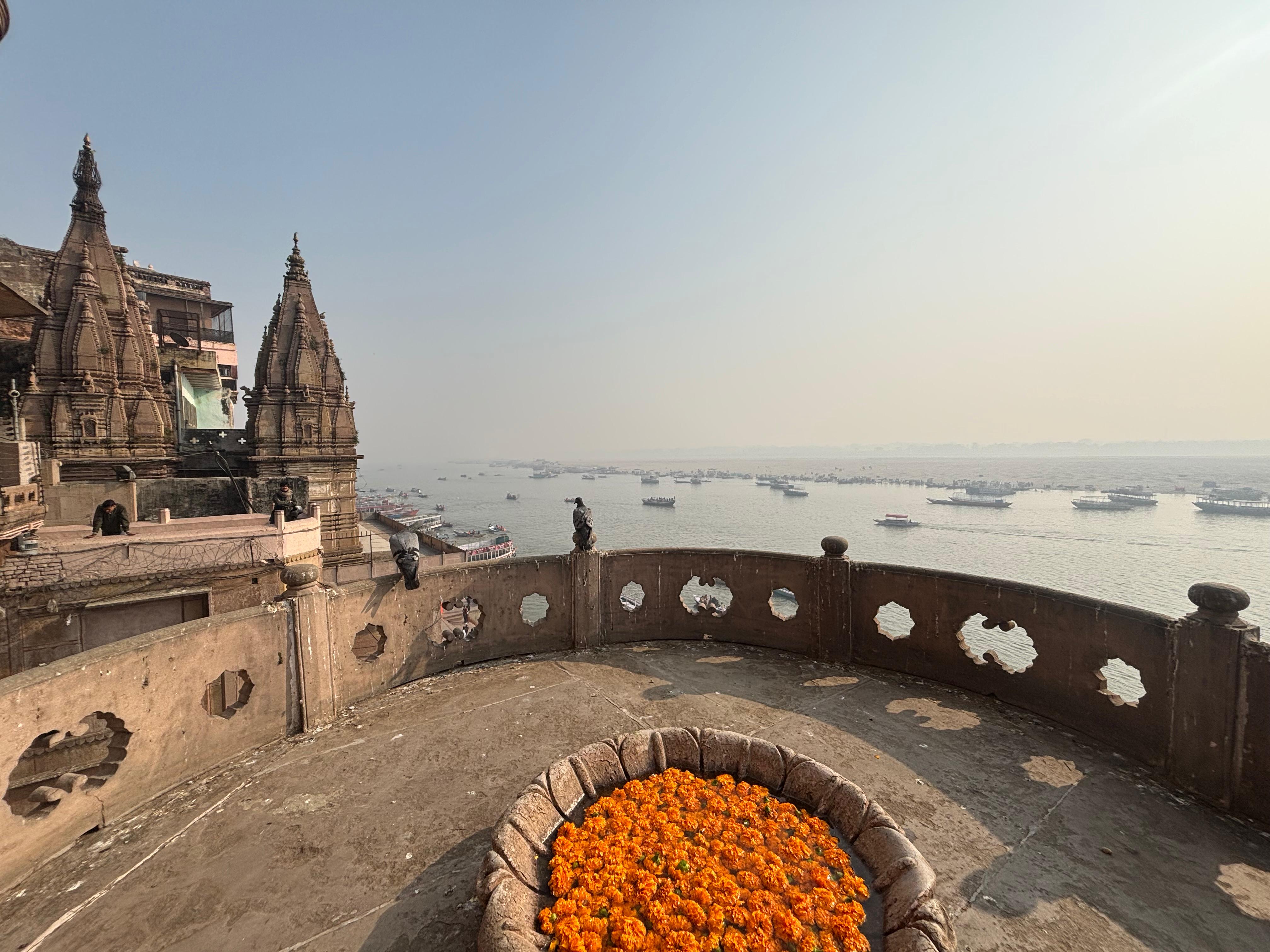
The view. Photo: Author
The palace also has an interesting history of its own.
Originally built in 1812 by Shridhara Narayana Munshi of the Royal House of Nagpur, it was conceived as a fort-like riverside structure meant to command both the river and the ghat below.
Its strategic location allowed it uninterrupted views of the Ganges, a feature that remains one of its defining strengths even today. In 1915, the property changed hands when it was acquired by Maharaja Rameshwar Singh Bahadur, the Brahmin ruler of Darbhanga in Bihar. He renamed it Darbhanga Mahal and added new levels and architectural elements, giving the palace much of its present form.
The elevator was installed just three years later (one of the first in Asia), long before such ideas became commonplace in India. However, following the Maharaja's death, the palace gradually slipped into disrepair.
The revival of Brij Rama Palace began in the 1990s, when local owner Arvind Kumar undertook the painstaking task of restoring the heritage structure. Over nearly two decades, conservation experts and architects worked to preserve its original character while making it liveable once again. From reinforcing sandstone walls to restoring frescoes, arches and ceilings, the effort was as meticulous as it was time-consuming.
In 2016, the palace finally reopened as a 32-room boutique heritage hotel under Brij Hotels and the 1589 group.
Architecture That Tells A Story
The architectural language of Brij Rama Palace also reflects the many hands it passed through.
Built primarily from sandstone, the structure blends Maratha elements such as semicircular bastions, lined pillars and betel nut leaf motifs with Greco-Roman influences introduced later. Symmetry, arches and decorative cornices sit comfortably alongside more Indian forms, creating a visual narrative of shifting eras.
Inside, the palace reveals layers of detail.
Hand-painted frescoes, gold and silver leaf ceilings, and intricate Thikri mirror work lend the interiors a quiet richness. Wooden ceiling fans, salvaged timber beams and antique furnishings ground the experience in authenticity.
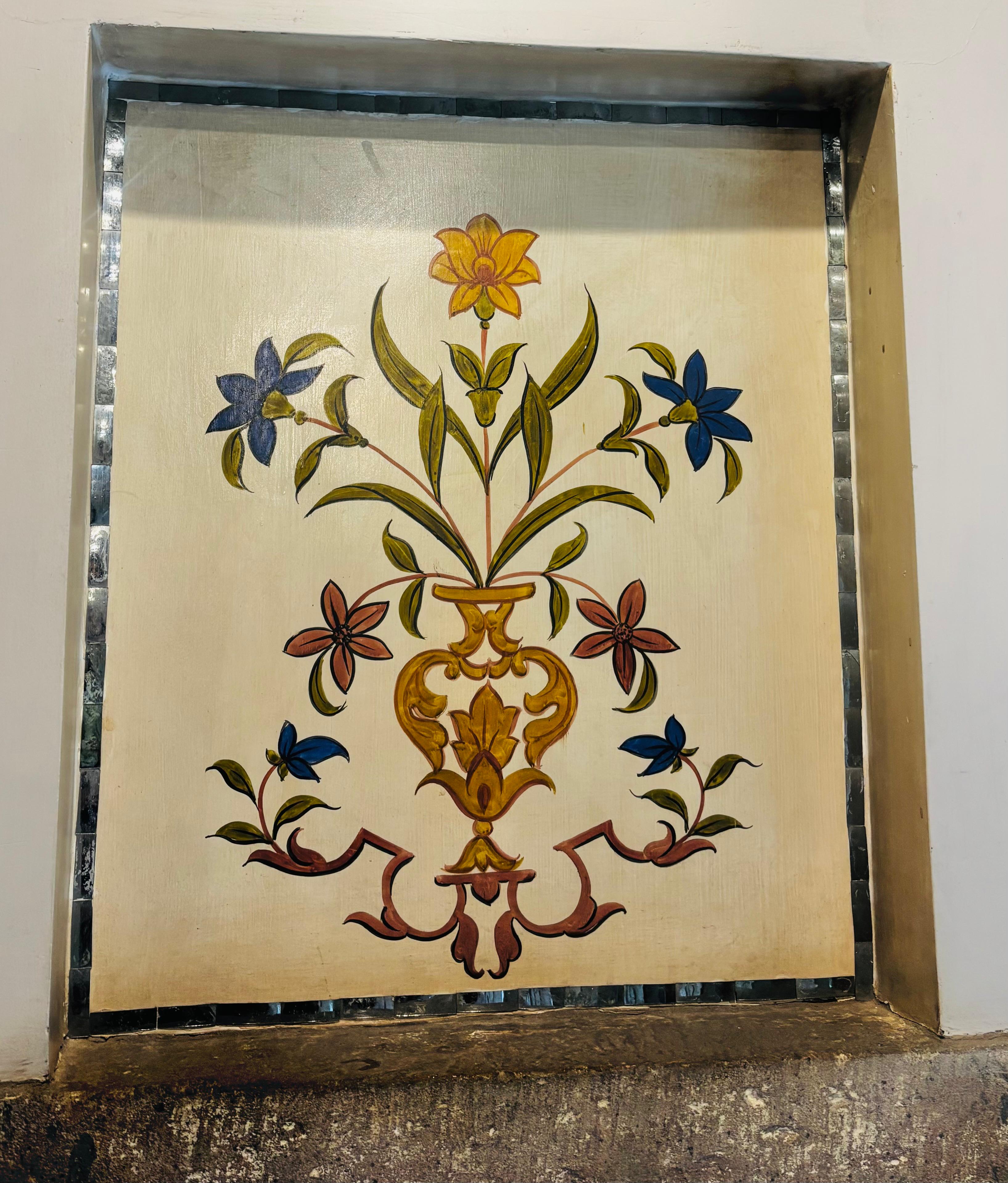
Thikri, or mirror mosaic inlay work, is a traditional Rajasthani art form. Photo: Author
The palace spans three floors and houses 32 uniquely designed rooms. Each floor carries its own character, from rooms overlooking the ghats to burj towers offering uninterrupted, 180-degree views of the Ganges. Sunrise and sunset here feel less like moments and more like daily ceremonies (with activities offered during both times).
The 10-Course-Meal In The Aangan Of The Palace
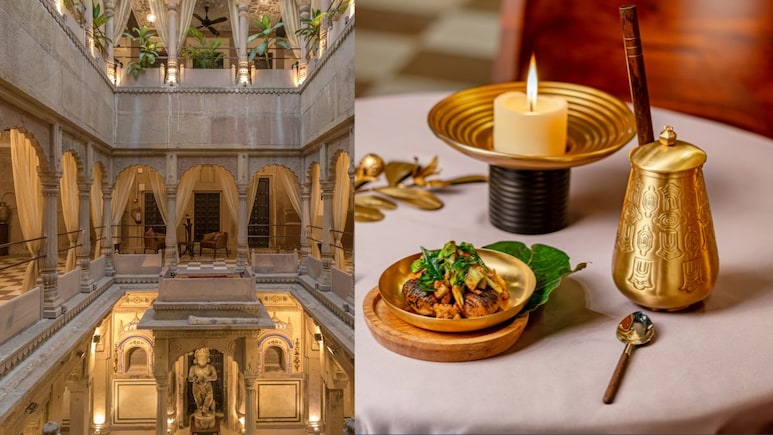
BrijRama Palace in Varanasi has launched its new signature restaurant, Aangan, and from the very first moment, it is clear this is not just about food. Set within the 214-year-old heritage property by Brij Hotels, Aangan officially opened its doors on November 1, 2025, promising an immersive dining experience on the banks of the Ganges.
The evening began quietly. As we took our seats in the newly furnished courtyard, a single candle was lit on the table. By the time the first course arrived, another followed. And then another. The candlelight kept building through the meal, until by the end of the experience, the wax had nearly melted away, mirroring the slow, unhurried pace of the dinner itself.
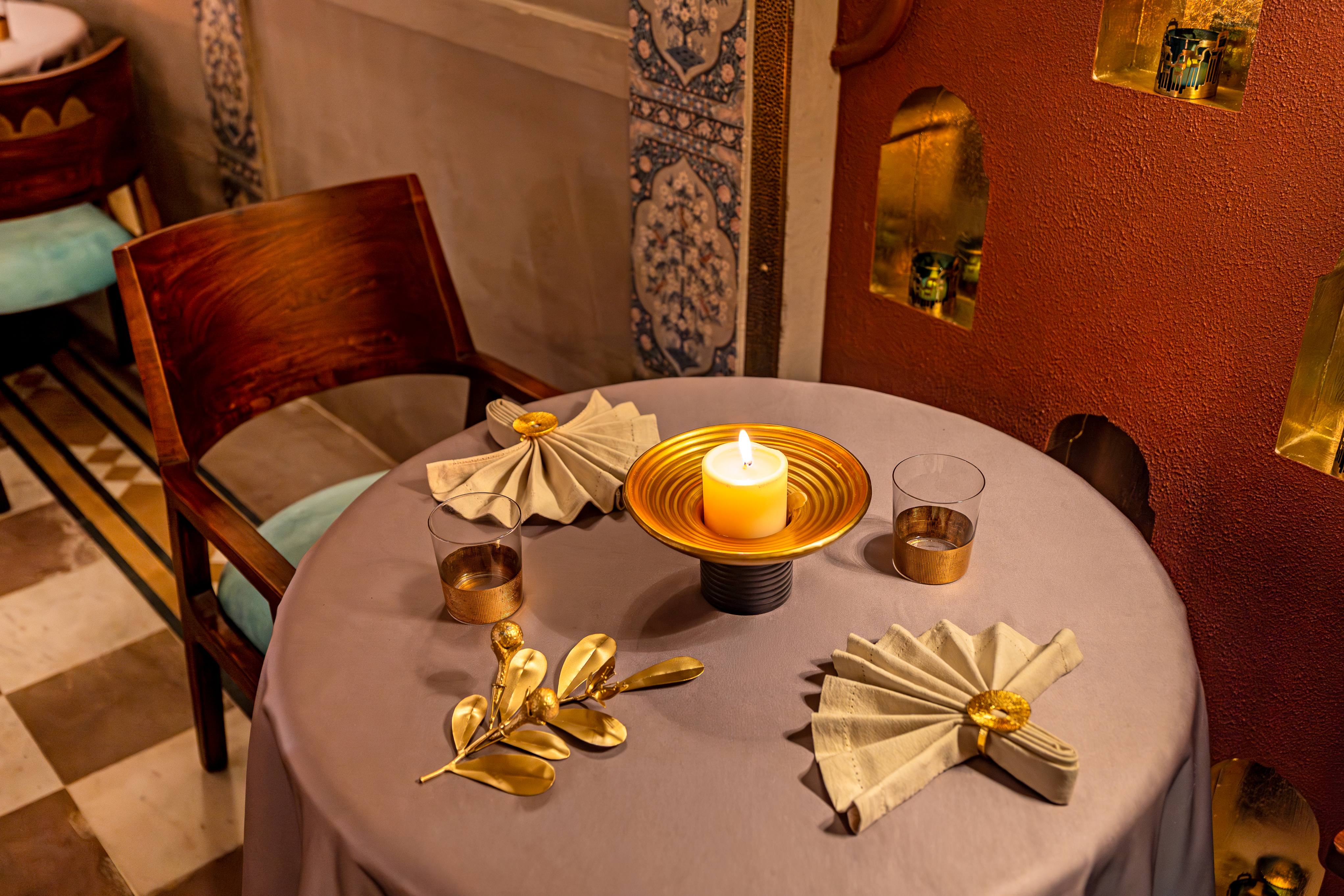
As we took our seats in the newly furnished courtyard, a single candle was lit on the table.
Over the next 2 to 2.5 hours, Aangan managed to do what few restaurants can, leaving both the heart and the stomach completely full and more.
True to its name, Aangan, meaning courtyard, sits in a space that once belonged to the Maharaja of Darbhanga. This was where classical music performances were hosted, and it also doubles up as a discreet passage to one of the palace's most iconic suites. Today, the courtyard has been reimagined as an intimate fine-dining venue.
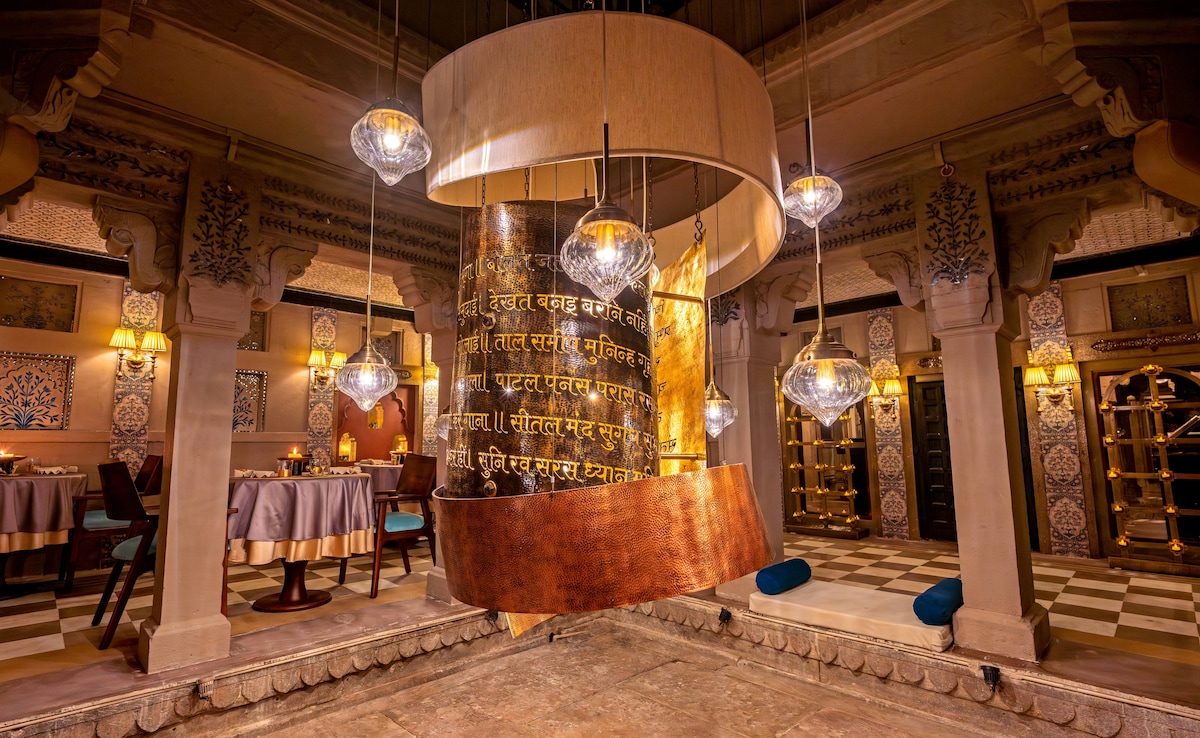
True to its name, Aangan, meaning courtyard, sits in a space that once belonged to the Maharaja of Darbhanga.
What makes Aangan stand apart is the way every dish is served with a story (since the property is at the Ghat, you will not be served meat or alcohol). Before each course reaches the table, we are told why it exists, where its inspiration comes from, and which chapter of the palace's legacy it represents. The ten-course vegetarian degustation menu is shaped by the philosophies of 'three guardians' of BrijRama Palace.
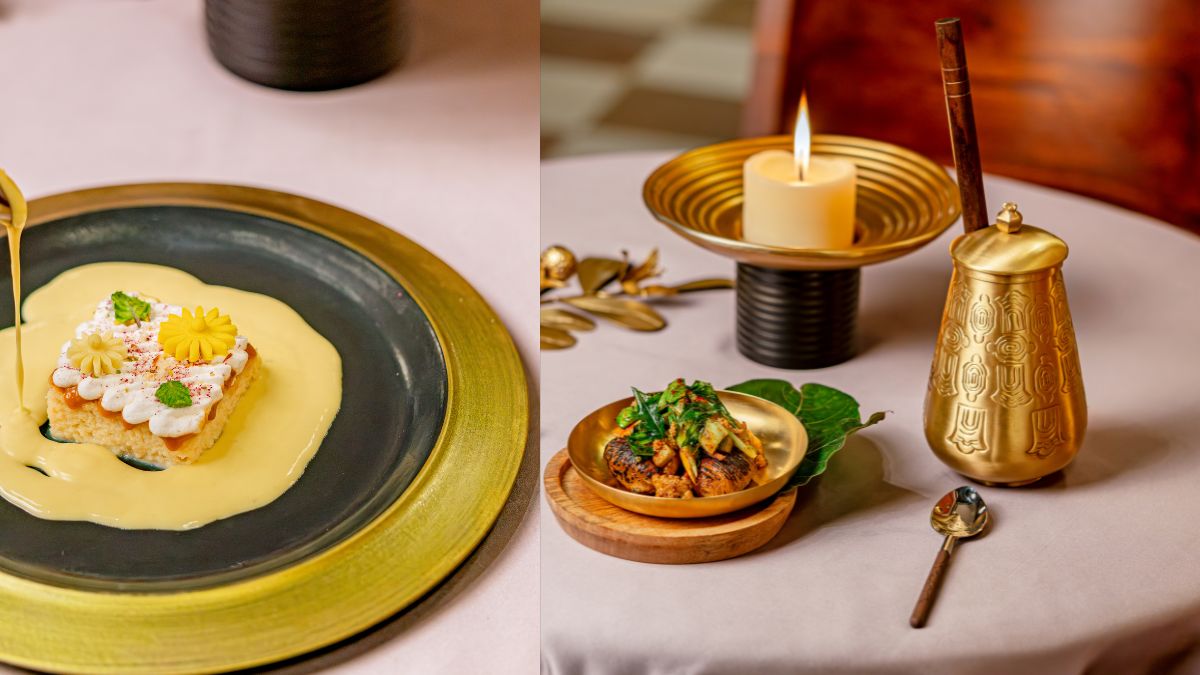
Food that comes with a side of story.
The opening courses draw from the beliefs of Sridhara Narayana Munshi, the palace's original architect, whose faith in astrology and fortification influences dishes like the Celestial Guardian, a delicate amuse-bouche inspired by cosmic alignment. This is followed by Fortified Heritage, where radish bricks echo the strength and geometry of the palace walls.
As the meal progresses, the influence of Maharaja Rameshwar Singh, known as the Sage King of Darbhanga, takes centre stage. His love for spirituality, art and ritual comes alive in dishes such as the theatrical Royal Reverie, cauliflower croquettes, and a deeply comforting buttermilk curry served with sheermal and roti. These courses are slower, richer, and designed to be savoured, much like the stories behind them.
The final chapters of the meal honour Arvind Kumar, the palace's cultural visionary and a strong advocate of sustainability. Banarasi traditions appear in lighter, refined forms, from the airy malaio (the Banaras special) pre-dessert to the Rasmalai Tres Leche cake. The experience concludes with a symbolic mithai box, a tribute to all three guardians, tying the narrative together.
Throughout the evening, a guy sits right in the centre of the courtyard and plays Sitaar throughout the meal which echoes its original purpose from over a century ago. The Aangan experience is also open to non-resident guests, making it accessible to visitors beyond those staying at the property.
"Dining at Aangan is like walking through the palace's own history, each course is a chapter. From the visionary beginnings, to the spiritual heart, to the cultural legacy that still lives on, our menu tells the story of BrijRama Palace on a plate," says Chef Devansh, a Varanasi native who has been reviving traditional recipes with a modern touch at the palace since 2023.
The physical space itself adds another layer to the experience. While Aangan retains the palace's original Greco-Roman architectural elements, the interiors have been newly designed in collaboration with consultant and designer Inderpal Kocchar and Sarthak Sahil Design Co. Brass dominates the space, from door frames to antique lamp shades and alabaster stone lamps.
Artefacts finished in brass and copper from Calico sit quietly around the courtyard, while a central lantern bears a poetic inscription in the local dialect, celebrating nature's beauty.
Older Than History
Banaras is often described as one of the oldest living cities in the world, but that description barely captures its essence.
This is a city where faith is woven into daily life, where death is acknowledged without fear, and where devotion spills effortlessly into the ordinary.
Some cities impress you with what they have become. Banaras stays with you because of what it has always been.
Fact Sheet
Where: Brij Rama Palace is located 25 Km or 52 mins away from Lal Bahadur Shastri Airport in Varanasi.
What To Do: If you don't have enough time, stick to the classics.
Watch the iconic Ganga Aarti at Dashashwamedh Ghat via palace-arranged boat ride, or join Subah-e-Banaras sunrise boat ritual at Assi Ghat.
Enjoy live Kathak dance, classical flute/sitar music sessions, spa or pottery/mehndi workshops on-site.
Take guided tours: palace history walk, temple visits (Kashi Vishwanath, Durga), Sarnath for Buddhist sites, weaver's district for Banarasi silk, culinary street food trail, or heritage/city walks.
Relax with sunrise yoga, high tea overlooking the Ganges, Ganges holy bath, or kushti wrestling at local akhadas. Don't forget to end your trip with a dinner at the Aangan.
Traffic
Room rates typically range from Rs 30,000 to Rs 1,00,000 per night for standard rooms, varying by season, room type, and booking platform. Check here.
For Aangan: Rs 7,500 plus taxes per person.
Also Read: Why An Uttarakhand Resort Is Betting Big On Slow Living By A Nine-Cornered Lake
Also Read: More From NDTV Luxury
Track Latest News Live on NDTV.com and get news updates from India and around the world
