VD Satheesan: The Man Who Saved Congress - And Yet Almost Got Ignored For It
Satheesan's biggest achievement is not simply winning an election. It was rebuilding trust inside a broken organisation through the idea of "Team UDF".
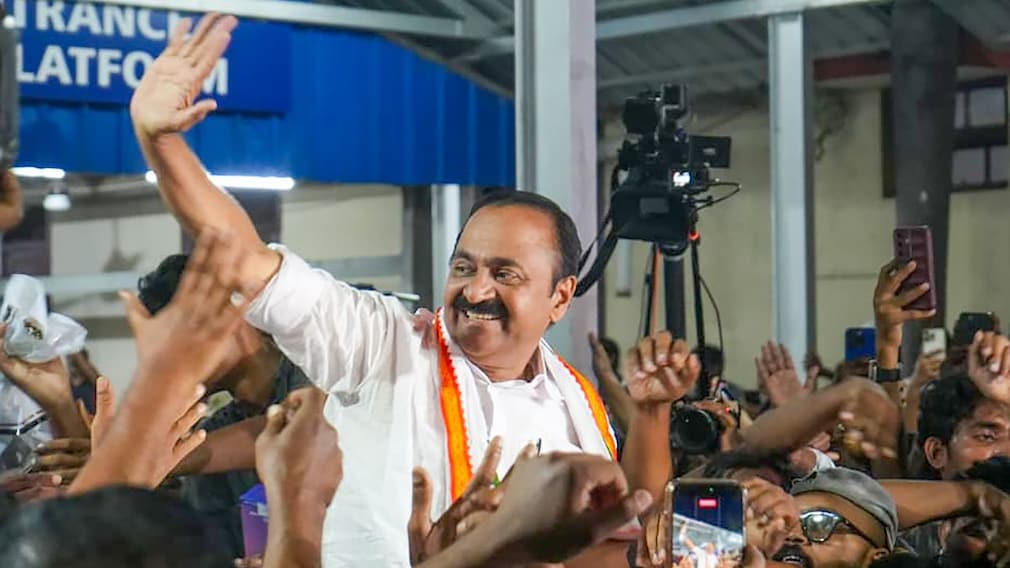
When VD Satheesan, the just-appointed Kerala Chief Minister, became Leader of the Opposition after the Congress-led UDF's heavy defeat in 2021, many in the state expected him to follow a familiar political tradition. Senior Congress leaders in Kerala usually begin their new roles by meeting powerful caste and community leaders. These visits are seen as politically important in a state where social organisations still influence public opinion.
But Satheesan did not follow that path.
He did not publicly seek the blessings of Vellappally Natesan of the SNDP or G Sukumaran Nair of the NSS. Both organisations carry significant influence in Kerala politics. Many expected pressure to build on the Congress leadership. It did. Satheesan, however, refused to change course.
He also avoided a direct confrontation. When criticism came from these leaders, Satheesan simply said they had every right to express their opinions in a democracy. That response revealed his political style.
A New Playbook
For decades, many Kerala politicians believed that upsetting caste organisations could damage a political career. Satheesan appeared willing to challenge that idea. The 2026 election result suggested that the influence of these groups may no longer fully control the voting behaviour of their communities. Despite repeated criticism from some community leaders, the UDF made strong gains across the state.
But Satheesan's real focus was elsewhere. He wanted to rebuild the Congress party itself, true to Nehruvian ideas.
After the Left government returned to power in 2021, many Congress workers privately feared the party was collapsing in Kerala. The defeat damaged confidence. The Congress increasingly looked divided, confused and trapped in endless internal fights.
Even before becoming Opposition Leader, he had openly argued that the Congress could not recover unless its internal power groups were weakened. During his time as KPCC vice-president after the 2016 defeat, he repeatedly criticised factional politics inside the party. He was unusually direct.
Satheesan openly questioned the dominance of groups linked to senior leaders like Oommen Chandy and Ramesh Chennithala. He argued that internal rivalry was hurting the Congress more than the opposition. At a time when most leaders avoided speaking publicly about factionalism, Satheesan chose confrontation over silence.
Ironically, Satheesan himself was never fully part of any major Congress faction.
The Man On The Outside
That partly explains why, despite winning repeatedly from Paravur and building a strong public image, he remained outside the party's main power structure for years. During the formation of the Oommen Chandy government, Satheesan publicly said he believed he deserved a ministerial position. He did not get one. Instead, he was made KPCC vice-president. At the same time, he also said he did not want the issue to create unrest for the Oommen Chandy government and wanted the controversy to end there.
Initially, together with K Sudhakaran, Satheesan worked to energise the Congress organisation again. The Youth Congress and KSU became more active. Younger workers started returning to the party structure.
More importantly, the old factional labels slowly began disappearing from public conversation. After Oomen Chandy's demise, the party forged a unity never seen before, so much so that a perception became very strong that a democratic, people-loving Chief Minister is what the state required. It made the public miss a leader who gelled with them rather than riding in isolated black cars flanked by security cavalcades.
The Congress no longer looked like separate camps fighting each other every day. Satheesan pushed one message repeatedly: Team UDF.
The slogan sounded simple, but politically it was important. It gave Congress workers and alliance partners a sense that everyone was moving in the same direction.
Leaders from the Muslim League, Kerala Congress factions and the Congress all appeared to get space within the alliance structure.
The 'Real Left'
Satheesan also repeatedly projected the Congress as the "real Left", fully aware that Kerala's political culture still carries strong elements of Nehruvian socialism. His positioning created a sense of hope even among some traditional Left supporters. For many observers, the erosion of long-standing Left strongholds in places like Kannur reflected that shift in mood.
Satheesan also changed the way the opposition campaigned. Kerala politics has traditionally depended heavily on roadshows, rallies and emotional speeches. Satheesan tried to give the opposition a more policy-based approach.
Before launching his outreach programmes and yatras, his team studied issues affecting different sectors in Kerala. Experts were consulted. Alternative policy ideas were prepared on unemployment, healthcare, the economy and development.
During these public interactions, Satheesan often focused more on listening than delivering speeches. That helped create the image of an opposition willing to hear public concerns instead of only attacking the government.
Inside the Assembly, too, Satheesan built a strong image.
Coming from Kerala's coastal belt and fishing communities, his political language was direct and sharp. He avoided complicated political language and instead made targeted attacks backed by preparation and detail. Many of his speeches forced several ministers to respond at once.
His political confidence also grew steadily through a series of elections. The Nilambur bypoll, the Lok Sabha elections, Palakkad, local body polls and finally the 2026 Assembly election strengthened his image as a leader who understood the public mood. His repeated prediction that the Congress-led alliance would cross the majority mark eventually added to his credibility.
Credit Where Due
Still, the UDF victory was not built by one man alone. Senior leaders like KC Venugopal, Ramesh Chennithala, K Sudhakaran, KPCC president Sunny Joseph, amd younger leaders like Shafi Parambil and UDF allies all played key roles in keeping internal tensions under control during the campaign, along with default freebies offered by Rahul Gandhi.
Chennithala, after stepping down as Opposition Leader in 2021, had moved into a larger national role within the Congress. Though he faced setbacks in some state elections, he was credited by many in the party for helping strengthen the Congress in Maharashtra during the 2024 Lok Sabha elections.
Though junior to Chennithala, Satheesan's biggest achievement may not simply be winning an election. It was rebuilding trust inside a broken organisation through the idea of "Team UDF".
After 2021, many believed the Congress in Kerala had become a sinking ship. Senior leaders were divided. Workers were demoralised. Different power centres were pulling the party in different directions.
He brought rival leaders onto the same platform, reduced public infighting, gave alliance partners confidence and rebuilt morale among workers.
By 2026, Satheesan had managed to gather competing captains, steady the Congress organisation, and sail the UDF to one of its biggest victories in Kerala politics.
Today, Satheesan's elevation as the captain of the Kerala ship has come after prolonged, intense negotiations led by the party high command. It took the top brass eight dragged-out days to finalise a name after the declaration of results. Ironically, the same high command that gave the Tamil Nadu leadership freedom to decide its approach towards Vijay's TVK did not offer similar freedom to the Kerala unit or its workers. Nonetheless, by picking Satheesan, it seems to have finally heeded the state's choice.
-
Gyanesh Kumar Has An Immunity Pin. Why A Petition Says He Can't Use It

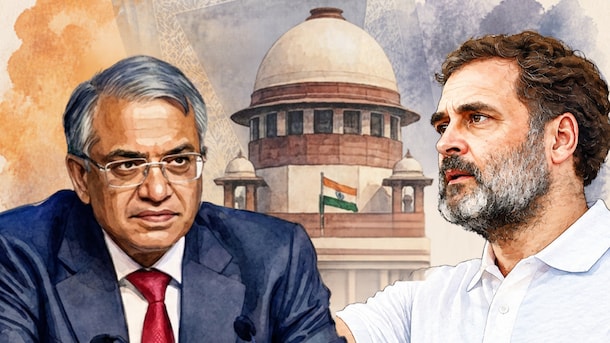
The Opposition wants the Chief Election Commissioner prosecuted for alleged manipulation of voter rolls, but a 2023 law stands in the way. A petition in the Supreme Court now says the law has a gap.
-
Opinion | Is The World Staring At A Big Stock Market Crash - And Recession? 5 Uneasy Signs
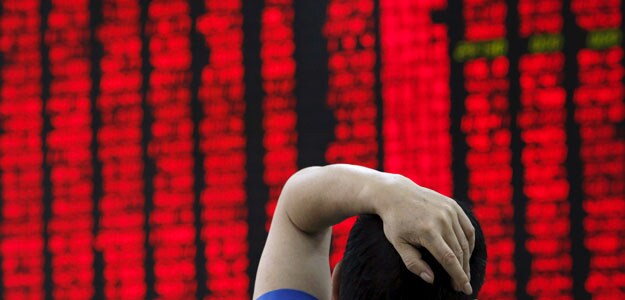
On Wednesday, the US bond market recorded its worst day since Trump's "Liberation Day" tariffs rattled markets in April 2025. The 30-year US Treasury yield topped 5.43%, putting it on track for its highest close since 2004.
-
Form 6 For New Voters: When A Small Change Triggered A Big Row
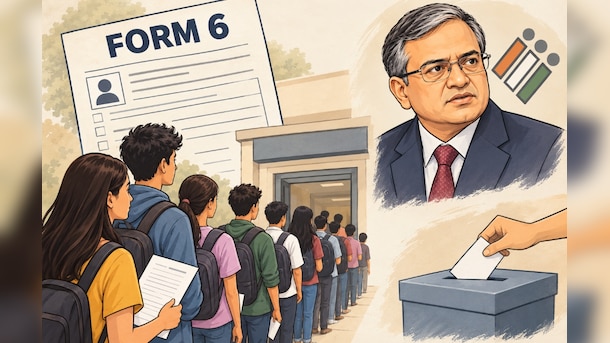
In July 2026, the online version of Form 6 on the ECI's ECINet portal was modified to include a new declaration.
-
Opinion | Saudi Arabia's China Turn Has Begun - After Learning Much The Hard Way
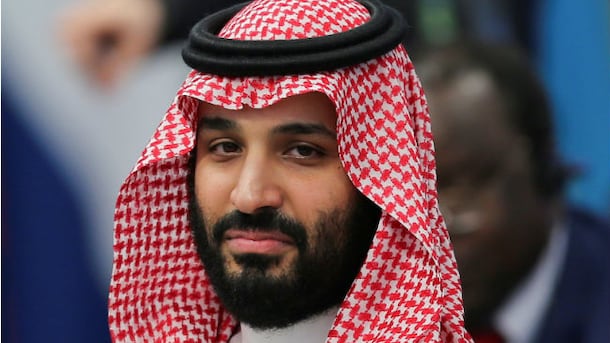
Leaning on China just makes sense for the Saudis right now. The question is, can its other great 'ally' stomach it?
-
Opinion | Bihar Assault, Hisar Marriage Ban: Who'll Stop The Guardians Of Indian 'Culture'?
Why exactly does the sight of a young couple seeking a bit of alone time somewhere tend to particularly provoke a certain kind of Indian men?
-
Opinion | The Trump-Xi Summit, And India's Many Worries Of Its Own
Washington and Beijing may have chosen coexistence over confrontation. For India, that could be both a relief and a warning.
-
Opinion | China Claims It Has Cut Troops At The Indian Border. But The Math Doesn't Add Up
The reduction likely has more to do with the deployment along the LAC than the total strength active in the region
-
Opinion | China Is No Longer Waiting For Trump To Set The Rules. And He Knows It
America's old diplomatic tricks with China won't work any longer. Because China has changed, and so has its ambitions.
-
Opinion | As UN Interviews Its Next Chief, The Interviewers Have Some Explaining To Do
On the panel sit governments whose wars, vetoes, and unpaid dues have helped make the organisation ineffective.