

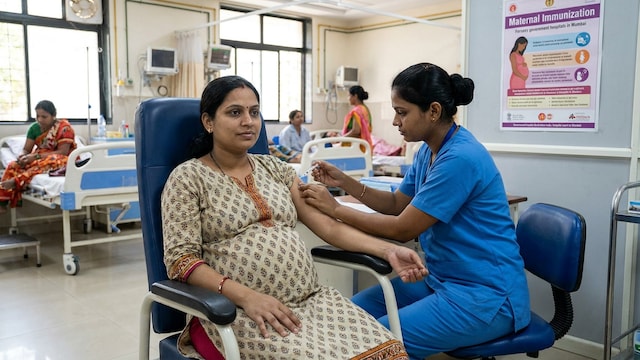
Vaccination during pregnancy may give you benefits that are more than just protecting mothers from infections, says a new Australian study. Researchers found that pregnant women who received routine vaccines against influenza, whooping cough and COVID-19 did not have a higher risk of pregnancy complications. Instead, vaccination was linked to better birth outcomes, including a lower risk of preterm birth and, in the case of the whooping cough vaccine, a substantially lower risk of stillbirth.
The study was conducted by researchers from Adelaide University and the Women's and Children's Health Network and published in the journal Vaccine. The researchers analysed data from 19,098 pregnant women who delivered at the Women's and Children's Hospital in South Australia between 2020 and 2023. The findings add to evidence supporting vaccination during pregnancy.
What Did The Study Find?
The researchers looked at three vaccines that are routinely given during pregnancy; influenza, pertussis or whooping cough, and COVID-19 vaccines. About 64% of the women received the flu vaccine, 74% received the whooping cough vaccine and 29.5% received at least one COVID-19 vaccine dose during pregnancy.
The researchers did not find evidence that these vaccines increased the risk of pregnancy complications. These included high blood pressure disorders, chorioamnionitis, premature rupture of membranes, bleeding, small-for-gestational-age babies and low birth weight.
Professor Helen Marshall AM, professor of vaccinology from Adelaide University's School of Medicine and WCHN clinical research director, said, "This clear safety and efficacy evidence supports maternal immunization as one of the most effective ways to prevent the potentially devastating outcomes of whooping cough, influenza and now also RSV, including death in newborn infants."
Vaccination Was Linked To Lower Risk Of Preterm Birth
One of the key findings was a lower risk of preterm birth among women who received vaccination during pregnancy.
According to the study, influenza vaccination was associated with a 13% lower risk of preterm birth, while pertussis vaccination was associated with a 17% lower risk. COVID-19 vaccination was also associated with a lower risk of preterm birth.
Dr Hassen Mohammed, a perinatal infectious-disease epidemiologist from Adelaide University's School of Medicine and first author of the study, said, "Receiving routine vaccinations against flu, pertussis and COVID-19 during pregnancy was in fact associated with more favorable birth outcomes.
"Both the flu and whooping cough vaccines were linked to a lower likelihood of obstetric complications, reducing the risk of preterm birth by 13% and 17%, respectively, with similar benefits also experienced with the COVID-19 vaccine."
Preterm birth means a baby is born before 37 weeks of pregnancy. Babies born too early can have underdeveloped lungs, difficulty maintaining body temperature and feeding problems. They can also face a higher risk of infections and other complications after birth.
The researchers suggested that preventing infections in pregnancy may be one reason vaccination could be associated with better birth outcomes. Infections such as influenza can be more serious during pregnancy and may lead to complications, including premature delivery.
Whooping Cough Vaccine And Stillbirth Risk
Another important finding involved the pertussis vaccine, which protects against whooping cough. The study found that women who received the whooping cough vaccine during pregnancy had a nearly 50% lower risk of stillbirth.
Stillbirth refers to the loss of a baby after 20 weeks of pregnancy in Australia. Although stillbirth can have many causes, infections are among the factors that can affect pregnancy and foetal health.
Vaccinated Babies Had Better Early Outcomes
The benefits observed in the study were not limited to pregnancy and delivery. Researchers found that babies born to vaccinated mothers had lower rates of some adverse neonatal outcomes, including the need for resuscitation and early-onset sepsis. The study also found that babies of vaccinated mothers weighed, on average, about 90-180 grams more and were delivered several days later.
Dr Prabha Andraweera, a maternal and child health expert from Adelaide University's School of Medicine and co-author of the study, said maternal vaccination was associated with improved foetal growth and babies being delivered several days later. "Our study found maternal vaccination was associated with improved fetal growth, with infants of vaccinated mothers weighing on average 90-180g more and also being delivered several days later," said Dr Prabha Andraweera.
Disclaimer: This content including advice provides generic information only. It is in no way a substitute for a qualified medical opinion. Always consult a specialist or your own doctor for more information. NDTV does not claim responsibility for this information.