

)
Women who work out tend to focus on their protein requirements as their bodies need to be nourished. Protein is necessary, as it provides essential amino acids that are needed for the repair and growth of muscles. But the exact body requirements of women differ from those of men who exercise, as their hormones influence their protein needs. For an average woman, her age, along with her daily physical activity level, as well as her fitness goals, influences the exact amount of protein needed.
Research published in the Journal of Nutrition suggests that the body weight of women has an impact on the daily protein requirements for muscle growth. Women who are athletes generally benefit from protein-based recommendations that are tweaked according to their exact body weight.
Why Protein Matters For Muscle Growth
Protein intake matters for muscle growth, as research published in the Journal of Cachexia, Sarcopenia and Muscle suggests consuming more protein produces additional gains in lean body mass among adults. Especially those who practise resistance exercise programmes, as their daily protein requirement is needed for muscle repair.
The muscles undergo controlled damage when you exercise, and for their repair, protein is necessary.
The composition of amino acids helps build new muscle tissue that can increase visible muscle gains.
Adequate muscle growth for women requires a mix of training and nutrition. When it comes to the kind of training and its subsequent protein needs, strength training requires the most protein for active repair.
How Much Protein Do Women Need Each Day?
The current dietary reference intakes for protein suggest that women need around 0.8 g of protein per kg of their body weight. The doses of protein needed to take women's physical activity levels into account, as those who are building muscle need around 1.4 to 2.0 g of protein per kg of their body weight.
Those who are competitive athletes may need about 2.2 g/kg under professional guidance for a monitored intake.
For instance, you can calculate the exact level of protein that you may need if your weight is 60 kg:
- Minimum requirement of protein: 48 g/day
- Muscle-building target needs: 84-120 g/day
Does More Protein Mean Faster Muscle Growth?
No, an excess of protein doesn't mean faster muscle growth, as increasing protein intake helps muscle growth up to a point, not on a continuous basis. More protein intake doesn't always mean more muscle. This is because there is a limit to how much protein the body can use, and it doesn't always translate to muscle.
Best Protein Foods For Women
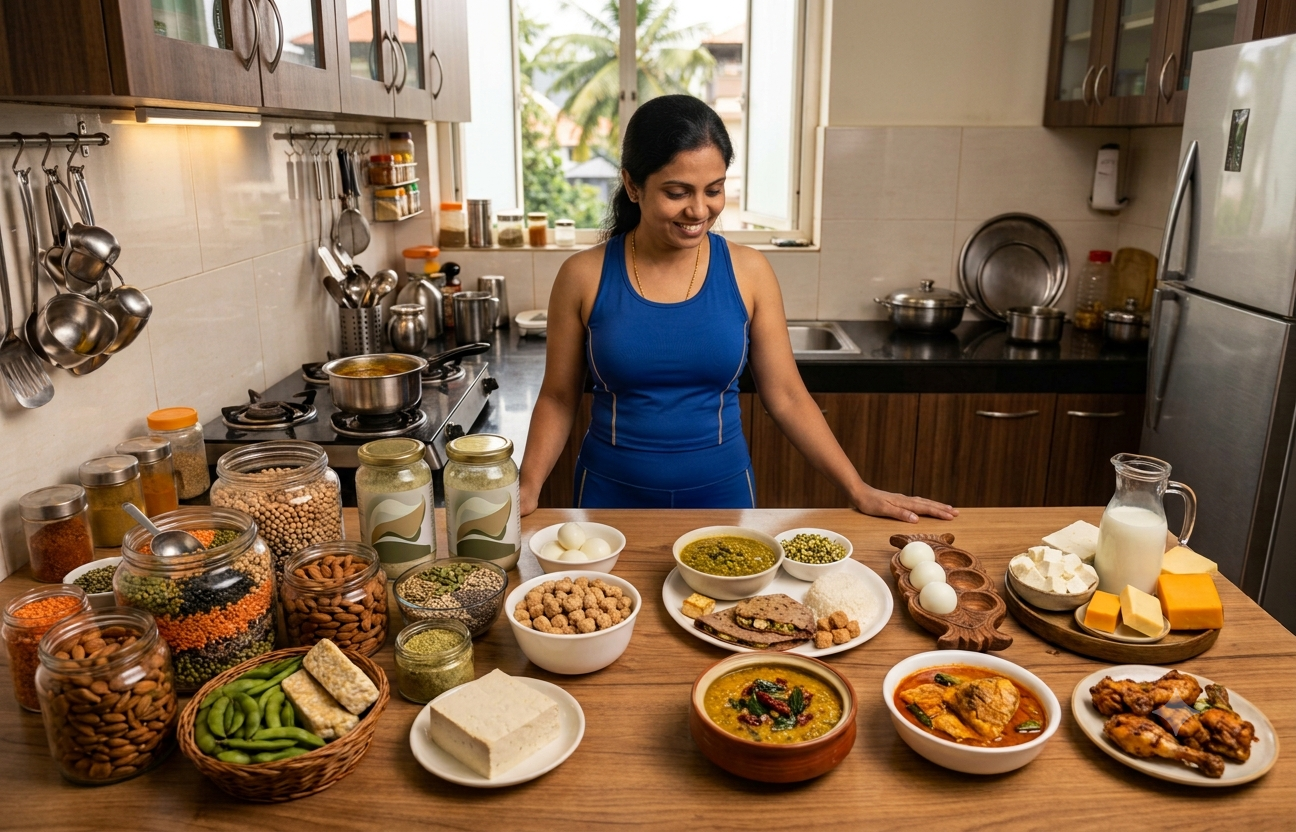
Protein foods for women can be extracted from animal-based sources and plant-based sources, but how they are absorbed by the body depends on your body's current condition. Here is how you can increase your intake of protein foods safely:
Animal-Based Sources of Protein
- Eggs
- Fish
- Chicken
- Greek yoghurt
- Paneer
- Milk
Plant-Based Sources of Protein
- Soy
- Tofu
- Tempeh
- Lentils
- Chickpeas
- Rajma
- Quinoa
Should Women Use Protein Powders?
Protein powders should be consumed only after a thorough doctor's consultation, as their ingredients need to be analysed. Protein-based supplements need a similar approach, as your body should be able to metabolise the protein in them for any health impact.
Whey protein and plant protein require even further scrutiny, as their impact on the internal health of women needs to be considered.
Protein supplements can help meet requirements but should not replace whole foods, as they can safely provide the needed protein.
Also Read: Are Protein Powders Doing You More Harm Than Good? New Study Says Yes
Common Protein Mistakes Women Make
When women prioritise their protein intake, they need to avoid these common protein consumption mistakes:
- Skipping protein at breakfast
- Eating most protein at dinner
- Undereating during fat loss
- Relying only on protein supplements
Does Protein Need Change With Age?
Yes, protein intake changes with age as the body's needs change as well; women who are in their 20s need a smaller amount of protein compared to women in their 30s.
Those over the age of 40 and those going through menopause need more protein for the same results, as active muscle loss is underway.
Signs You May Not Be Eating Enough Protein
Women who are not eating enough protein can experience the following:
- Difficulty building muscle
- Slow workout recovery
- Persistent fatigue
- Frequent hunger
- Loss of strength
- Hair and nail issues
What To Eat After A Workout
A workout requires a readily absorbable protein intake that is based on an expert's guidance and expertise.
It is best to:
- Consume a protein-rich meal within a few hours.
- Protein plus carbohydrates are necessary for better absorption.
- Hydration is needed for quicker absorption.
Note: Every woman who is looking to increase her protein intake safely should consult a doctor.
In order to build muscle and maintain it for better physical health, women need to consider their daily protein intake. Make sure you are taking a safe approach to protein consumption, keeping your fitness goals in mind.
Disclaimer: This content including advice provides generic information only. It is in no way a substitute for a qualified medical opinion. Always consult a specialist or your own doctor for more information. NDTV does not claim responsibility for this information.