

The promise of rapid physical transformations frequently drives people toward extreme crash diets promising drastic weight reduction within a single week. Data from the National Family Health Survey (NFHS-5) highlights a steep epidemiological transition across India, revealing that nearly one in four Indians is now classified as overweight or obese. This rapid surge, heavily concentrated within urbanizing, cash-driven economies, has sparked an unprecedented national fixation on aggressive weight management interventions. However, the pitfalls of commercial weight loss plans, the widespread reliance on severe calorie deprivation can trigger a dangerous biological rebound. The urgent rush to shed kilos overlooks a critical distinction in body composition: muscle loss and fat loss. When structural weight reduction is fast-tracked, the body compromises lean tissue over fat stores, a fundamental error that permanently destroys your long-term metabolic rate.
Why Dropping Weight Too Fast Destroys Your Long-Term Metabolic Rate
To understand the underlying physiological mechanisms, NDTV consulted Dr. Amrita Ghosh (MD, DNB), Senior consultant Endocrinologist and Metabolic Disorder Specialist at Fortis, New Delhi. Dr. Ghosh clarifies that extreme caloric deprivation forces the human body into an emergency survival state, fundamentally altering how energy is expended.
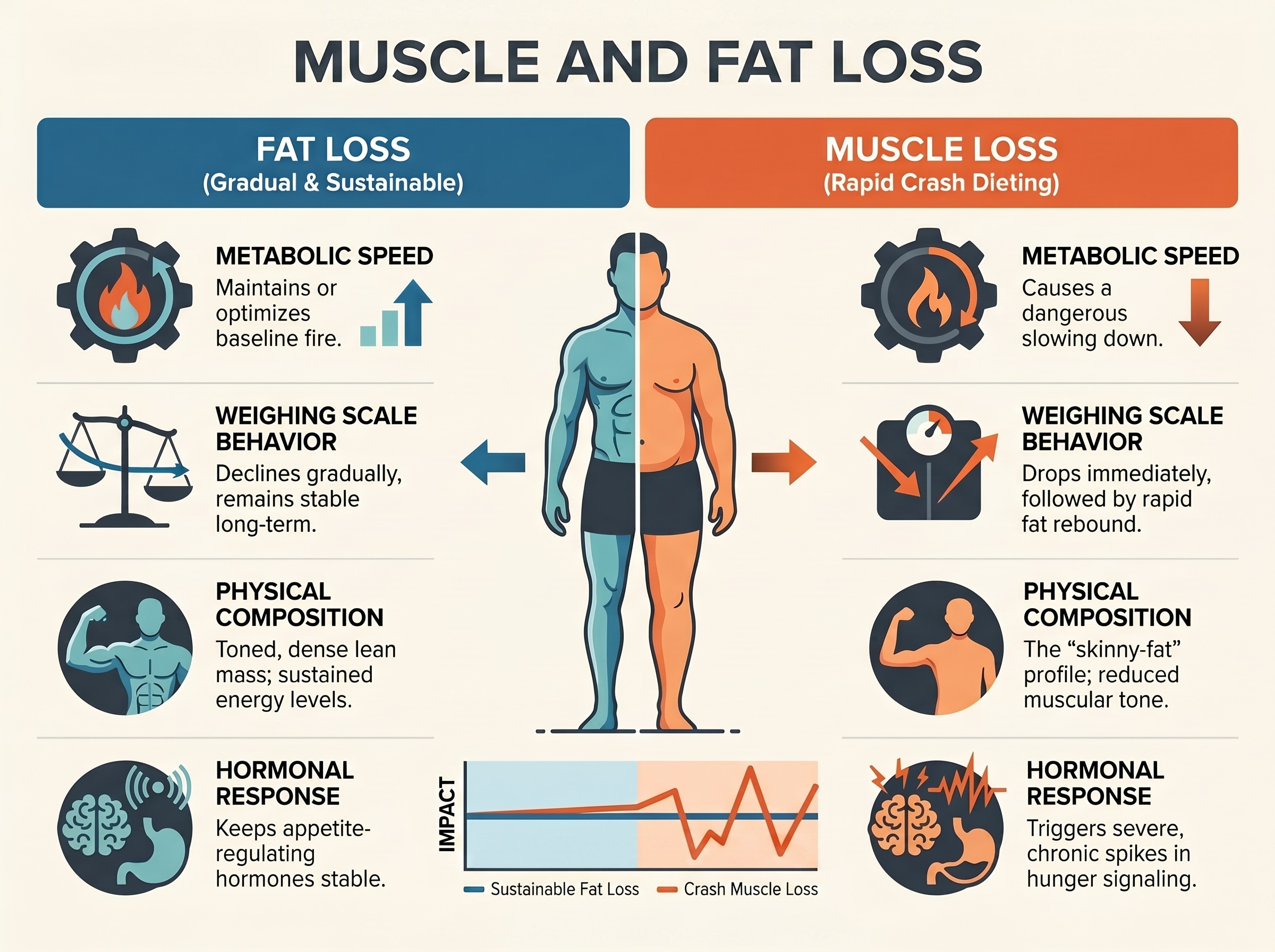
"The human body perceives rapid weight loss as an existential threat, mimicking a period of severe famine," states Dr. Amrita Ghosh. "When calories are cut drastically, the neuroendocrine system actively preserves energy-dense adipose tissue as an evolutionary survival mechanism. Simultaneously, the body begins catabolizing active skeletal muscle tissue to meet its baseline energy demands. This structural shift directly drives down the resting metabolic rate-the foundational number of calories the body requires just to sustain vital organ function at rest."
This biological defense protocol is heavily corroborated by long-term clinical research:
Clinical trials published in The Lancet Diabetes and Endocrinology Analysis highlight that comparing gradual weight reduction to rapid crash dieting confirms that faster weight loss protocols yield significantly higher rates of lean tissue degradation, resulting in a severely compromised, long-term metabolic rate.
Also Read: 6 Signs You Are Gaining Muscles And Losing Fat
Why Losing Muscle Mass Resets The Metabolic Rate
Skeletal muscle operates as a highly metabolically active engine, demanding constant caloric energy to maintain itself. Every kilogram of muscle tissue continuously burns calories, even during periods of complete rest or deep sleep. Conversely, adipose tissue (fat) is primarily a passive, dormant energy storage system.
When individuals engage in severe, unmonitored crash dieting, dropping weight too fast destroys their long-term metabolic rate because it systematically shrinks this internal metabolic engine.
If an individual loses 10 kilograms rapidly through extreme deprivation, and 4 kilograms of that total consists of lean muscle tissue, their daily caloric burning capacity is permanently blunted. This clarifies why dropping weight too fast destroys your long-term metabolic rate: upon returning to normal eating patterns, the downsized metabolic engine cannot process the incoming calories, resulting in accelerated fat accumulation.
Also Read: What Is Sarcopenia? Doctor Explains Causes Of Muscle Loss After 30
How To Lose Fat Without Losing Muscle
Bypassing this biological defense system requires a deliberate shift from generic weight reduction to structured, healthy weight management.
The clinical framework to ensure sustainable fat loss tips are integrated effectively involves a precise sequence of adjustments, such as
- Establish a Modest Caloric Deficit: A gentle calorie reduction of 300 to 500 calories below maintenance levels ensures steady fat oxidation without triggering the body's internal starvation alarms.
- Prioritize Dietary Protein Intake: Consuming adequate protein across all meals provides the essential amino acids required to repair and preserve existing muscle fibers while fat stores are utilized.
- Incorporate Progressive Resistance Training: Engaging in resistance or bodyweight exercises at least three times a week signals to the nervous system that muscle mass is vital for daily function, forcing the body to prioritize fat burning.
- Track Body Composition Over Absolute Weight: Utilizing progress tracking, energy consistency, and clothing fit serves as a more accurate metric than the weighing scale, as muscle gain and fat loss often occur simultaneously.
The clinical consensus remains clear: speed should not be prioritized over structural health. To maintain a functional, high-performing metabolism, preservation of muscle tissue must remain the primary objective.
Disclaimer: This content, including advice, provides generic information only. It is in no way a substitute for a qualified medical opinion. Always consult a specialist or your own doctor for more information. NDTV does not claim responsibility for this information.