

)
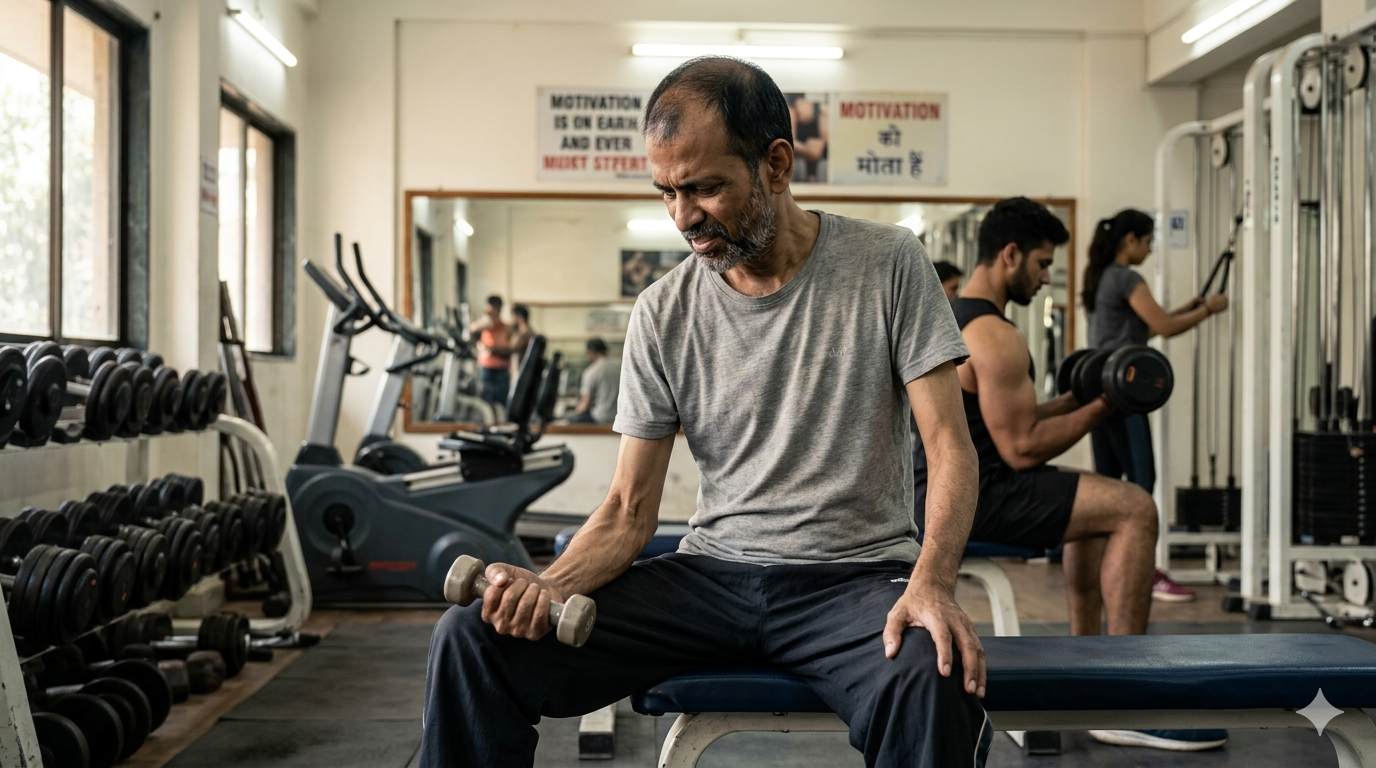
For decades, bone health has dominated conversations around ageing, mobility, and fracture prevention. From routine bone mineral density (BMD) scans to widespread awareness of osteoporosis, the focus has largely been on preserving bone strength. However, a growing body of research suggests that this approach may be incomplete. Increasingly, experts are turning their attention to an equally important but often ignored factor, muscle health. Sarcopenia, the progressive loss of muscle mass and strength with age, is now being recognised as a key driver of disability, poor surgical outcomes, and metabolic decline. While it often develops silently, its consequences can be far-reaching, affecting everything from balance and mobility to recovery after major procedures.
Orthopaedic specialists now emphasise that bones and muscles function as a single unit. Ignoring muscle health while treating bone conditions may limit recovery and increase the risk of complications. As populations age and sedentary lifestyles become more common, addressing muscle loss early could be one of the most effective strategies to maintain independence, prevent falls, and improve overall quality of life.
Why Muscle Loss Is A Growing Concern
"In orthopaedic care, we have traditionally focused on the 'bricks'-the bones and joints. We track Bone Mineral Density (BMD) religiously to prevent osteoporosis, yet we often overlook the 'mortar': the skeletal muscle," says Dr Shuvendu Prosad Roy, Orthopedic Surgeon and Additional Director of Ortho & Spine Surgery at Fortis Hospital.
Sarcopenia, he explains, is "a critical, yet frequently ignored, predictor of surgical outcomes and long-term disability." According to the World Health Organization (WHO), age-related muscle decline is a major contributor to frailty and loss of independence in older adults. Studies show that adults can lose 3% to 8% of muscle mass per decade after age 30, with a sharper decline after 60.
The Link Between Muscle And Bone Health
"The current understanding is osteoporosis and sarcopenia happen simultaneously and affect each other," says Dr Roy. Muscles play a direct role in maintaining bone strength. "Muscles are attached to the bone, so the strength of the muscle and its regular contraction gives a direct stimulus to bone to maintain its strength and density," he explains.
The National Institutes of Health also highlights that reduced muscle mass is closely linked to lower bone density, increasing fracture risk. This combined condition is sometimes referred to as "osteosarcopenia."
The Shift From Bone To Power
"While bone health is vital, muscle is the primary engine for functional independence," says Dr Roy. Loss of muscle quality, especially due to fat infiltration, can weaken joint stability and increase stress on cartilage. This accelerates conditions like osteoarthritis.
The European Working Group on Sarcopenia in Older People defines sarcopenia not just by muscle mass but also by reduced strength and performance, which are stronger predictors of disability.
The Hidden Orthopedic Risks
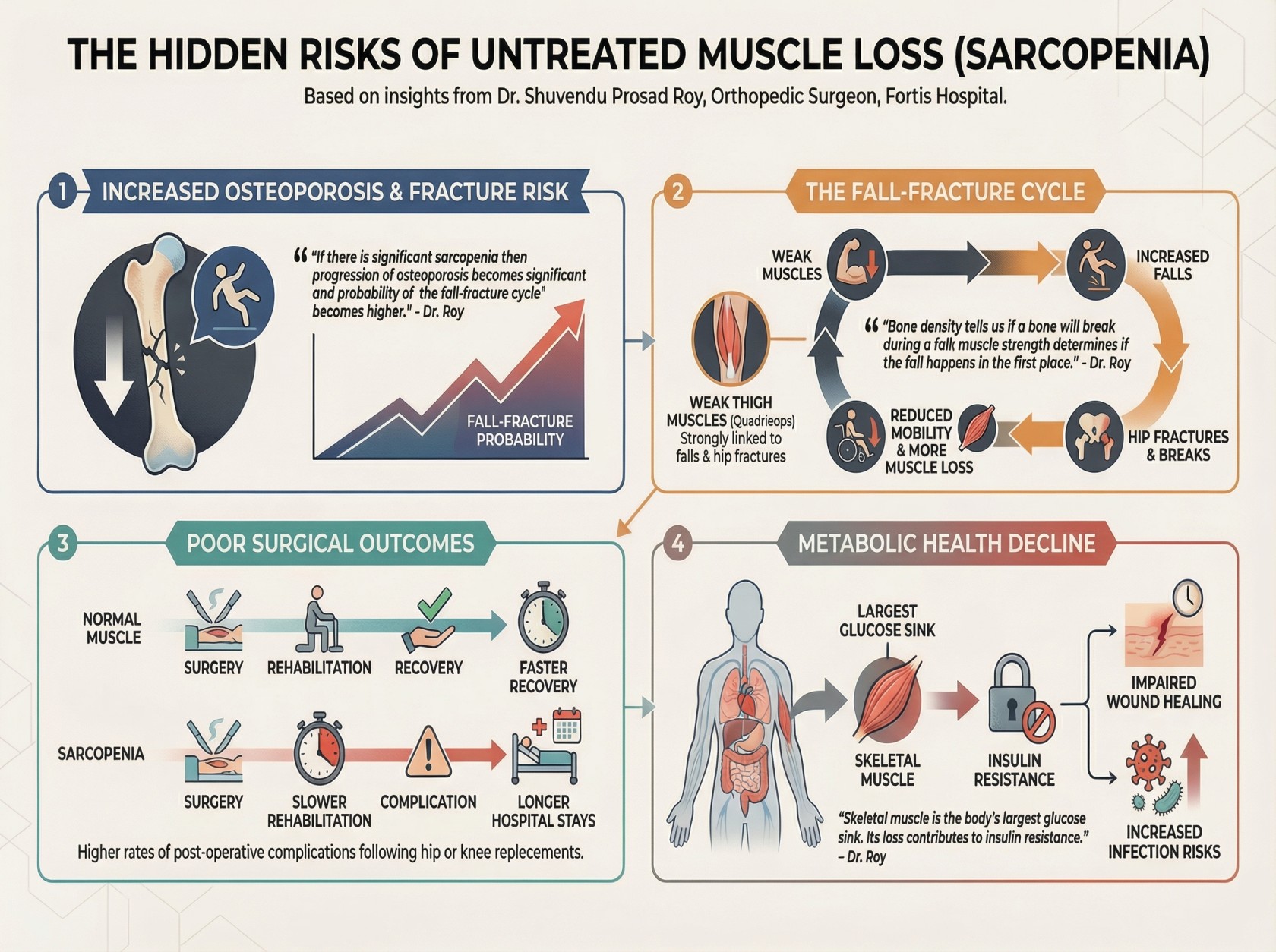
Dr Roy outlines several key risks associated with untreated muscle loss:
- Increased Osteoporosis And Fracture Risk: "If there is significant sarcopenia then progression of osteoporosis becomes significant and probability of 'the fall-fracture cycle' becomes higher," he says.
- The Fall-Fracture Cycle: "Bone density tells us if a bone will break during a fall; muscle strength determines if the fall happens in the first place," Dr Roy explains. Weak muscles, particularly in the thighs (quadriceps), are strongly linked to falls and hip fractures.
- Poor Surgical Outcomes: "Patients with pre-existing sarcopenia face slower rehabilitation following hip or knee replacements, leading to higher rates of post-operative complications and longer hospital stays," he adds.
- Metabolic Health Decline: "Skeletal muscle is the body's largest glucose sink. Its loss contributes to insulin resistance, which can impair wound healing and increase infection risks," Dr Roy notes.
Why Sarcopenia Often Goes Undetected
Unlike osteoporosis, which can be measured through BMD scans, sarcopenia is often overlooked because it develops gradually and lacks routine screening. Many people attribute muscle loss to ageing or inactivity, delaying intervention until mobility is already affected.
How To Prevent And Manage Muscle Loss
"We must move beyond the 'Fix the Fracture' mentality toward proactive musculoskeletal preservation through 'Prevent the Fracture'," says Dr Roy. He recommends a three-pronged approach:
- Grip Strength Assessment: "A simple, low-cost proxy for overall systemic strength," he says. Grip strength is widely used in clinical settings as an early indicator of sarcopenia.
- Early Resistance Training: "Prioritising power training well before elective surgery and making it a compulsory part of osteoporotic treatment is essential," Dr Roy advises. The WHO recommends at least two days of muscle-strengthening activities per week for adults.
- Nutrition Matters: "Ensuring adequate protein intake and Vitamin D levels is crucial to support muscle protein synthesis," he adds. Adequate protein intake, especially in older adults, has been shown to slow muscle loss and improve strength.
Muscle loss is no longer just a concern of ageing, it is a major health issue with implications for mobility, independence, and long-term outcomes. As experts highlight, focusing solely on bone health may not be enough to prevent fractures or ensure successful recovery after surgery.
By recognising sarcopenia early and prioritising strength training, nutrition, and regular assessment, individuals can significantly reduce their risk of falls, fractures, and metabolic complications. "By elevating muscle health to the same clinical status as bone density, we don't just repair frames, we preserve the power that moves them," concludes Dr Roy.
Disclaimer: This content, including advice, provides generic information only. It is in no way a substitute for a qualified medical opinion. Always consult a specialist or your own doctor for more information. NDTV does not claim responsibility for this information.