

)
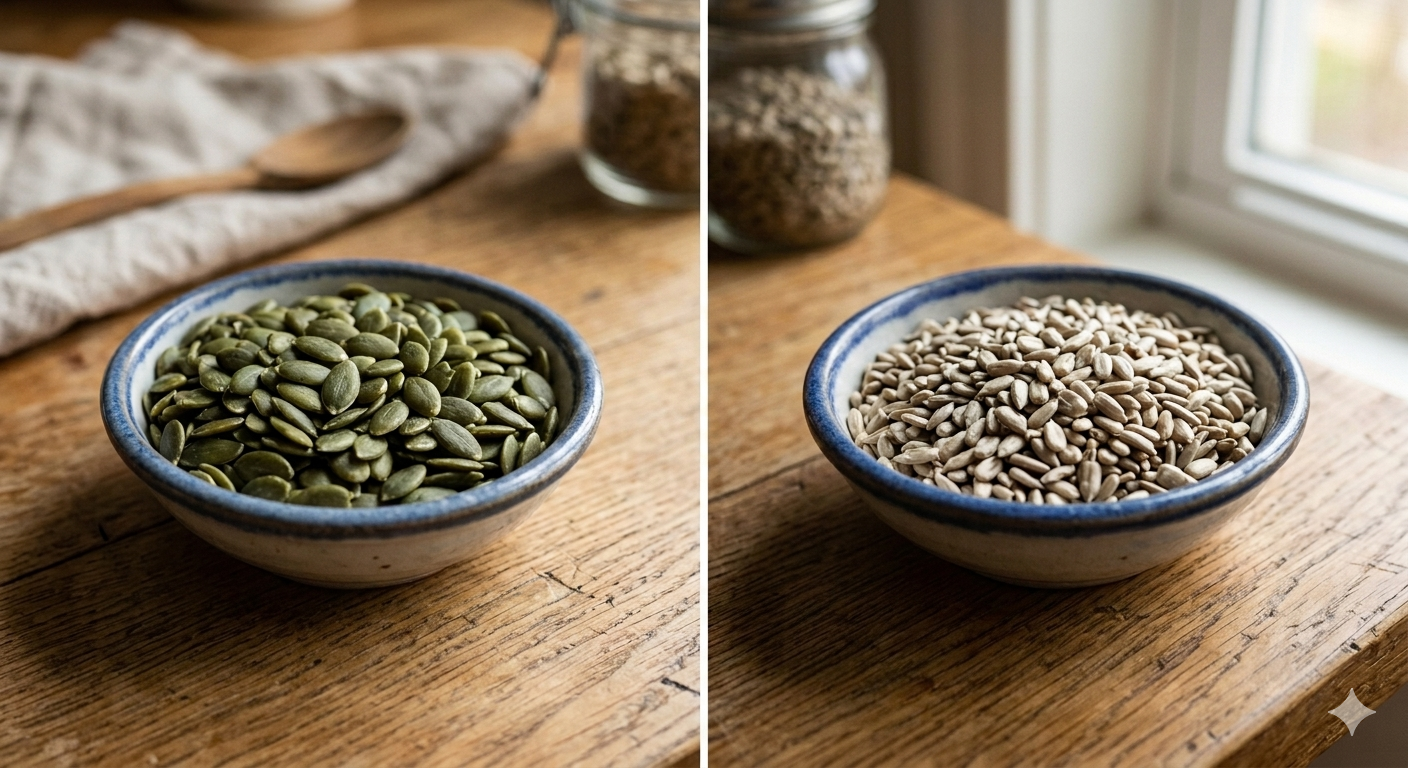
Seeds are highly nutritious and can significantly enhance your dietary intake. Among the most popular options are pumpkin seeds and sunflower seeds, which serve as versatile snacks. They can be easily added to salads, granola, and trail mixes, or enjoyed alone for a healthy snacking option.
Health benefits explained
Pumpkin seeds
- Pumpkin seeds are packed with a variety of nutrients. They are particularly rich in antioxidants and promote heart health.
- These seeds are an excellent source of magnesium, which plays a key role in many bodily functions such as muscle and nerve function, blood glucose control, and blood pressure regulation.
- Pumpkin seeds are often linked with improved prostate health and may help alleviate symptoms of benign prostatic hyperplasia (BPH).
- They are also high in zinc, which is important for immune function and overall health.
- These seeds also contain tryptophan, an amino acid that helps produce serotonin and melatonin for better sleep.
Sunflower seeds
- Sunflower seeds are rich in healthy fats, particularly polyunsaturated fats, which are beneficial for heart health.
- They are one of the best sources of vitamin E, an antioxidant that helps protect cells from oxidative stress.
- The vitamin E content in sunflower seeds also promotes healthy skin and may help reduce inflammation.
- Sunflower seeds provide a good amount of iron, which is crucial for red blood cell production and transporting oxygen throughout the body.
- With significantly more fibre, they are superior for supporting gut health and preventing constipation.
- They are also rich in selenium, a mineral pumpkin seeds almost entirely lack, which is essential for thyroid health.
Which one is better?
When comparing pumpkin seeds and sunflower seeds based on fibre, magnesium, and protein content:
-
Fibre
Sunflower seeds generally provide more fibre, supporting digestive health.
-
Magnesium
Pumpkin seeds are higher in magnesium, making them highly beneficial for muscle and nerve function.
-
Protein
Pumpkin seeds contain slightly more protein, aiding in muscle repair and growth.
The verdict
In determining which seed is better and more nutritionally rich, it really depends on individual health goals.
- If you are looking for a higher magnesium and protein content, pumpkin seeds are the better choice
- If you need more fibre and vitamin E, then sunflower seeds might be more beneficial
Pumpkin seeds usually lead in protein and magnesium, while sunflower seeds often win on healthy fats and vitamin E. Both seeds offer unique health benefits, so incorporating a variety of nuts and seeds into your diet can help you achieve a well-rounded nutrient intake. Combining pumpkin and sunflower seeds ensures a complete profile of essential minerals, vitamins (E and B), and healthy fats.
Disclaimer: This content including advice provides generic information only. It is in no way a substitute for a qualified medical opinion. Always consult a specialist or your own doctor for more information. NDTV does not claim responsibility for this information.