


World AMR Awareness Week is observed from November 18 to 24 every year to raise awareness about antimicrobial resistance (AMR) and prevent the spread of drug-resistant infections. The theme for this year is "One Health, one action: Prevent AMR now", which highlights how the health of people, animals, plants and the environment is connected. AMR is a growing global health threat because it can make medicines used to treat infections less effective. According to the World Health Organization (WHO), bacterial antimicrobial resistance was directly responsible for about 1.14 million deaths in 2021, while nearly 5 million deaths were linked to bacterial AMR.
AMR happens when bacteria, viruses, fungi or parasites change over time and no longer respond to medicines that were designed to treat them. When this happens, infections can become difficult or even impossible to treat. Antibiotics are used against bacterial infections, but their misuse and overuse can speed up resistance.
Ahead of World AMR Awareness Week, WHO released a new report which highlights a major concern. In 2023, about one in six laboratory-confirmed bacterial infections worldwide were resistant to antibiotic treatments.
What Does The New Report Say?
The WHO report, based on the 2026 Tracking Antimicrobial Resistance Country Self-assessment Survey (TrACSS), shows that more countries are taking steps to tackle AMR. As many as 173 countries reported having national plans to address AMR, more than twice the 79 countries that reported having such plans in 2017.
However, having a national plan does not always mean that people can access the testing and treatment they need. Only 22% of countries said they had both the required funding and full implementation of their national AMR action plans. The survey was completed by 183 countries which represents 94% of WHO Member States. The findings show that major gaps remain in preventing infections, diagnosing resistant infections, providing appropriate treatment and monitoring the spread of resistance.
Dr Tedros Adhanom Ghebreyesus, WHO Director-General, said, "National plans are essential for protecting the medicines that protect us, and the fact that most countries now have plans in place is great news.
"But an unfulfilled plan helps no one. We call on all countries to implement their plans with investments in infection prevention, surveillance, equitable access to essential antimicrobials and quality diagnostics. Every infection prevented means fewer antimicrobials are needed, and testing ensures that patients receive the right treatment only when necessary."
One In Six Bacterial Infections Are Resistant
One of the most concerning findings is that around one in six laboratory-confirmed bacterial infections worldwide in 2023 were resistant to antibiotics. WHO also reported that between 2018 and 2023, antibiotic resistance increased in more than 40% of the pathogen-antibiotic combinations that were monitored. The average annual increase in resistance across these combinations was estimated at 5-15%.
The problem is serious in regions where health systems have limited capacity to diagnose and treat bacterial infections. WHO estimates that resistance is highest in the South-East Asia and Eastern Mediterranean regions, where around one in three reported infections were resistant.
Why Is Testing Important?
Antibiotic resistance cannot always be identified based only on a person's symptoms. Laboratory testing can help doctors determine which bacteria are causing an infection and which medicines are likely to work.
But access to such testing remains limited. According to the new WHO report, only 36% of countries reported having a national reference laboratory equipped to test selected bacteria and fungi for resistance. This is below the global target of having comprehensive bacterial and fungal resistance testing capacity in 80% of countries by 2030. Without appropriate testing, patients may receive antibiotics that do not work against the infection. This can delay effective treatment and may also add further to resistance.
How Does Antibiotic Misuse Cause AMR?
Antibiotics are important medicines, but they should not be used for infections that do not require them. Taking antibiotics unnecessarily, using the wrong antibiotic or using them incorrectly can add to resistance.
WHO says misuse and overuse of antibiotics are the major causes of AMR. In 2022, medicines classified as "access" antibiotics, which are recommended as first-choice treatments for many common infections, accounted for only about 53% of global human antibiotic use. This is why antibiotics should be taken only when prescribed by a qualified healthcare professional and according to the prescribed dose and duration.
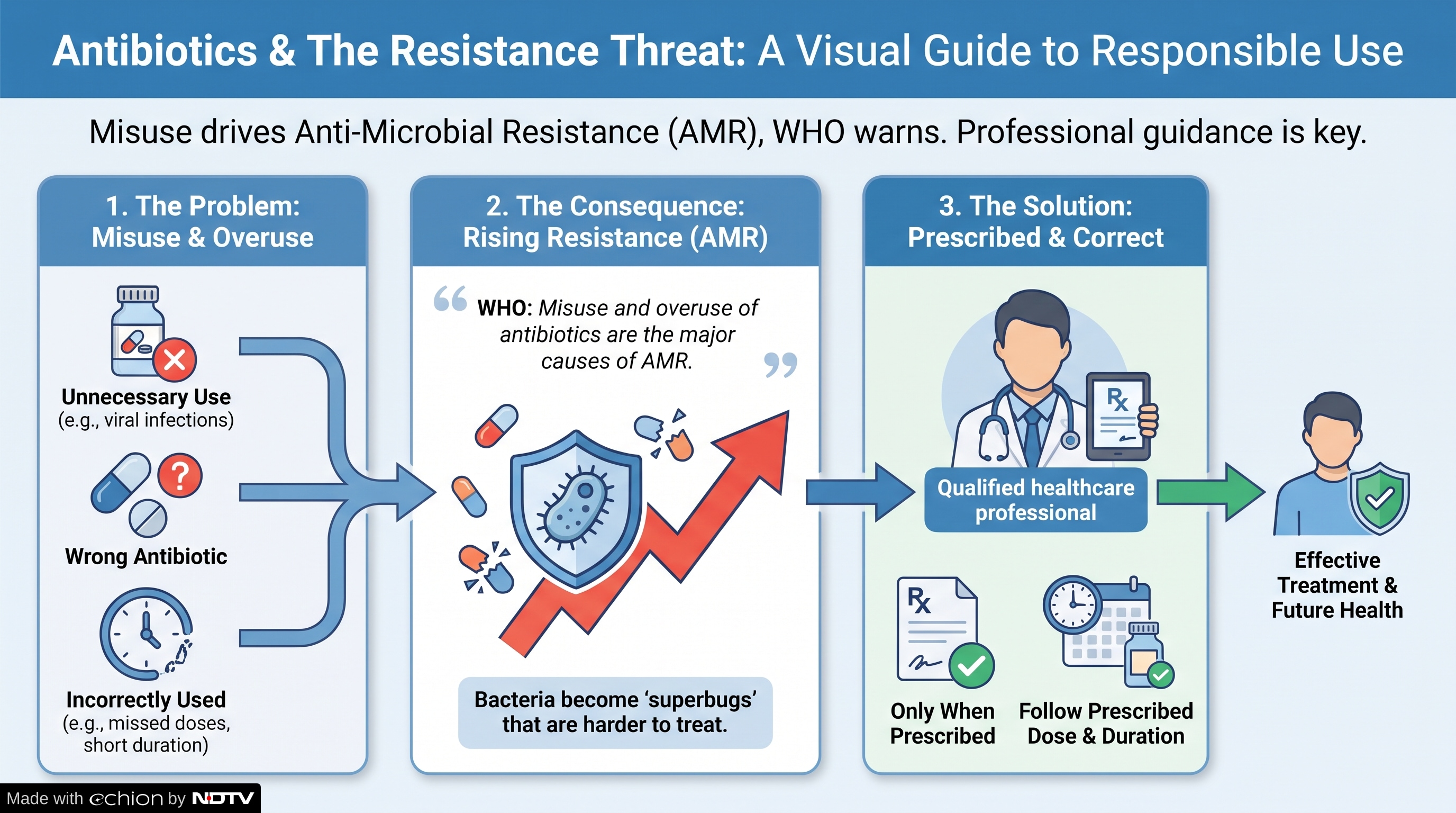
The effects of AMR are more than just treating infections. When antibiotics and other antimicrobials stop working effectively, routine medical procedures can become more complicated. According to WHO, resistant infections can make surgery, childbirth and cancer care even more riskier because these treatments may depend on effective medicines to prevent or manage infections. Drug-resistant infections can also lead to longer hospital stays, higher healthcare costs and more severe illness. Some resistant bacterial infections can progress to serious conditions such as sepsis, organ failure and death.
People can avoid self-medication with antibiotics and not share leftover medicines with others. Antibiotics should be used only when needed and as prescribed. AMR does not affect humans alone and resistant microbes can move between people, animals, food systems and the environment. Preventing AMR therefore needs action from healthcare workers, governments, veterinarians, farmers, researchers and communities.
Disclaimer: This content including advice provides generic information only. It is in no way a substitute for a qualified medical opinion. Always consult a specialist or your own doctor for more information. NDTV does not claim responsibility for this information.