

)
Wellness is a science, not a secret. Yet, in an era dominated by rapid wellness trends and targeted marketing, daily health routines have slowly drifted toward synthetic solutions. From popping a pill for morning fatigue to downing a capsule for glowing skin, consumer reliance on synthetic shortcuts continues to reach unprecedented heights. However, as National Nutrition Week begins across India, medical experts and dietitians are issuing a timely reality check: the human body was evolved to extract and absorb nutrients from a balanced plate, not a plastic pill bottle.
While targeted, clinical-grade supplements remain indispensable for individuals with diagnosed deficiencies, chronic malabsorption issues, or specific physiological life stages like pregnancy, relying on them as a primary substitute for an inadequate diet often misses the mark. This approach overlooks food synergy: the complex, highly evolved biological interaction where vitamins, minerals, dietary fibre, and bioactive phytonutrients naturally co-exist to maximise absorption and protective cellular benefits.
The Science of Whole Foods vs Isolated Supplements
To break down why whole food sources consistently outshine isolated chemical formulations, NDTV spoke with Dr Ananya Sharma, Clinical Nutritionist and Preventive Health Specialist, Apollo Hospital.
"When you consume a whole food, your gut processes a natural matrix of co-factors that dramatically improve bioavailability," explains Dr Ananya Sharma. "For example, synthetic vitamin C tablets give you isolated ascorbic acid. But an Indian gooseberry (Amla) provides Vitamin C alongside bioflavonoids, polyphenols, and fibre, which enhance absorption and protect against gut irritation."
A landmark study published in The American Journal of Clinical Nutrition demonstrated that dietary intake of micronutrients and antioxidants through whole foods significantly reduces markers of systemic inflammation. Conversely, high-dose synthetic antioxidant supplements failed to produce similar bio-protective outcomes and, in certain instances, exhibited pro-oxidant risks when introduced to complex human cellular environments.
Isolated vitamins lack the surrounding cofactors such as trace minerals, enzyme activators, and natural lipids that dictate how effectively a nutrient is transported across the intestinal wall and utilised at a cellular level. Without these natural helpers, a significant percentage of synthetic supplement doses are simply excreted by the body or, worse, stored in excess, where they can cause physiological distress.
5 Nutrient-Dense Food Swaps To Streamline Your Daily Routine
For individuals looking to clean up their medicine cabinets and optimise their nutritional intake, clinical dietitians suggest replacing common isolated supplement pills with five nutrient-dense, locally available whole-food alternatives.
1. Swap Synthetic Iron Tablets For Moringa And Beetroot
Iron deficiency anaemia remains widespread, yet synthetic iron pills frequently trigger gastrointestinal discomfort, including severe constipation, stomach cramps, and nausea, leading many patients to discontinue their regimens prematurely.
Fresh moringa leaves (Sahjan) paired with raw beetroot and a squeeze of fresh citrus juice. Moringa provides a dense concentration of non-heme iron, while the natural vitamin C in lemons or beetroots converts the mineral into a ferrous form that is readily absorbed within the digestive tract.
A study published in Nutrients highlighted that plant-based, polyphenol-rich food matrices enhance overall iron bioavailability without triggering the adverse gastrointestinal inflammation and oxidative stress associated with high-dose synthetic ferrous sulphate supplements.
2. Swap Calcium Chews For Sesame Seeds And Ragi (Finger Millet)
Calcium supplements have drawn intense clinical scrutiny over the past decade due to potential risks of arterial calcification and kidney stones when consumed in excessive, isolated amounts without key co-factors like vitamin K2 and magnesium.
Incorporating whole ragi (finger millet) and unhulled white or black sesame seeds (Til) into daily meals. Just two tablespoons of roasted sesame seeds offer a high concentration of bioavailable calcium alongside natural magnesium, phosphorus, and zinc, the precise combination of structural minerals required for safe bone matrix integration.
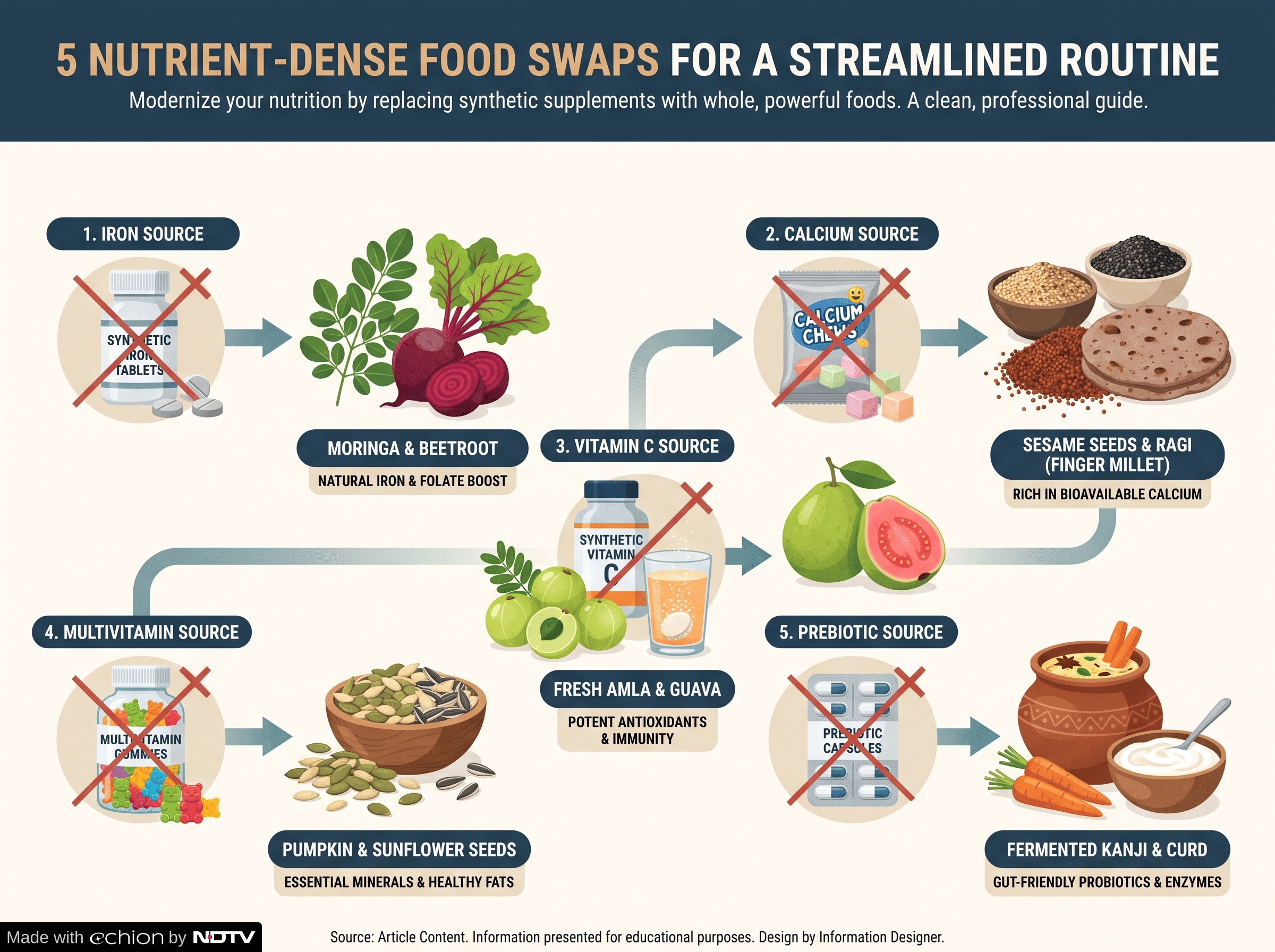
3. Swap Synthetic Vitamin C For Fresh Amla And Guava
Effervescent vitamin C tablets offer convenience and high dosage labels, but they present isolated ascorbic acid stripped of the natural flavonoids that preserve vitamin stability inside the human body.
Eating fresh amla (Indian gooseberry) or ripe guava. A single small amla delivers approximately 600-700 mg of natural vitamin C, nearly twenty times the concentration found in an orange that is naturally within protective tannins that guard the delicate nutrient against rapid thermal and enzymatic degradation during digestion.
4. Swap Multivitamin Gummies For Pumpkin And Sunflower Seeds
Commercial multivitamin gummies have surged in popularity, yet they frequently contain high amounts of added refined sugars, synthetic dyes, gelatine, and lower-grade synthetic nutrient compounds such as synthetic dl-alpha-tocopherol rather than natural, active vitamin E (d-alpha-tocopherol).
Consuming a daily handful of mixed raw pumpkin, sunflower, and flax seeds. These seeds deliver a balanced spectrum of natural vitamin E tocopherols, highly bioavailable zinc, magnesium, selenium, and essential omega-3 fatty acids that support cellular integrity and immune function.
5. Swap Prebiotic Capsules For Fermented Kanji And Curd
Pill-based probiotics often suffer from poor survivability, with many bacterial strains perishing in the highly acidic gastric environment before ever reaching the lower intestine, where they are needed.
Traditionally fermented foods such as seasonal black carrot kanjikanji, fresh homemade curd (yoghurt), and fermented rice water. These functional foods supply live, resilient, wild-type bacterial strains alongside natural prebiotic fibres that nourish the existing gut microbiome safely and effectively.
Ahead of National Nutrition Week, clinical consensus stresses conducting a thorough audit of one's daily diet prior to reaching for commercial dietary supplements. While lab-verified clinical deficiencies mandate targeted medical interventions, building your daily dietary routine around colourful, unrefined, and nutrient-dense whole foods establishes a biological foundation that synthetic formulations simply cannot match. Focus on diversifying your plate, supporting your digestive health naturally, and letting real food do the heavy lifting for your long-term wellness.
Also Read: Heart Disease Prevention: Study Finds How Increasing Fruits And Vegetable Intake Protects Your Heart
Disclaimer: This content including advice provides generic information only. It is in no way a substitute for a qualified medical opinion. Always consult a specialist or your own doctor for more information. NDTV does not claim responsibility for this information.